Riskworld 2026: The Hartford’s Matt Scott
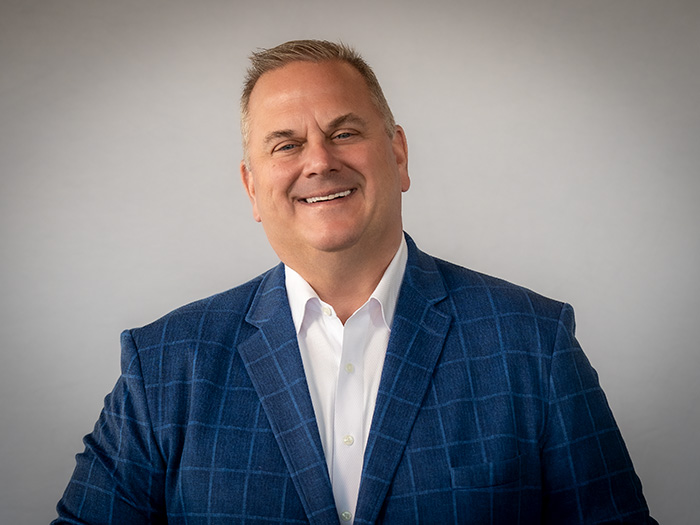
At RISKWORLD 2026 in Philadelphia, Dan Reynolds, editor in chief of Risk & Insurance, sat down with Matt Scott, Head of Property & Casualty Innovation, The Hartford. What follows is a transcript of that discussion, edited for length and clarity.
Risk & Insurance: Nice to see you again Matt. What new products are your team working on that you are particularly excited about?
Matt Scott: Product innovation is a top priority for us at The Hartford.
A product of note addresses workplace violence and offers companies enhanced protection in the event of an on-site incident.
We developed this in partnership with some of our broker partners to act as a reimbursement policy for our customers to help them access direct professional claims handling by our major account team, as well as coverage for exposures that a lot of the workers’ comp systems will not pay for such as experiencing a mental impact without a physical impact.
If you know anything about workers’ compensation, you often need a physical impact to set up for mental compensation. Our Workplace Violence product acts as a sidecar to our workers’ comp offerings, and I’m proud to say it’s in the market today.
R&I: What is the take-up for this offer, and how are people responding to it?
MS: As the number one workers’ comp carrier in the country, we are seeing high interest in our Workplace Violence product. As you can imagine, it’s a tough conversation to have around preparedness, but frankly the premium is extremely reasonable and the capabilities that come with it are extremely impactful.
For savvy risk managers who always think about the worst day, it resonates well. What they are looking for, should that happen, are professional, deep capabilities that heal their company and heal their people after an incident and as importantly, they are seeking good advice on prevention.
R&I: What impact is artificial intelligence having on technology and its applications, particularly in fields like robotics?
MS: The market’s reaction has been positive.
When we think about AI, it’s about all what it enables.
For example, while robotics has been around for a long time with various applications, artificial intelligence has taken that technology and transformed its usage and impact. Now, robotics could interact with us the way we interact with each other, and that’s a big step.
R&I: What are the implications of humanoid robotics becoming mainstream in the workforce for workers’ compensation carriers?
MS: The implications are significant. If you are a workers’ comp carrier, you might see more humanoid robotics integrated into the workforce.
Your premium target would still be workers’ comp for all the associated employees working to support that robot. However, now you also must explore product liability, along with a variety of other applicable products related to the deployment of the machines into an integrated workforce.
R&I: How does The Hartford evaluate the risks and product implications associated with emerging technologies like robotics?
MS: We explore how people will interact with a given robot, what risks are associated with it, and whether there are safety measures in place to prevent injury. We look to understand the nature of automation and how that automation interacts in an environment where people and machines need to work safely in harmony.
We are always thinking about what those implications might be, how we deliver prevention advice, what other technologies could be brought to the table to protect people and the business’s livelihood. In this process we explore gaps in risk protection and begin to explore unique product offerings to start to shape how our product portfolio might be impacted.
R&I: How is the basic performance of robots, such as those on automobile manufacturing lines, evolving beyond improvements in safety and human interaction?
MS: Standard assembly robots in manufacturing have been improved by safety guards and access controls, paired with programmed and repeatable processes that are very precise.
The more interesting development now is how robots can now advance beyond a manufacturing environment with a routine process to an environment that is ever changing with the same variety of tasks that humans undertake. They are beginning to operate and engage in processes that change every single time. Several of our customers are experimenting with humanoid robotics to explore production lift and injury reduction in areas where standardization just doesn’t work.
R&I: How is robotics being explored to enhance safety and efficiency on construction sites?
MS: Besides robotics, there are a lot of telematics, AI enhanced monitoring video and sensor based products that can really ensure that a construction site is secure and safe., As far as robotics, some of our partners are putting robots on job sites to check the quality and consistency of a construction site as the building is being established. For example,
in one experiment they put sonar technology on a robot and created two leaks on a construction site to see if the robot could find the leaks. The robot found four because the sonar technology heard the drop of water in four spots not two!
It is that kind of creativity and openness that makes us think about what else is possible for safety of the job site, and how we can help keep employees safe while managing effective and efficient job schedules for our customers.
The idea we keep coming back to is that we want people to go home safely every single night, for any job they have. There is a lot of ideation happening at The Hartford – particularly in my role to ensure we’re on the forefront of understanding it all, along with the implications for how we can deliver that to our customers. We want to help our customers achieve a better, safer operation.
R&I: Can you delve into other advancements, particularly those involving AI?
MS: Sure, AI has the potential to really transition risk assessment and prevention from episodic to continual monitoring and real time intervention to prevent injury. Traditionally, you’d have video monitoring with a human watching the footage. Then came thermography to watch for heat signatures.
Now, AI is trained to watch videos and spot problems constantly. That could be a hot spot, a forklift doing donuts, an inappropriately packed pallet, or a process that’s simply broken and could be improved by risk managers on the spot with technology that starts to predict a problem situation.
Artificial intelligence is changing risk prevention opportunities from a snapshot to an ongoing film.
In the past, you could see something and react to it. Now, technology enables continuous monitoring, making risk vigilance an everyday practice with a far better chance of prevention of injury.
This shift benefits customers, employees, safety, production, and quality. To me, that’s a noble purpose for why we provide the products we do.
R&I: What kind of traction are telematics gaining across various industries today?
MS: Telematics broadly defined, really can prevent accidents for all sorts of contexts between equipment and people including providing real time data that could prevent loss. However, the economic impacts on commercial auto context—frequency of accidents, severity of those accidents, and the rate environment—are significant in that telematics could have the greatest impact on accident avoidance if the right program with active coaching is adopted. There are studies that suggest that over 70% of accidents could be avoided with active AI enhanced coaching with video in commercial fleets.
Telematics is a solution, but it’s not just about having telematics. It’s about having telematics in vehicles and creating a culture of safety within the organization with coaching programs that help employees become safer on the job using the data from the telematics. The most effective telematics is camera-enabled with on-point coaching by risk professionals.
We offer discounts in most of the U.S.. If our insureds embrace telematics, we know it will drive a significant reduction in the frequency of events and we providing discounts up front because of our confidence in accident prevention.
Some of our best providers see remarkable results when they offer their full suite of telematics. This includes AI-enhanced interpretation of their data and AI-enhanced coaching, even featuring AI avatars that coach drivers in the image of their own boss or other personality to make it more relatable to their profession.
The data shows over a 70% reduction in incidents across a large sample of commercial vehicles. We know technology works, customer adoption and making safety a big part of culture is the challenge.
Today there is a new class of insureds who want a different handshake from the industry. They want to adopt the technology and partner with a carrier that will give them not only a preferred rate, but also outstanding service, claims, and risk engineering over the long haul.
Long term relationship building is core to The Hartford’s strategy. We want to be the carrier that gets it—working with customers who understand the value of a long-term partnership in risk mitigation.
R&I: What drives your evident passion for worker safety, and what do you find most fulfilling about your work?
MS: I have always been a purpose-driven person, and I take great pride in my work and in my association with a 200-plus-year-old company that has helped build this country and continues to make an impact across the globe. In a couple of weeks, I’ll be starting my thirtieth year with the company. Whether it’s the up-and-coming generation or those of us who have been around a while like me, one common thread that motivates most of us is the idea of dedicating our careers to a noble purpose.
For me, that purpose is helping businesses thrive and ensuring employees get home safely at night. There is no one in this country that knows more about how employees get hurt at work or at home than we do. We have a significant employee benefits footprint and a huge workers’ compensation footprint.
If we can harness that data and give people better insight into how to safely run their operations or prevent injury and recover quickly- that’s what it’s all about. That sense of purpose drives passion, and that passion attracts talent. That’s exactly why The Hartford cares deeply about the success and safety of its customers and in my view the passion that has driven our success over many decades.
R&I: Please describe your career journey at The Hartford over the past thirty years, particularly your early experience working directly with customers.
MS: I started as an attorney. For the first fifteen years of my career, I was responsible for runoff litigation, including asbestos, tobacco-related injury, breast implant, basic tort, multiple chemical, and mold cases. I handled everything you’d read about in the Wall Street Journal as a significant loss event. I was wrestling with the headlines. I’ve seen failed insurance products, I’ve seen misinterpreted insurance products, and I’ve seen a lot of industry impact come full circle.
After fifteen years, I went on to manage many of our field operations in claims, catastrophe response, liability, and construction defect. I grew up as a claim executive and really felt the pride in restoring people’s lives after events like a catastrophe or a fire.
There’s nothing that brings our product and our people closer to the edge of impact than speaking with someone at our mobile response unit who has just lost everything.
When our team begins to process a claim, it is the best part of their day when they can write that check, support those people, and help them start to rebuild their lives. That’s what motivates me.
All those processes combined fuel my passion for delivering the best of our company. We talk about it as trying to unlock the DNA of our company.
The more we can impact our customers by sharing everything we know about risk, the more loyal they’ll be, the safer they’ll be, and we’ll build a strong business relationship—and frankly, a personal relationship to go with it—that endures over a long period of time. &
The post RISKWORLD 2026: The Hartford’s Matt Scott appeared first on Risk & Insurance.
Popular Products
-
 Classic Oversized Teddy Bear
$23.78 -
 Gem's Ballet Natural Garnet Gemstone ...
$171.56$85.78 -
 Butt Lifting Body Shaper Shorts
$95.56$47.78 -
 Slimming Waist Trainer & Thigh Trimmer
$67.56$33.78 -
 Realistic Fake Poop Prank Toys
$99.56$49.78