Marketing Disguised As Helpful Government Benefits Doesn't Help In The Long Run
My sister and I recently took my 82-year-old French mom to Northern France for a two-week vacation. We booked several short-term rental accommodations, all of which were excellent with one exception. That unit turned out to be a three-storey property with a narrow, steep spiral staircase that was genuinely dangerous, particularly for her.
I was irritated and went back to the listing. Not one review, photograph or description line mentioned it. The property had been deliberately misrepresented and we had no recourse once we were standing at the bottom of that staircase with our luggage.
Governments do this too, but with considerably higher stakes than a missed staircase.
Politicians who cannot defend a tax policy on its merits create a marketing name . The label is designed not to inform, but to disarm: to make the financially illiterate feel reassured and the financially literate hesitant to object. It is one of the more cynical features of modern fiscal governance, and it is accelerating.
For nearly a decade, the Justin Trudeau government insisted that Canada’s carbon tax was not a tax, but rather a price on pollution. The distinction was entirely rhetorical.
A government charge that is compulsory, reduces disposable income, and raises consumer prices qualifies as a tax. Calling it a price on pollution was a marketing decision, not an economic one, and one designed to neutralize opposition by borrowing the language of environmental responsibility. It worked well enough on the politically sympathetic. It fooled nobody who actually read the legislation.
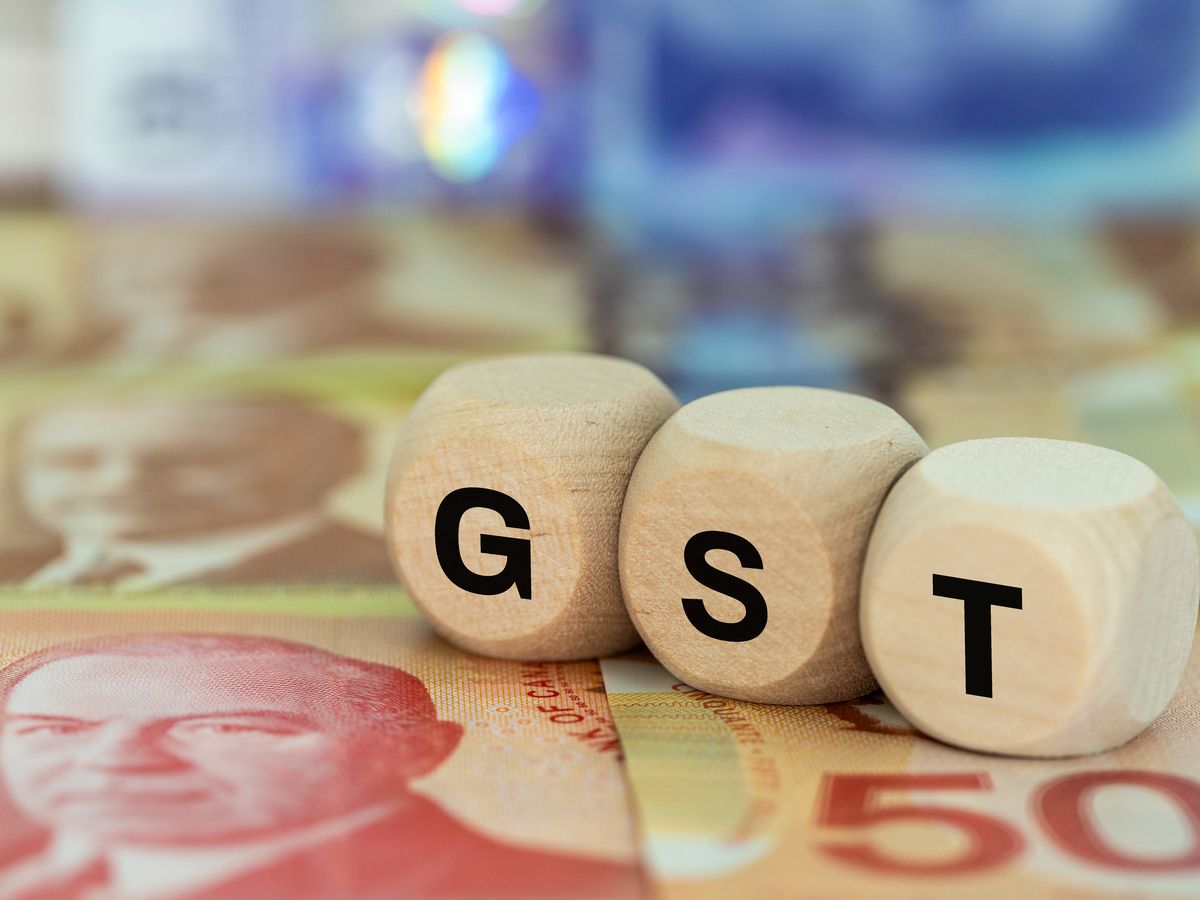
More recently, the federal government rebranded the GST credit — a long-standing, well-designed offset to a regressive consumption tax introduced by the Brian Mulroney government in 1991 — as the Canada groceries and essentials benefit.
This was not the first time Ottawa had reached for the GST credit’s plumbing to manufacture good news. Since 2020, it has done so four times: a special payment that doubled the credit during COVID-19, a six-month doubling in 2022 under the Making Life More Affordable banner, a grocery rebate in 2023 that was simply a second cheque equal to double the January credit, and now the 2026 top-up tied to renaming the credit itself.
Each was mechanically the same GST credit adjustment, but with changed marketing. Of course, the government can’t help but brag about it. Yep, redistributing after-tax payments of extracted funds as a gift is a neat trick.
The tax branding arms race is not limited to Canada. In January, the incoming Dutch government announced what it called a freedom tax — a surcharge on personal income and corporate taxes designed to generate approximately five billion euros annually to fund a dramatic expansion of defence spending toward North Atlantic Treaty Organization targets. The name is almost admirably brazen. A tax increase has been repackaged as a patriotic contribution to liberty.
You can debate whether the defence investment is wise or necessary. What you cannot do is pretend that calling a surcharge a freedom tax changes what it is. The Dutch taxpayer reaching into his pocket will feel no freer for the branding. A more appropriate use of the freedom tax phrase would be to honour the lives lost in prior wars that preserved such freedoms.
South of the border, the United States offered perhaps the most celebrated recent example of tax-policy nomenclature as misdirection. The 2022 Inflation Reduction Act was, by any serious analysis, primarily a climate and industrial policy bill. Its projected effect on inflation was negligible at best , a conclusion reached by both its critics and some of its architects. Some television contributors praised the name as “marketing branding genius.”
But marketing genius and sound fiscal policy are not the same thing and conflating them is precisely the problem. There is a useful rule buried in all of this and it is close to a law: the more appealing the name, the worse the policy underneath it.
Freedom, groceries, fairness, inflation reduction are all advertising copy words. A government usually reaches for emotional language to describe a fiscal measure because the measure cannot survive a dispassionate description of its actual mechanics.
The antidote to marketing is better policy. Canada’s tax system has accumulated decades of politically motivated complexity: boutique credits, targeted incentives, rebranded transfers and piecemeal amendments layered atop one another. The result is a system that is expensive to comply with, difficult to understand and chronically uncompetitive.
Which is exactly why Canada desperately needs Big Bang tax reform with less complexity, broader bases, lower personal tax rates, genuine neutrality and the elimination of measures that exist primarily for political optics rather than economic logic as its core objectives.
A simpler system is harder to misrepresent. That alone is a reason to build one. I have argued for years, including in my recently updated book Making Life Less Taxing , that Canadians deserve a tax system they can actually understand. Branding makes that harder, not easier.
- Automatic tax filing is coming, but the government's plan still misses the mark
- Don't fall for tax myths even if it's Jeff Bezos spouting them
But reform can take years , which brings us back to the rule. You should ask a government that announces a new tax measure with an appealing name what it actually does, who pays for it and whether the so-called benefit being celebrated was extracted from you first. The answers are rarely as warm as the label suggests and often misleading.
The short-term rental host who misrepresented her unit with the dangerous staircase knew exactly what she was doing: the right pictures and words, but the wrong reality. Governments have mastered the same art. The freedom tax sounds noble. The groceries benefit sounds generous. The Inflation Reduction Act sounds responsible. None of them were what they claimed.
Check the staircase before you book.
Kim Moody, FCPA, FCA, TEP, is the founder of Moodys Tax/Moodys Private Client, a former chair of the Canadian Tax Foundation, former chair of the Society of Estate Practitioners (Canada) and has held many other leadership positions in the Canadian tax community. He can be reached at kgcm@kimgcmoody.com and his LinkedIn profile is https://www.linkedin.com/in/kimgcmoody.
_____________________________________________________________
If you like this story, sign up for the FP Investor Newsletter.
_____________________________________________________________
Popular Products
-
 Mommy Diaper Backpack with Stroller O...
$111.56$55.78 -
 Ai Dash Cam with Front & Rear HD, GPS...
$295.56$147.78 -
 Smart Auto-Recharge Robot Vacuum Cleaner
$613.56$306.78 -
 Wireless Health Tracker Smart Ring - R11
$131.56$65.78 -
 Electric Hair Straightener and Curlin...
$161.56$80.78