Grandland Grand Tour: A Rapid, Relaxing Parisian Fling In My Electric Vauxhall
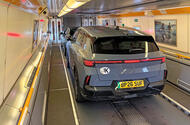
An important mission in Paris awaits – is the Grandland Electric the right car for the job?
My summer trip across France in colleague James Attwood’s BMW iX3 has given me confidence in the idea of longer journeys in an EV, so when daughter Elsa asked if I’d give her – and most of her worldly goods – a lift to Paris for a year of studying abroad, I had no hesitation in taking the Grandland Electric.
Two warnings to note. First, the Vauxhall’s bootlid isn’t steel – as I found when I ordered a magnetic UK plate and it promptly fell off. Second, you’ll need a Crit’Air emissions sticker if you’re going into a major city in France, and don’t trust a quick Google search when buying one.
I was served a number of scam websites charging £40 for this vital pass, which you’ll need to access low-emission zones even if you’re in an EV, but then discovered I could get it for just €5.11 (about £4.40) from the official government site. Then the only thing left to do was pack (grateful once again for the huge boot) and disable the automatic main beam function: the Intelli-Lux headlights adapt to avoid dazzling oncoming traffic so don’t need deflectors.
Because I was going to be out and back within 24 hours, I booked myself on to an evening LeShuttle from Folkestone. Taking the Channel Tunnel is by far the quickest way to get to the continent and there are other advantages too – such as being stuck on the next available train when I was running early.
I was surprised to find my car wasn’t considered large and was directed to the top deck, which was a bit of a squeeze. But looking at it in situ, it’s really more of a tall estate car than a traditional rugged SUV. LeShuttle is a fast and relaxing way to travel and soon spat us out in France.
We’d booked an overnight in Amiens and the Grandland made swift progress on the autoroute, whose smooth surfaces suited the firm ride. Only a fair amount of wind/road roar disturbed the peace. The car did demand a bit of correction to stay on track too, particularly in crosswinds.
Although it’s quite comfortable cruising at the 130kph (81mph) limit, economy takes a steep dive if you do. My total average dropped from 3.5mpkWh to 3.3mpkWh during the trip, and I reckon we were returning well under that at those speeds, dropping the range below 200 miles.
With no chargers at our cheap motel, I was up at dawn to plug in at a nearby supermarket while Elsa slept, before another toll-road blast to the outskirts of Paris, then the inevitable crawl around the Périphérique and into the middle of town.
Sadly, Paris underground parking is designed for Twingos, not Grandlands, and after squeezing in through the narrow, steep, concrete-lined entrance, I spent most of the day worrying about how we’d get out again. But with Elsa safely installed, she helped me emerge unscathed and, after an emotional goodbye, it was back on the road bound for Calais.
On a previous trip to Bordeaux, I’d been amazed by the number and quality of charging options, but the Parisian trail appears to be less well served. So upon leaving the capital, I plumbed in a major shopping centre, but the promised 300kW stations were out of service and the best I could find was a 150kW unit a walk away from the supermarket where I’d planned to stock up.
Although the Vauxhall has a maximum charging rate of 160kW, the most it received was 120kW and it took over an hour to add 55kWh (I’m becoming convinced that charging rate is even more important than battery capacity), so I opted for a couple of brief top-ups en route rather than another lengthy wait.
That aside, it covered nearly 700 miles in two days with ease and I arrived home far less exhausted than I’d expected. Mission accomplished.