New Emissions Rules This Month To Target Brake Dust And Tyre Wear
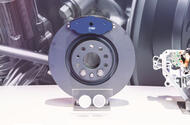
How manufacturers are changing brake pads and discs to meet new EU emissions standards
Euro 7 emissions regulations will kick in across the EU on 29 November.
Significantly, they are the first to target not only exhaust emissions from ICE vehicles but also particle emissions from braking systems and tyre wear. This means EVs will also be impacted by the new regulations for the first time. EVs will also be subject to 'battery durability requirements': minimum requirements for battery life will dictate they hold a minimum of 80% of the original capacity for the first five years or 62,000 miles (100,000km) of a car's life, then 72% from five to eight years or 99,422 miles (160,000km), whichever comes first in both cases.
Brake particle regulations will apply to both EVs and ICE cars. EVs will face a tougher figure of 3mg/km (4.8mg/mile) while ICE cars must hit 7mg/km (11.3mg/mile). The lower figure for EVs reflects the part played by regenerative braking in reducing the work done by conventional friction brakes and the corresponding reduction in the amount of dust generated. The regulations target particle sizes of 10 microns or smaller (PM10) and are the result of brake pads gripping steel discs to generate friction and convert the kinetic energy of the moving car into heat energy.
Where manufacturers tread, aftermarket suppliers must follow. Regulation ECE R90 is in place to ensure that replacement brake materials are up to the job of factory parts and safe to use on the highway.
Although Euro 7 currently applies only to new cars and original equipment, aftermarket suppliers are already ensuring their products meet the same criteria.
ZF Aftermarket has a solution ready based not just on the brake pad materials but also on the way the discs are made. Under its braking component brand, TRW, it has developed a next-generation 'DTEC' dust-reducing technology disc and pad designed to reduce fine dust emissions.
A large proportion of the dust particles generated under braking comes from the steel disc rather than the friction pad, and a fundamental method of reducing particle emissions is by hardening the disc surface. ZF expects manufacturers to use a variety of disc surface treatments rather than a 'one size fits all' solution, and it thinks an appropriate combination of disc surface treatment and pad friction material composition will be dictated by a vehicle's inertia and engine type.
Hardening the disc surface can cause more challenging NVH behaviour, so it's important for ZF to understand the interplay between all the components in the braking system. That is done via a test rig called DustIN that uses the same test regimes used to develop the Euro 7 regulations.