V2l: How My Electric Car Saved My Family Holiday In A Blackout
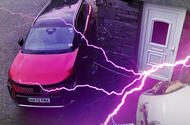
Storm Boelo caused a 30-hour power cut, but our Renault Scenic kept the holiday fun going
As if the rain and gales weren’t bad enough, Storm Boelo had another unpleasant surprise for the start of our group holiday in the Lake District this half-term: a 30-hour power cut.
But this enabled our first-ever use of the vehicle-to-load (V2L) function on our Renault Scenic. Suddenly we were the saviours.
The Renault is supplied with a device that plugs into the charging port and gives you a three-pin plug. We scoured the rental house to come up with the longest extension cord (not very long), parked the car as near to the back door as possible, and suddenly we had (limited) power.
V2L is available on many but not all electric cars. Most modern Hyundai, Kias and Renaults have it, along with many Chinese models. It essentially turns your car into a portable battery.
What it doesn’t do is run your entire house. That’s called vehicle-to-home (V2H) and requires a special switch to isolate your house from the grid. It’s big in the US, where many rural homes have generators to take over in the event of power cuts, but not here in the UK, where power is more reliable.
The Scenic, with its 87kWh battery, would have been happy to supply all the power needed, given the average household consumes between 6.8kWh and 9.4kWh daily.
But we were constrained by the Renault’s 3.7kW maximum V2L power output (and the length of the extension cord). The power issue forced some quick ChatGPTing about the draw of individual household devices. Renault’s handbook says not to use it with devices that consume more than 16 amps, or 3.6kW. The oven, therefore, was out.
I had a bit of a moan at this point about the fact that we had just 3.7kW when some new Chinese models like the Changan Deepal range offer 6kW or higher. Then we could have run our oven!
However, after a chat much later with John Fox, COO of HGV charging specialist Voltempo but more crucially one of the brains behind Indra’s vehicle-to-grid trials, I realised I was being greedy.
Anything over 16 amps and you starting needing much thicker cables than standard extension cords allow. It’s why things like ovens or heat pumps are hardwired with their own isolation switches.
So we plugged in two fridges (it was a big house) and a couple of standard lamps and rigged up a separate plug-block for everyone to charge their devices. Cruelly, though, we left the wi-fi unplugged to force the children to find other entertainment. In the morning it also coped with a toaster.
In total we used just 8% of the Scenic’s power in those 30 hours but we did have one small issue when the Renault turned itself off overnight.
A query to the Scenic Facebook group unearthed the likely problem. When the load drops below a certain level, the Scenic stops delivering power. It can’t be that, I told one poster. We had two fridges running! And that’s when I learned fridges will shut themselves down when they’re at the required temperature. So we kept the standard lamps on and that seemed to cure it.
We huddled round the wood fire and survived. My wife and I also drew warmth from our smugness at finding another EV advantage.
But really we should be getting more use out of that enormous battery day to day, either powering our home during the day with energy acquired by charging at cheap night-time rates or sending electricity back to the grid at peak times.
“V2L is absolutely brilliant in a distressed situation,” says Fox. “However, the single biggest frustration of my career is that we've all got these precious minerals sat on the driveway doing nothing most of the time.”