"depressing Yet Exciting": When Brits Were Invited On Soviet Road Trips
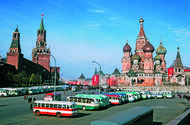
Tourist coaches in Red Square, Moscow, in 1967 | Credit: Getty ImagesAmazingly, the USSR lifted the Iron Curtain to foreign drivers in the '50s and '60s – but they did keep a close eye…
The common perception of the Cold War period is of two isolated worlds, divided by an unmoving, impenetrable Iron Curtain. Yet in fact communist nations did accept tourism from their capitalist rivals – encouraged it, even.
And while the prospect would have scared many, Autocar found in 1957 that “a road journey through the USSR may be undertaken without apprehension”.
Back in 1928, we had run a report from a war correspondent in which he recalled the revolutionary days of 1921, when some rural people “in their hunger had learned a very ugly form of cannibalism” and “night after night, the dead silence was disturbed by the crack of revolvers from the prison”, and promised: “If you know enough Russian, you can listen to the youths denouncing you as they gather round your car, and asking why, since all men are equal, you should drive while they walk.”
Funnily enough, those quotes weren’t picked out for posters or brochures by Intourist, the state travel agency formed in 1929.
Having successfully run Arctic cruises and opened a London office, in 1935 Intourist began offering motor tours on which Brits could drive their own cars.
For the modern equivalent of £2130, each got “three meals daily, the specified ‘sights’ in Moscow, Novgorod and Leningrad [St Petersburg], services of interpreters, garage of cars and the Soviet visa”.
Of course World War II broke out soon after, and the offer wasn’t reinstated until 1957. Geopolitical relations were tense (the USSR had threatened to nuke Britain amid the Suez crisis, then brutally put down an anti-communist revolution in Hungary), yet incredibly several thousand Brits expressed interest.
Two bigwigs from the RAC took the first tour, reporting in Autocar that, after completing “a mass of formalities” and grillings from border agents, they had “covered 4315 miles in 15 days, through blazing heat and lashing storms”.
“The Brest-to-Moscow highway is a mild imitation of an autobahn,” they continued. “High speeds can be maintained consistently and easily, though vigilance is necessary, for the surface is apt to be uneven.
“Whenever our Standard halted, it became immediately the centre of an admiring crowd, eager to fire questions at us on all sorts of topics.”
The problems were the scarcity of fuel stations and their low-octane petrol, the length of time needed off work and the high cost (£5410), due to unfavourable exchange rates.
Despite this, not to mention the ever-looming spectre of nuclear apocalypse, a few thousand Brits visited the USSR in 1958.
One reported in Autocar on a 1963 holiday with his wife and children in their Riley 1.5 – complaining of inedible food, scarce signage, lane-hogging lorries and threat of arrest for using the wrong roads or taking photos in the wrong places.
In 1973, another writer “made the mistake of driving at night – an extremely hazardous experience. Soviets have a habit of driving without any lights, and it was common for them to become irate when passing our lit minibus.”
“The boredom and long hours on the road are worthwhile just to be able to visit the capital,” he added. “The Kremlin, overlooking Red Square on one side and the Moskva river on the other, the colourful cupola domes of St Basil’s and GUM, the world’s biggest department store, are all sights that had to be seen. The wide thoroughfares, too wide for normal traffic, some of the grotesque buildings and the grey, sullen faces of the people all add up to make Moscow an interesting city.
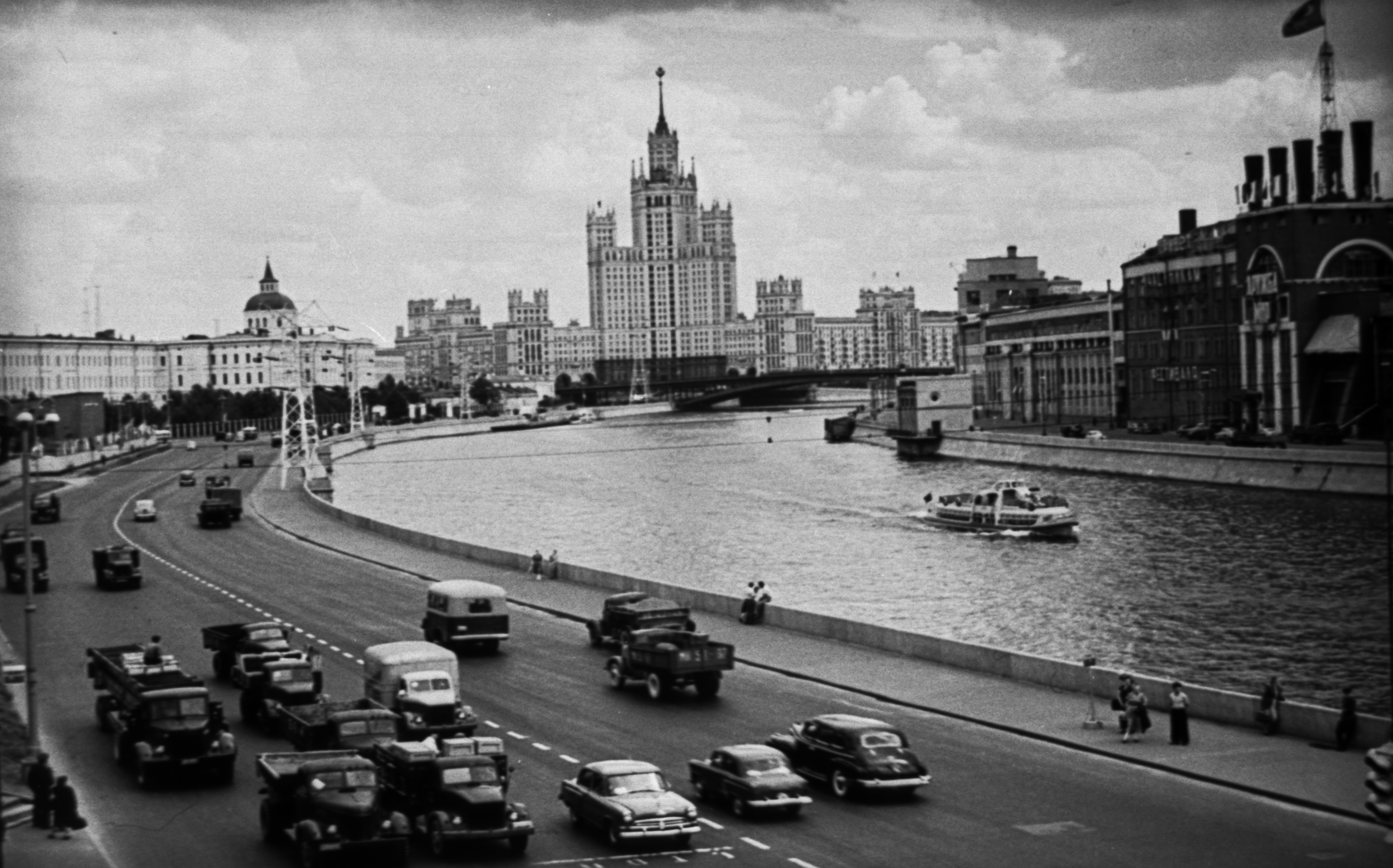
“We found the USSR depressing yet nevertheless exciting. The people were always friendly and extremely helpful and showed great interest in our travels and in our Ford Transit.
“Intourist became more and more disorganised as we proceeded deeper inside Russia. However, they always managed to keep a check on us and knew exactly where we should be at any given moment.”
We visited once more in 1979, on our way home from Sweden in the all-new Saab 900 Turbo. We found it curious how “the border guards were the only Russians who showed the slightest interest in it” but the unrestricted, dreadful roads were ideal “for proving the worth of a fast, rugged car with improved handling and good ride qualities”.
Perhaps the reason so few people realise that Westerners could duck the curtain, then, was because very few would’ve had any desire to do so.
A personal experience - I actually did it
One of the few who did take up the offer was Autocar reader Terry Dudleston, whose parents took him to Moscow in their Jaguar MkVIII M in 1960.
"A lot of the roads were just dusty dirt tracks, and at times our average speed was about 10-20mph," he recalled.
"I can still smell the low-octane petrol, which did cause some pinking even though the Jaguar’s ignition was retarded.
'We were allowed into the Kremlin, obviously with a guide, and we were always aware of being shadowed by men in dark coats – probably KGB – keeping a close eye on us wherever we went.
"The food in Russia was mainly borscht, which was ghastly, but all our guides and translators provided by Intourist were very friendly and helpful. The Jaguar created a lot of interest from locals.
"The whole holiday took four weeks and, as I was only 12 at the time, I probably didn’t appreciate the enormousness of the whole trip and experience."