How To Show A Car At A Concours D’elegance
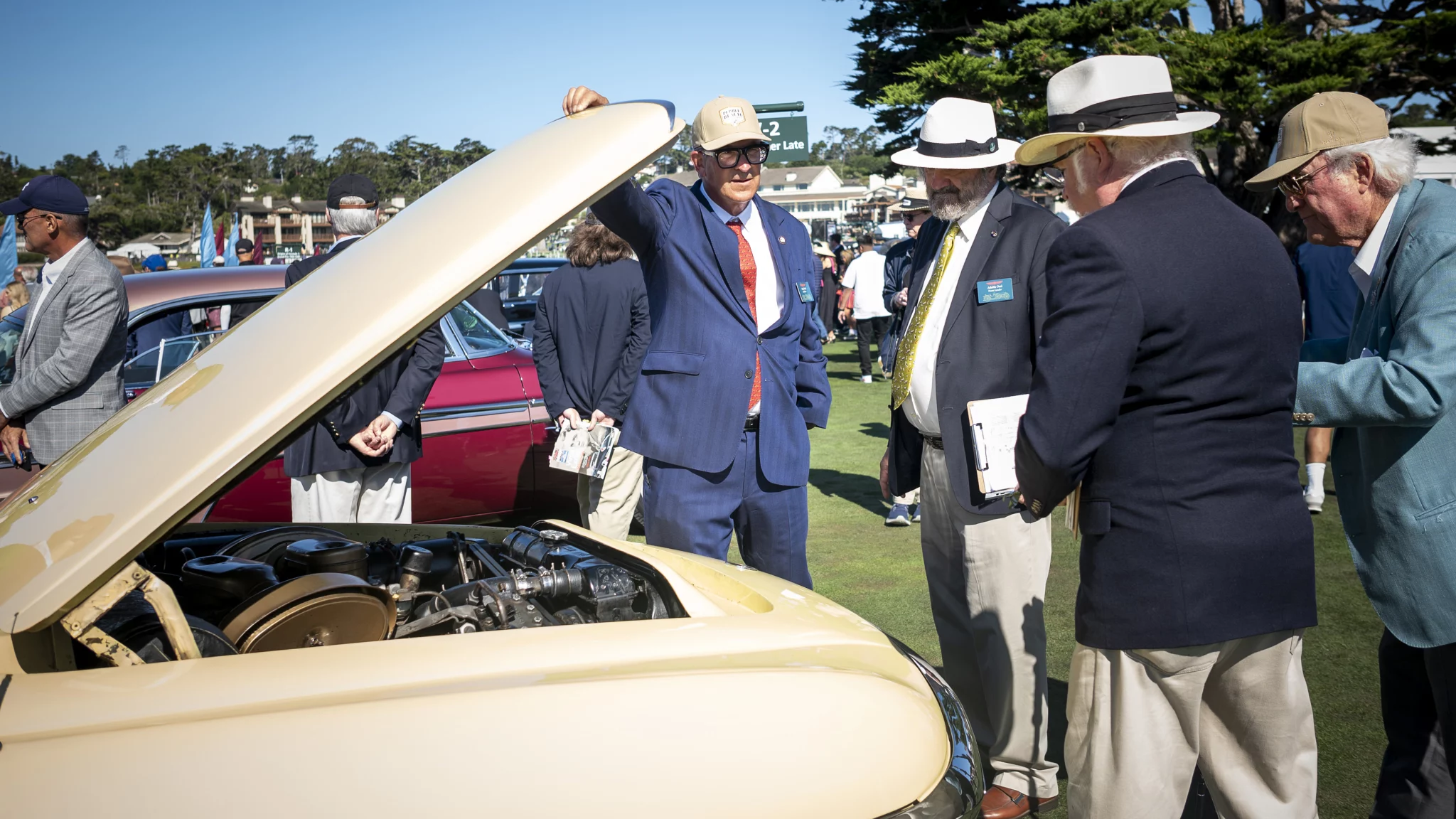
In 2022, I was invited to show a car for the first time at The Amelia Concours. I had shown at other events including The Quail, Hilton Head, and the Lime Rock Historic Festival, but showing at Amelia was another thing entirely. Even though I was nervous, by this point, I had been a judge at various concours d’elegance events for several years, and during that time, I had met friends who gave me great advice on what to do and how to do it. Since that first showing at Amelia, where we finished second in our class, I have been back every year with a car and have won an award every year but one. In addition, I also had the honor of being selected to show a car at Pebble Beach in 2025. Again, I turned to friends for advice, and we had an amazing time and presented the car well.
I realize now that I was in a unique position because I had a lot of experience many collectors in the hobby may hot have. Plus, I had a lot of friends who show at these top events regularly to query for tips and advice. Many people entering a concours for the first time may not have the experience or the connections to get good info about what to do, so I thought I would try to help by sharing my experience with you in order to make your first — or your next — concours showing experience as amazing as mine have been over the last six years.
First of all, a concours d’elegance is not like a local car show. The costs associated with showing at concours are higher, the awards are harder to get, and the quality of the cars on display at a concours such as Pebble Beach, Amelia, or at the sharp end, Ville d’Este, are so far beyond those you will see at the best car shows that they are in another galaxy. All have won awards in the past; many of those award-winners at regional or national marque-specific shows will not win anything.
With that being said, winning a $100 trophy is not the endgame of showing at a concours. Being accepted to be on the field at one of these events should be considered a win in itself. You already beat out the entries that were turned away, so do your best and enjoy sharing your vehicle with the many thousands of spectators who turn out for these events.
WHAT TO DO
Let’s start with some must-do things for getting your car ready for the concours field. None of these are optional. When owners do not do them, the results are that they and their cars look bad in front of a great many spectators and judges — effectively everyone — so read carefully.
1.) Prep your car. Make sure your vehicle is absolutely as clean as you can get it for the field. Dirt anywhere is completely unacceptable. If you have never prepared a car for a concourse and you are not a professional concours prep/detail person, then do yourself a favor and hire one. Yes, this can be expensive, but remember: How clean your vehicle is will effect how it is seen by judges and spectators alike. I have used the same person to concours-prep my vehicles every time I have shown and I have won more than 15 concours awards over the past six years. Doing this is not inexpensive, but the best costs money — which is always money well spent. Also, it is a mistake to leave this important step until a few days before loading your vehicle onto the trailer as getting the car perfect can take as long as a week if you have to deal with problems that come up (and they always do). Personally, I set this up to happen at least a week before the car is loaded.
2.) Prepare a “go bag.” Your go bag should include cleaning supplies, tools you might need, cordless air compressor, cordless lithium battery-powered jump pack, nitrile gloves, portable cordless vacuum cleaner, and any spare parts you think you might need, such as spare fuses, spark plugs, gasket compound, and a quart of oil.
3.) Do your homework. Does your car have an interesting history? Is it a preservation car? Is it a significant model? Does it have period racing history at a high level? Is it the first example of a specific model or the only example? If you do not know these things, find out. The finding out is not the end of this exercise, though. You will need to be able to back up what you say to the judges. Period documents and photos of your car help quite a bit with this. In addition, if your vehicle’s manufacturer offers a certificate of authenticity that covers data such as the build date, colors it was painted, engine numbers, and options, get one. At the low end, these cost around $100 dollars; at the high end, these can cost thousands. The rule of thumb is the more expensive the car, the more the certificate will cost. This is not throwing money away because having that document honestly adds value to your vehicle.
4.) Create a “show book.” No, this is not something to bring out and go through page by page with the judges — it is a way to organize the history of your car. This helps you in two ways. First, it gives you the info you need in order to discuss your car with the judges. Second, your show book is where you can add photos of your car in period, original historical documents, and other useful info that can support what you say to the concours judges. It can be a bound book or a simple binder like the one I used for my 007 Edition BMW Z3. Do not present your show book to the judges, but have it handy while they are there. Judges hate it when you want them to see every page in your book, so use it as a supplemental item during judging.
5.) Practice your presentation. I drive my traveling partner and ace mechanical expert John Saccameno crazy because I mock-present the car I am going to show over and over and over again. The key is to include everything that is good and special about your car, not what is wrong with it. Keep in mind that you have 5-10 minutes to do this, so keep it as concise as possible, but do not leave out important historical facts about your car.
6.) Get your car to the event early. I have never had a car I was showing arrive on the day of the concours. Instead, I make sure it arrives a few days early so I can then ascertain that everything is working correctly, clean the car, and not rush to get it on the field the morning of the show. Every time I have shown a car, there has been something to do (such as cleaning, at the very least) before the concours to make it perfect. Also, just because the car was working perfectly before it was loaded does not mean that it will be when it arrives. Having it arrive early allows you to deal with these things. A good example of this was when I was showing a Hudson Italia at Amelia. It was perfect when I loaded it, but when it arrived, the brakes were completely locked up. I was able to get them repaired because the car arrived on Wednesday and the show took place on Sunday. The car ended up winning in the preservation class. Had I not had that extra time, the car would not have even made it on the field. And make sure you have fuel in the tank. I forgot to check this a few years back, but I was lucky enough to make it to the gas station the night before the show.
WHAT NOT TO DO
Possibly more important is the list of things to not do. Again, none of these are optional. If you do something on the list below, you are not likely to do well at any concours, and there is a good possibility you will not be invited back.
1.) Do not make stuff up. When your car is being judged, do not say something to the judges that you think might be true. If you cannot show documentation that Sir Stirling Moss raced your car, do not say that people believe he did. The only one that will end up believing that is you, and if your judges are good and doing their jobs right, they will know that even though they won’t mention it during judging.
2.) No brag boards, mannequins, or silly props. A concours d’ elegance is not the place for an information board about your car or some goofy dressed-up mannequin. Yes, you see them at car shows all the time. You might have taken a long time making one of these or spent a lot of money on the costume for your mannequin, but leave these things at home. Quite honestly, I don’t think any car show, especially a concours, is the place for them. Most concours state in their rules that they don’t want signs or extra props displayed with your car as they look silly and block the car from view. They also look terrible in photos. Yes, you will stand out if you put one up, especially as you are likely to be the only one in your class with one, but you can stand out in a good way or a bad way. Putting up a brag board or a mannequin dressed up as a racing driver or mechanic is a bad way to stand out at a concours.
3.) Do not put up an awards display. Resist the urge to set up your past trophies next to your car to try to impress the judges. If you filled out your application correctly, they already know where and what the vehicle has won in the past. On the other hand, if your car won an event, such as the 1956 Le Mans race, and you have the trophy, that is worth bringing with you, but keep it in the trunk to show the judges at the end of your presentation.
4.) Arrive early on show day. If load-in starts at 6 a.m., be ready to go at 4:30. This will give you the most amount of time to not only get the car on the field, but also to prepare both the car and yourself for judging. Rushing at the very end is a terrible way to get yourself ready for judging at a concours. If you bring chairs, which I recommend, try your best not to have them directly behind or right next to the car. They make photos look bad and get in the way of the judges. Also, do not raise your car’s hood until the judges arrive.
5.) Let the judges do all the talking. I personally thank the judges for accepting my car after they greet me. At this point, the judges should ask you to talk about your car. As I advised earlier, tell them everything that is good about the car, but be as brief as possible. At many concours, the judges will then ask you to start your car, perform various mechanical checks, and ask you to open the hood or engine cover, doors, etc. Do not tell them they are welcome to open the doors as they were likely told in the judges’ meeting not to touch the cars at the event. The shorter you can make the mechanical checks portion, the more time you have to talk about your car. If you have a period photo that relates to its history, this is the time to hand your show book to them to illustrate what you are saying. Bookmark the relevant section of your show book so you do not have to waste time leafing through and searching for it.
After all that, it is a matter of waiting to see how you fare. Be aware that most cars do not receive an award at a concours d’elegance. If you do receive one, your class host will let you know what you need to do next. Be sure (s)he has your cell number so you can be reached if you are not by your car. It is a good idea to have someone by your car all day to answer questions, make sure the car is safe, and get in touch with you so you don’t miss getting an award.
All is not over after awards are distributed, though. Have an action plan for packing up and know which route you need to take to leave the field and get back to trailer parking. Do not leave early — you are there to show your car for the entire concours. Plus, leaving early creates a traffic disaster.
I hope these tips are helpful to you, whether you have shown a car at a concours before or not. Following my advice may not guarantee you an award, but it will definitely put you in a better position to win one. Even though concours are a lot of work, they are also fun and rewarding, and will lead to you making many new friends and coming home with several good stories to share.