Can Range Rover Succeed Where Other Luxury Evs Are Failing?
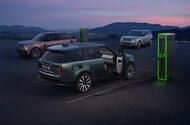
The market for luxury EVs cooled off right as the electric Rangie came to fruition, but it can still win
What of the commercial prospects for Range Rover's long-awaited debut EV?
Around a year ago, JLR loftily claimed to have taken 60,000 'expressions of interest' for the model, which, while not as indicative of demand as actual customer deposits, would seem to suggest quite a lengthy queue was forming equivalent to around three years of production for the regular combustion-engined car.
However, the company hasn't been quite so vocal of late about the length of its waiting list, and during the Range Rover Electric's long gestation period the global market for luxury EVs in this vein has grown, peaked and then quickly collapsed - to the point where Lamborghini and Aston have delayed their debut EVs, Lotus is fitting the similarly conceived Eletre with a petrol engine and Porsche is now working on another generation of petrol-powered Cayenne.
Still, there is cause for optimism: if the Range Rover Electric does indeed look, drive, taste and smell like the fuel-burning version, it will be easy to convince even the most ardent ICE apologist of the lack of compromise that comes with making the switch - and easier still to make a virtue of its improved refinement and off-road controllability.
The success of the Spectre - Rolls-Royce's second-best-selling car - is proof certain types of cars actually suit battery power better than ICE, and surely the Range Rover sits in that camp: its suite of available engines (highly competent though they are) is hardly central to its appeal as a quiet and composed penthouse on wheels.
But there's no denying the stigma attached to EVs at this price point, irrespective of their objective attributes, and the knock-on impact it has on brand cachet and residual values. Case in point: the Audi E-tron GT starts at around £90,000 today or you can buy a visually identical 2022 car for a third of that.
Happily for JLR, the first Range Rover EV uses a platform that has done much to pay its way already, having underpinned many thousands of highly profitable Range Rover models over the past five years, and so the weight of financial expectation isn't perhaps as heavy as it might be for an entirely bespoke product.
Also, like Bentley, Range Rover isn't replacing an ICE car with an EV successor; rather, it's adding a new powertrain option into the mix, which means it doesn't actually need to sell like hot cakes (initially, at least; JLR must still fully electrify its line-up in Europe over the next decade).
Either way, the odds are in its favour from the off: in a segment that remains fairly nascent (largely by dint of other marques' reticence), the Range Rover Electric has the specs, prestige and brand power to make a sizeable splash.
JLR needs to capitalise on its first-mover position and keep the car competitive to ensure continued commercial success like it could and should have done with the Jaguar I-Pace.
Popular Products
No popular products available in this category.