Canada Could Give China’s Biggest Carmaker A Backdoor Into The Us Market
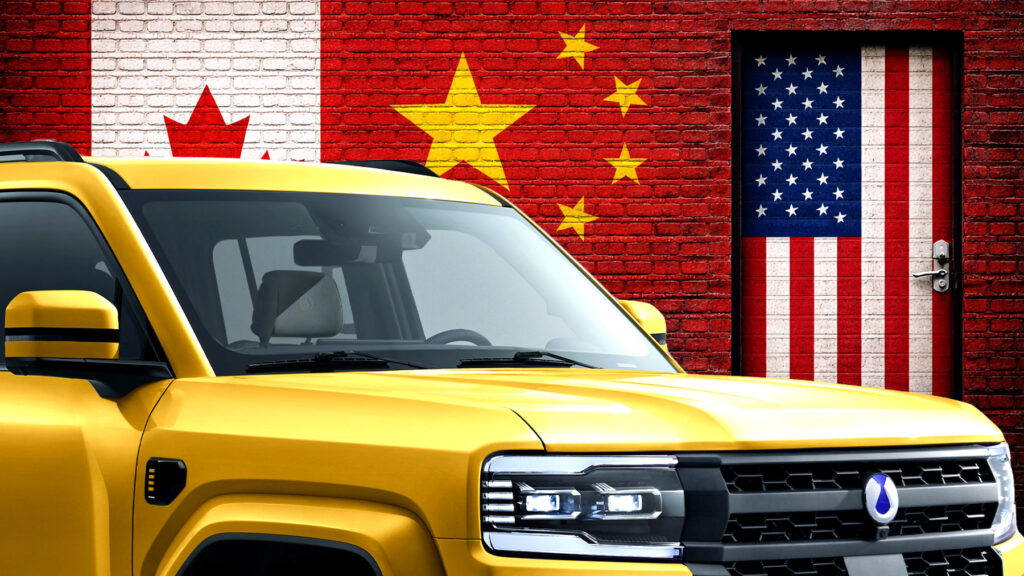
- BYD could enter Canada solo, avoiding joint venture deals entirely.
- Canada may serve as a North American base for production and exports.
- Tariff quota begins at 49,000 units and rises steadily over five years.
BYD is taking on the world, and thanks to a new trade deal between Canada and China, it could start building vehicles in the Great White North. The company’s executive vice president has even admitted an openness to acquire an existing car manufacturer as it looks to further broaden its reach.
Earlier this year, Canada announced it would slash tariffs on Chinese EVs from 100 percent to 6.1 percent, but only for the first 49,000 vehicles per year. This quota will grow to around 70,000 vehicles annually over five years, reopening the door for BYD to enter the Canadian market.
Read: Jim Farley Tests Chinese Pickups, And He Has Something To Say
The Chinese juggernaut was eager to enter Canada a couple of years ago, but shelved its plans in late 2024 when the 100 percent tariffs were announced by then-Prime Minister Justin Trudeau. Now, BYD executive vice president Stella Li said at an event in Brazil that a Canadian launch is back on the cards and that the firm is even considering a manufacturing facility there.
Exactly how BYD would establish itself locally remains undecided. Ottawa has been pushing Chinese automakers toward joint ventures with domestic partners, but Li was blunt on that point, saying she does not believe “a JV will work” for the company.
Can Anything Stop BYD’s Growth?
Canada could provide BYD with a foothold in North America, meaning building models for the local market and having the option of exporting them. Fellow Chinese brands Geely and Chery are also reportedly making moves to enter Canada, although they’ve yet to commit to building cars in the country.
BYD’s growth strategy could involve acquiring an existing automaker. Speaking with Bloomberg, Li suggested the company is interested in taking over a legacy car brand, noting that “We’re open to every opportunity we have,” and that BYD is currently evaluating potential assets.
Acquiring an established automaker could also give BYD an indirect route into the United States. It is a well-worn strategy, and one that has worked before. Geely took control of Volvo and used it to expand its global footprint, while SAIC revived MG into a thriving EV-focused brand. BYD could be looking at a similar playbook.
Popular Products
No popular products available in this category.