Confirmed: Vw Group Plans To Halve Model Range As Part Of Huge Cuts
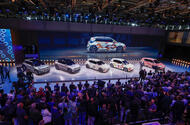
The group's supervisory board has approved plans set to involve 50,000 job cuts, up to four plant closures – and the axing of the historic Seat brand
The Volkswagen Group has confirmed plans to halve its model range, dramatically reduce its technical complexity, cut around 50,000 jobs and potentially close four plants as part of the most extensive restructuring programme in its history – and Autocar has learned that it will retire the Seat brand before the end of the decade.
The measures form part of the German car maker’s newly approved Future Plan 2030, which also calls for sweeping changes to its engineering and manufacturing operations and a major reduction in planned investment.
While the plans have been previously presented by the group's management, they have now been unanimously approved by the VW Group Supervisory Board – the 20-member body that includes shareholders and union representatives. That has been a major challenge for the car maker, given the union presence, but the approval now gives CEO Oliver Blume the go-ahead for a restructuring programme aimed to make Europe’s largest car maker considerably more flexible and more profitable.
Volkswagen describes it as “the most strategically profound transformation programme” in its history.
At the centre of the strategy is a fundamental rethink of Volkswagen’s sprawling model range. By 2035, the number of models offered across its 10 brands are planned to be reduced by around 50%. Volkswagen says concentrating investment on fewer models will enable it to achieve higher volumes for individual cars, reduce costs and create greater economies of scale.
The move is intended to lead to a greater sharing of platforms, electronic architectures, software and components among Volkswagen Group brands than is the case today.
It represents a reversal of the expansion strategy pursued by the Volkswagen Group over previous decades, during which an increasing number of models, derivatives and technologies were used to cover almost every major segment of the global car market.
Future investment will instead be concentrated on what Volkswagen considers its most attractive models and profitable market segments.
Seat brand to be retired by 2030
While not officially confirmed in the VW Group's statements on the restructure, internal documents seen by Autocar confirm that one of the first casualties will be Seat. The 76-year-old Spanish brand will be phased out by the end of 2029 at the latest, while its more upmarket spin-off Cupra will continue as Volkswagen Group’s stand-alone Spanish brand.
The decision completes a strategy that began when Cupra was established as its own brand in 2018 following the Volkswagen Group's failure to purchase Alfa Romeo.
In recent years, Cupra has grown with a broader range of models and a more premium positioning than Seat, allowing the Volkswagen Group to command higher prices while targeting younger buyers.
It has also overtaken its parent brand in sales. During the first half of 2026, Cupra delivered 170,100 cars, compared with 129,600 for Seat.
For the UK, the decision brings an end to a presence stretching back more than four decades. Seat entered the British market in 1985, initially selling cars including the Ibiza and Malaga, before Volkswagen took control of the Spanish car maker in the following years.
More recently, increasing overlap between Seat, Skoda and Volkswagen has left Seat without an obvious position within the group, while Cupra has been allowed to establish a more distinctive identity.
The Future Plan effectively settles the question of whether the two Spanish brands could continue alongside one another: Volkswagen has chosen Cupra.
Model line-up reduction hints at major consolidation
Seat’s demise forms part of a much wider product rationalisation.
Volkswagen hasn’t yet identified which other models will disappear, but reducing the portfolio by 50% suggests considerable consolidation across its brands during the next decade.
The changes will extend underneath the cars as well.
Volkswagen wants to converge on just two principal electrical and electronic architectures for future EVs: its Software Defined Vehicle architecture and the China Electronic Architecture. A separate architecture is planned for future combustion-engined cars in Europe and North America.
Its forthcoming SSP platform programme is also being simplified. Eight planned variants are being reduced to four, with substantially greater component sharing between them. The Volkswagen Group wants to spend less developing fewer combinations of models and technology.
Technical development itself is also set for a major restructuring, with greater responsibility handed to individual lead brands to develop systems for use elsewhere in the group.
This “one-for-all” approach is intended to eliminate duplicated engineering and shorten development times. Volkswagen will simultaneously make greater use of AI, increase engineering activity at lower-cost locations and reduce the scale of its technical development operations.
The group’s software subsidiary Cariad is to be restructured too, with its responsibilities significantly reduced. A detailed plan is due to be tabled by the end of 2026, according to an internal resolution document obtained by Autocar. Despite the cuts, Volkswagen says it will invest a “three-figure billion [euro] sum” in new products, technologies and future growth areas over the coming years.
Its new target is €135 billion (£117bn) of investment in research and development spending between 2027 and 2031.
However, this represents a substantial reduction against previous planning. The Volkswagen Group is cutting around €50bn from earlier investment and R&D over five years.
The German car maker plans to concentrate investment on fewer products rather than spreading development resources across its existing portfolio.
The product overhaul will be accompanied by another reduction in Volkswagen’s workforce. Around 50,000 additional positions worldwide, including management jobs, are expected to disappear beyond reductions already covered by existing programmes.
Volkswagen currently employs around 663,000 people worldwide and operates 111 production facilities.
Management restructure, plants under threat
Management itself is also being reorganised. Volkswagen intends to introduce leaner management structures, and shorter decision-making chains, accompanied by a new performance and bonus system.
It has also acknowledged that it has more than 500,000 cars’ worth of excess annual production capacity in Europe.
As a result, the long-term future of its factories at Emden, Zwickau and Hanover, together with Audi’s Neckarsulm plant, is uncertain.
Under current planning, Volkswagen says competitive future product allocation can’t be secured for Emden and Zwickau from 2031, Hanover from 2032 and Neckarsulm from 2034 – but the plants haven’t yet been condemned to closure.
The Volkswagen Group says it will develop a new European production structure by the end of June 2027, while alternative uses, including weapons and military vehicle production, for the four factories are also being considered.
The plants could still produce future models if sufficient reductions in manufacturing costs can be achieved, the internal resolution document points out.
This represents a major shift in Volkswagen’s approach to its German industrial base: future model allocation will increasingly depend on individual plants being internationally cost competitive rather than simply replacing an outgoing model with its successor.
China is also taking on a different role within Volkswagen’s global manufacturing strategy.
Rather than serving primarily as a huge domestic market, Volkswagen says it intends to use its Chinese engineering and production base to support other regions, possibly opening the way for Chinese-produced models to be sold in Europe.
The company says it is adapting to lower expectations for overall Chinese market growth while expanding exports towards what it describes as the “Global South”.
Its target is to export 250,000-300,000 Chinese-built cars annually by 2030 to markets including south-east Asia, Oceania, the Middle East, Africa and South America.
Volkswagen expects the programme to generate more than €1.5bn in additional annual revenue by 2030.
Meanwhile, North American operations are set to concentrate on the market segments generating the greatest absolute profit, including SUVs, pick-ups and more rugged models from the resurrected Scout brand.
Underlying all of the changes is a more conservative assumption about Volkswagen’s future size.
The group is planning annual sales of nine million cars by 2030 rather than relying on a return to the higher volumes achieved before the pandemic.
Its financial ambition is nevertheless considerably greater. Volkswagen wants to achieve an operating margin of 9% by 2030, equivalent to operating profit of approximately €31bn.
For perspective, Volkswagen sold nine million cars in 2025, generating revenue of €321.9bn and operating profit of just €8.9bn, down from €19.1bn the previous year.
This makes Future Plan 2030 less about making Volkswagen bigger than making its existing scale substantially more productive.
“We are taking responsibility for our entire workforce, for our partners and for industrial jobs worldwide,” said Blume. “Over the coming years, we will invest a three-figure billion sum to make our iconic brands even more attractive, stronger and more competitive.”
Popular Products
No popular products available in this category.