Ingenium To Electric: Jlr's Engine Factory Is Now An Ev Powerhouse
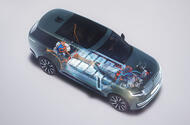
JLR invested £356 million to convert its Wolverhampton factory to EVs, and now it's up to speed
A boast about production speed during our visit to Jaguar Land Rover’s overhauled propulsion plant was a nice reminder that car companies aren’t just competitive about their product.
JLR’s former Engine Manufacturing Centre in Wolverhampton changed its name to the Electric Propulsion Manufacturing Centre in 2024 to reflect its £356 million investment to build electric motor/gearbox units and assemble battery packs.
Even before JLR’s second generation EVs go on sale – led by the new Range Rover Electric – the plant reckons it holds the UK speed record for building combined motor/gearbox/invertor units in the UK at 95 jobs per hour.
It’s perhaps an indictment on the UK’s slowness to embrace electric car manufacturing that Wolverhampton only has one serious competitor to beat: Ford’s combined gearbox and electric drive unit factory in Halewood, Merseyside, which supplies both the Puma and Transit plants.
The shift to electric made by both JLR in Wolverhampton and Ford at Halewood is crucial for car companies to maintain jobs in the less glamorous but still vital engine and gearbox manufacturing facilities.
The skill sets are quite similar. The electric drive unit housing is needs to be created from essentially a lump of metal, much like engines or gearboxes. “The machining line is very similar to that for an ICE block,” Richard Weaver, head of propulsion assembly at Wolverhampton, told us. They transitioned existing CNC machines for the new task.
The hall for making the drive units used to build four-cylinder diesel engines. They, along with the six-cylinder Ingenium engines are still made on site but this electric hall represents the future for Wolverhampton while still retaining the flexibility to adjust to whatever speed that future arrives at.
The level of precision needed to build the electric motors and transmissions for the Range Rover Electric, new Range Rover GT, Jaguar Type 01 and the smaller Defender ‘Sport’ is a big step up from combustion engines. Tolerance levels can’t exceed 80 microns (about the thickness of a human hair), vs around 120 microns for combustion engines, Weaver said. Nothing can be allow to contaminate the final product. “Cleanliness is another level,” Weaver added.
The factory builds the permanent magnet motors from scratch, including winding the copper coils in the stators. These are beefy too, supplying up to 348bhp each in the Range Rover Electric, more than double that the 167bhp units built for the Ford Puma and Transit further north.
Quality is key. “We have more quality checks here than anywhere,” Weaver said. Only the invertors are bought in, just as they are at Ford in Halewood.
That speed means that the electric drive unit line has the capacity to make 419,000 a year, which sounds a lot until you realise each Land Rover and Jaguar product needs two per car to make them four-wheel-drive.
The battery module and pack lines are currently running at one shift to package the cells for all JLR’s new EVs (PHEV packs and EDUs are assembled at JLR’s Hams Hall plant). There’s more staff here at 400 per shift against 66 for the more automated EDU line.
The pack (weighing 736kg for EMA platform cars like the GT) sits in an aluminium frame weighing 80kg. These are weighty because there’s a lot of cells, up to 138kWh for the MLA platform used by the Range Rover and 127kWh for the JEA Jaguar platform.
The cells don’t come from the UK – yet. Currently they are supplied by AESC from China rather than the company’s plant in Sunderland, but next year all going to plan they’ll be sourced from JLR parent Tata’s battery company Agratas at its new facility in Somerset.
In total at Wolverhampton JLR has added 13 battery and electric drive unit manufacturing lines, supported by five and half miles of conveyors.
The Wolverhampton investment is good to see at a time when so much UK automotive manufacturing is playing a wait and see game, on legislation, pricing, competition, EV take-up and everything else. Nissan for example has reportedly cancelled a planned electric drive unit facility at its Sunderland facility that was to be built by its subsidiary JATCO.
Car companies are under huge pressure to cut costs to match the Chinese on costs and that means sourcing parts as cheap as possible.
JLR also faces cost pressures of its own as it juggles rapidly shifting demand globally, but repurposing its Wolverhampton facility for its EV powertrains both retains jobs, gives it control over crucial componentry and keeps local content for its models high, which helps when the UK next has to negotiate trade deals with countries anxious not to be helping a third country.
Popular Products
No popular products available in this category.