The Success Of Hot Wheels Is Proof Youngsters Still Love Cars
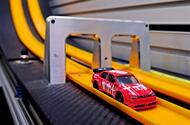
Have youngsters fallen out of love with cars? The popularity of 1:64 models would suggest not
Are young people falling out of love with cars? It’s a question I’ve heard a lot in recent years, prompted in part by the falling proportion of youngsters who hold driving licences.
Common causes cited include the rising cost of buying and running cars; the lack of affordable used options; the increasing prevalence of ride-hailing apps, e-bikes and e-scooters; kids being too busy on their phones to want to maintain a car; and the feeling that, frankly, quite a lot of modern cars are pretty boring.
I’m not sure all those arguments are quite the factors some suggest, but let’s be honest: while that new Chinese SUV might be really practical and surprisingly affordable, 10-year-old you wouldn’t be sticking a poster of it on your bedroom wall. It’s not a leap from there to think that cars will continue to get less interesting, particularly as they continue to transition from analogue to digital by design.
Yet I’ve just returned from a car launch that has made me truly optimistic for the future and reinforced the fact that people of all ages still love cars and still care about cars – and, crucially, still think cars are fun. The unusual element is that the launch I was attending was for a line of toy cars.
Hot Wheels, to be precise. The brand was launching a new campaign called Challenge Accepted, which continues a hugely successful push towards the collectibles market for older buyers. As part of that, it has named a series of celebrity legends – footballer Robert Lewandowski, Brazilian music star Maluma and influencer Supercar Blondie – and given each their own limited-run customised model.
For the record, I couldn’t name you a single Maluma song, but his customised Toyota Land Cruiser FJ60 was my clear favourite.
The cars were revealed at a swish event in Venice Beach, California, and while the models were 1:64 scale, the event was as big and outlandish as any other car launch I’ve been to. There was a glamorous venue outside a nightclub, a handful of celebrities, loud music, some life-size Hot Wheels recreations, plenty of outlandishly dressed influencers and at least one slightly jetlagged British car journalist trying to work out what on earth he was doing there or what ‘Fast Lane Fashion’ actually meant as a dress code.
But the reason I was there was to understand just what big business Hot Wheels have become. In terms of unit sales, it's the world’s biggest toy: globally, around 22 cars are sold every second. It's the most profitable of Mattel’s stable of brands, ahead of Barbie (and fellow car line Matchbox). And its sales are continuing to grow each year.
That growth is driven by two strands, including the aforementioned adult market for collectibles. Hot Wheels has expanded its range of higher-end lines, up to and including a members-only Red Line Club that gives access to limited editions. Those models are higher-margin premium lines, but the core of Hot Wheels sales continue to come from its ‘mainline’ models – the ones you will find in many shops that cost around £2 a piece, which remain hugely popular with kids.
As well as the event launch, I visited the Hot Wheels design studio. You can read and hear more from that in Autocar in the coming weeks. But perhaps the most gratifying takeaway from that visit is that every single member of the Hot Wheels team I met was a massive car fan. They love cars, and when they’re not involved in creating model cars, they’re admiring, driving, racing, tuning or modifying real cars.
For example, British design chief Craig Callum has two hot rod racers and still owns his first car, an original Mini, which he now uses as a daily driver. Yes, in Los Angeles.
That passion is put into the models they create. But while you can absolutely see it in the incredible detail put into those higher-end lines, just as much care goes into the mainstream ones. Possibly more: a Hot Wheels toy can’t go into production until it can successfully complete a loop-the-loop on a test track. To the design team, it’s as important that a Hot Wheels car performs right than it looks right.
It’s also interesting to know which models sell. The team would only mention general trends, but it’s clear that SUVs and EVs have yet to prove that appealing to Hot Wheels buyers. Currently, models of small, affordable, analogue and fun cars – in particular JDM machinery – are a major draw.
Now, there’s no real science here. You can argue the expanding success of Hot Wheels doesn’t have any real relevance for the car world, that you can’t draw a line from the popularity of toy cars to a sustained passion for cars. But it strikes me as encouraging, in several ways.
First, that in this always online generation, vast numbers of children are still embracing analogue toys that, at base level, haven’t changed that much for decades. And second, that the younger generation still see cars are fun and desirable. And as they grow up with Hot Wheels, they will learn about the sort of desirable, fun cars that we all love.
Perhaps there are lessons for the car industry. Here’s a toy firm making huge amounts of money by selling small, cheap cars at a relatively low mark-up to millions of passionate buyers.
The question really is: how do we convert that passion for toy cars into buyers of real ones?
Popular Products
No popular products available in this category.