Volkswagen Mission Efficiency Sets New Benchmark For Ev Efficiency
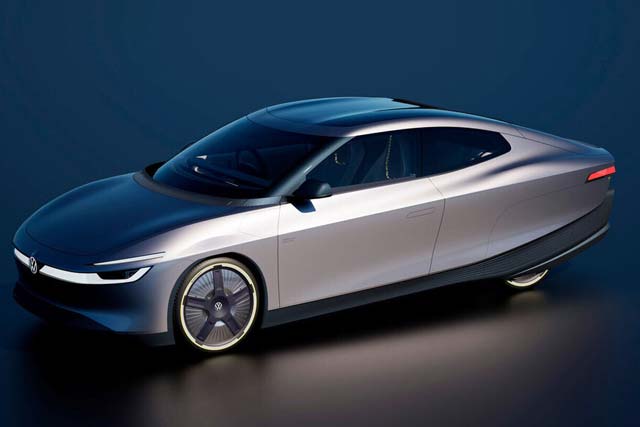


Volkswagen has unveiled the Mission Efficiency, a near-production electric vehicle prototype designed to demonstrate just how far EV efficiency can be pushed using technology that could eventually reach high-volume production models.
The highly aerodynamic electric coupe has set three new records, including a drag coefficient of just 0.158, an ideal-trip consumption figure of 6.48 kWh/100 km, and an exceptionally low real-world consumption figure recorded over a 1,278-kilometer road trip.
Rather than relying on exotic technology developed exclusively for a prototype, Volkswagen says the Mission Efficiency uses production-oriented components, including the electric drive system and battery technology developed for the upcoming ID. Polo.
Volkswagen Mission Efficiency Sets Three Records
The first record is the vehicle’s Cd value of 0.158, which Volkswagen says is a new benchmark for road-approved cars. The extremely low drag coefficient is central to the Mission Efficiency’s efficiency, particularly at higher speeds.
The second record came during an idealized efficiency run. At a constant 68 km/h, with no elevation changes and auxiliary systems such as air conditioning switched off, the prototype consumed just 6.48 kWh/100 km.
The third achievement is arguably more relevant to everyday EV drivers. During a documented road test covering 1,278.36 km, the Mission Efficiency achieved an average consumption of 7.51 kWh/100 km including charging losses. Without charging losses, consumption was just 6.89 kWh/100 km.
The journey started at Volkswagen’s development center in Wolfsburg, Germany, and continued through Poznań, Poland, and Olomouc, Czech Republic, before reaching Vienna, Austria.
The average speed was 67.72 km/h, while the highest speed reached 138 km/h. Remarkably, the vehicle’s 54.9-kWh net battery needed to be charged only once during the trip. When it arrived in Vienna, the prototype still showed a remaining range of 164 km.
Production EV Technology From the ID. Polo
One of the most important aspects of the Mission Efficiency is that Volkswagen isn’t presenting it simply as an experimental technology demonstrator.
The prototype uses the 99-kW (135-PS) electric motor and high-voltage battery developed for the ID. Polo. The drivetrain is designed for Volkswagen vehicles based on the MEB+ platform with front-wheel drive.
Volkswagen says the lightweight, efficient drive system demonstrates the potential of its next-generation mass-market EV technology.
The Mission Efficiency therefore provides a glimpse at how future Volkswagen electric cars could deliver greater range without simply installing larger and heavier batteries.
Extreme Aerodynamics Are Key to Its Efficiency
The Mission Efficiency’s remarkable efficiency begins with its shape.
The vehicle has a drag coefficient of 0.158 and a frontal area of only 2.08 square meters. Its body uses a streamlined, teardrop-inspired profile designed to minimize air resistance.
Several aerodynamic details contribute to the result, including active cooling-air flaps, covered rear wheels, a fully enclosed underbody, frameless windows and flush door handles.
Volkswagen says the aerodynamic improvements become particularly significant above 80 km/h. At those speeds, the Mission Efficiency consumes more than 30% less energy than a standard ID. Polo.
At 140 km/h, the prototype reportedly requires approximately the same amount of energy as an ID. Polo traveling at 100 km/h.
The design also draws inspiration from Volkswagen’s XL1, the ultra-efficient plug-in hybrid introduced in 2013.
At 4,775 mm long and just 1,392 mm tall, the Mission Efficiency is a low-slung 2+2 coupe. Despite its focus on aerodynamic performance, it offers 481 liters of luggage space, along with additional storage beneath the rear seats and in the sides of the body.
The rear seats are suitable for passengers up to approximately 1.60 meters tall, making the prototype theoretically usable as a small family car.
The body combines elements from the ID. Polo with a lightweight aluminum structure and components made from carbon-fiber-reinforced polymer and aramid composite materials.
New Brake Technology Improves Efficiency
Volkswagen has also focused on reducing energy losses through the braking system.
The front axle uses a MacPherson design and hydraulic brakes derived from the ID. Polo. At the rear, however, the Mission Efficiency introduces an electromechanical brake.
The system reduces friction losses and eliminates the need for conventional brake lines and brake fluid at the rear. It also enables more flexible brake-force distribution and can improve regenerative braking.
Volkswagen developed the system together with AUMOVIO, which also supplies braking technology for the ID. Polo.
The prototype has received EU road approval and complies with the relevant safety, structural and crash requirements.
Wheels and Tires Play a Major Role
Volkswagen’s efficiency work extends to the wheels and tires, an area that can have a surprisingly large effect on EV consumption.
The company estimates that wheels account for roughly 25% to 30% of aerodynamic resistance. The Mission Efficiency therefore uses specially designed wheel arches, patented rim deflectors and flat, aerodynamic hubcaps to reduce turbulence.
Volkswagen also worked with Continental to develop a low-rolling-resistance tire based on the EcoContact 7 series.
The prototype tire has a rolling resistance of 4.9 kg per tonne, approximately 25% below the threshold for the EU’s highest Class A rolling-resistance rating.
The sidewall and tread compound were optimized to reduce energy losses as the tires roll, helping increase efficiency and potentially extend driving range.
Solar Panels Add More Range
The Mission Efficiency also incorporates solar power.
A 370-watt photovoltaic system is integrated into the glass roof and trunk lid. The solar array supplies electricity to the vehicle’s onboard electrical systems and can provide additional range depending on weather, location and season.
Under favorable conditions, Volkswagen says the solar system can increase real-world range by up to 30 km per day.
Weight reduction is another part of the efficiency strategy. The interior uses lightweight panels, while a portable Bluetooth speaker replaces a conventional speaker system. Volkswagen also uses a “bring your own device” approach, allowing a smartphone or tablet to serve in place of a dedicated infotainment display.
A Glimpse at More Efficient Volkswagen EVs
The Mission Efficiency is unlikely to become a conventional production model in its current form. Its significance lies instead in demonstrating how multiple relatively practical technologies can work together to dramatically reduce energy consumption.
Aerodynamics, low rolling resistance, lightweight construction, efficient electric motors, regenerative braking, solar power and production-oriented battery technology all contribute to the result.
Volkswagen’s prototype shows that improving EV range doesn’t necessarily require dramatically larger batteries. Reducing the energy required to move the vehicle can deliver similar benefits while potentially lowering weight, cost and energy consumption.
With a 0.158 drag coefficient and real-world test consumption of just 7.51 kWh/100 km including charging losses, the Mission Efficiency offers a compelling demonstration of what highly optimized electric vehicles could achieve in the future.
The post Volkswagen Mission Efficiency Sets New Benchmark for EV Efficiency appeared first on Electric Cars Report.
Popular Products
No popular products available in this category.