Vw's New Concept Changes The Ev Game - Why Can't We Buy It?
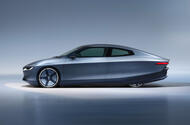
The Mission Efficiency is based on the showroom-ready ID Polo, yet won't be following it into production
Reading through the towering achievements of Volkswagen's latest concept, cooing approvingly at its dramatic, pebble-like silhouette and marvelling at its close relationship with a £25k supermini that's already on sale, you might ask the obvious question: why don't they just build it?
No current car remotely resembles the Mission Efficiency, so if Volkswagen could start producing it using largely existing components, it would be effectively unrivalled and you might think it would be a lucrative endeavour.
But that would be to ignore the inconvenient truth that technical capability and real-world viability are so often opposed concepts, and what looks appealing on paper doesn't necessarily translate into a showroom smash hit.
We want cars to be as tiny and as light as possible, but we also want them to have good head and leg room, decent all-round visibility, punchy sound systems, airbags and (heaven forfend) chunky touchscreens with smartphone mirroring.
Engineers need space for all the mandated safety equipment and crash structures they have to integrate, too, and designers want everything that leaves their studio to command presence with a beefy stance and eye-catching proportions, rather than shrink discreetly into the background.
Which is why even today's lightest and most efficient EVs can't come close to matching this concept for real-world efficiency. And it's why impressive experiments like this are destined to remain just that, for now: commercial viability and legislative compliance will always outrank technical potential.
So while we can be assured of the Mission Efficiency's potential to influence future production cars, it's unlikely to ever follow the XL1 in making it to customers' driveways - and that's a shame.
Popular Products
No popular products available in this category.