What's London In For? My First Taste Of A Self-driving Taxi
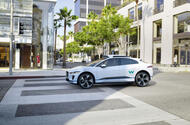
With autonomous cabs landing in London, I tried a Waymo in San Francisco for an idea of what to expect
The driverless taxi of the future flunked the first test I set for it.
You will probably remember Waymo, the Google-backed outfit that started pilot testing (rarely has that term been less well applied) what it called 'robotaxis', or driverless cabs, on North American roads back in 2017.
Today it operates almost 4000 of them across ten US cities. With its driverless Jaguar I-Paces due to begin plying for hire in London in the near future, I considered it my duty on a recent visit to San Francisco to hop into one on Mission Street and see what Londoners have in store - especially pertinent as Uber and Wayve have just put their self-driving cabs into service on the capital's streets.
The 'hopping in' bit was probably the least satisfactory part. You hail a Waymo using a smartphone app, inserting your location and destination a bit like you would for an Uber.
I was staying in a hotel with one of those 'drive thru' valet areas. The footprint of the hotel itself extended right up to the edge of the pavement, however, the drive-thru porte-cochère (my thanks to Google not only for the ride but also the architectural terminology) being contained within that ground-floor footprint.
As far as any map might be concerned, then, it might have seemed like a portico that didn't actually exist; but an actual driver, using his highly developed eyes and brain, would have found out differently on arrival.
The robotaxi that turned up (within about 15 minutes) didn't even attempt to come directly to the spot that I specified (the hotel's front door). I would have been very impressed indeed with its problem-solving AI if it had, but I can't speak for how the hotel door staff might have felt.
Instead, there it was—with a spinning lidar sensor on its roof and rotating lidar poles on each corner, making it look like something that ought to include on-board barber service—stopping on the wrong side of the road, half a city block away, while at least partly obstructing a live lane of traffic.
And there I was, suddenly made responsible for a problem not of my making - but somehow responsible all the same.
"Are you really getting in that thing?" asked a smiling local from the driver's window of her parked Lexus. By simply pulling up in the live lane of traffic, it had blocked her in.
Luckily she didn't seem too miffed, as I did my best to remove the obstruction promptly by diving into the Waymo's back seat and prodding the touchscreen in the back row to tell it to depart. Off we duly went. I've had one or two rides in driverless vehicles over the years, but mostly in set-up test environments nowhere as alive with hazards as real-life San Fran. Wouldn't you know it, though, the Waymo did incredibly well.
We moved off smoothly, right on the cue of the lights, and made progress assuredly with the flow of traffic. It knew it could 'turn right on a red' (one up on me the first time I drove in the US) and did so safely. It changed lanes judiciously, seemingly aware of its surroundings and declining to move into the path of other vehicles. It coped with narrow lane restrictions and unexpected moves from vehicles that it was following.It also came nowhere near being wiped out by one of the city's famous cable trams, you may be disappointed to read.
When the journey ended and the time came to park again, the Waymo did better than it had on pick-up, as if it wanted to make amends. It selected a space about 50 yards short of my Target (I really was, by coincidence, going to the US retail outlet) and let me out directly onto the kerb, without blocking anyone.
The most impressive thing? The actual city driving, I'd say. Once it was moving, the Waymo handled city traffic like a seasoned professional.
I'd certainly get in one again—although I'd be a little smarter about exactly where I asked it to collect me.
Popular Products
No popular products available in this category.