At&t Ceo Holds Firm Stance On Elon Musk's Spacex Phone Strategy
SpaceX went public this year. For the first time, the company reported its financials to outside investors, and the connectivity business was larger than most expected.
The company’s first earnings call produced a comment that moved markets. President Gwynne Shotwell said SpaceX expects to take “quite a few” customers from traditional wireless carriers because Starlink’s service would be better, Benzinga reported.
Shares of AT&T, Verizon, and T-Mobile declined after her remarks.
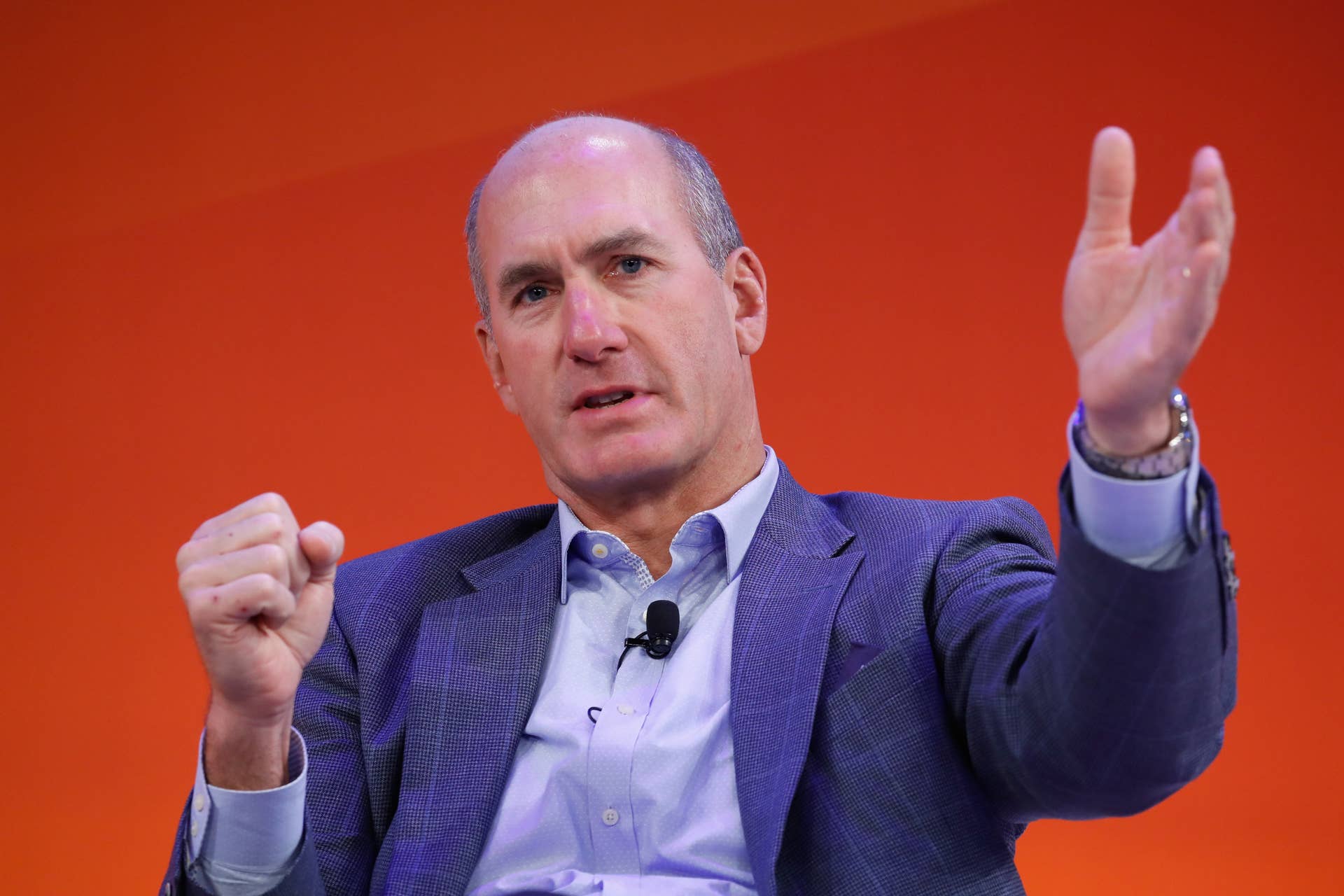
AT&T’s chief executive had a detailed response. John Stankey told Axios that SpaceX’s proposed path into consumer wireless is not economically or technically feasible. He also laid out what AT&T is building in the meantime.
Also read: Elon Musk just handed Nvidia investors another big win
SpaceX wants to skip the cell tower entirely
SpaceX wants to put small cellular base stations next to Starlink dishes at homes and businesses. The idea is that more ground stations means more capacity. Musk says phones connected through the system would get better service than they do today from traditional cell towers.
The design would let SpaceX avoid building a conventional macro cell network. Instead of erecting large towers across the country, the company would rely on small stations installed on private property. That would reduce the infrastructure burden significantly, at least in theory.
SpaceX already has real scale in satellite connectivity. The company reported 12 million subscribers and 10,200 satellites covering 167 countries as of June 30, according to its first public earnings report, as Fox KTVU reported.
Connectivity accounted for 55% of SpaceX’s revenue, making it the company’s largest business segment.
Shotwell did not say that SpaceX hopes to compete one day. She said it expects to take customers from existing carriers. That is a different kind of statement.
AT&T’s CEO says the math does not work
AT&T’s CEO took direct aim at the economic argument. Stankey said building out SpaceX’s proposed home base station network would cost roughly as much as constructing a conventional macro cell network capable of delivering comparable service. The savings SpaceX is counting on may not be real at the required scale.
“If that were viable, we would be installing antennas on our massive fiber network,” Stankey told Axios.
Beyond cost, Stankey raised regulatory and practical obstacles. Transmitting cellular signals from private homes requires permissions that do not exist at scale today. Homeowners, local regulators, and federal agencies all have a role, and clearing that path across a national footprint would take considerable time and effort.
Stankey also addressed the performance gap directly. He said satellite service, even with significant improvement over the next decade, will not match fiber. That is the technology AT&T has decided to build around.
AT&T is spending $3 billion on a different answer
AT&T is not defending a static position. The company signed a $3 billion agreement with Corning, announced on Sept. 29, to supply fiber infrastructure.
Stankey described fiber as AT&T’s disruptive play rather than a defensive one. Rather than trying to hold off a challenge the company cannot answer, he argued that the company is building infrastructure that others will have to compete with.
The investment case rests on demand growth. AT&T expects rising use of artificial intelligence, cloud computing, and AI-powered applications to drive demand for high-capacity, low-latency connectivity.
Fiber delivers both, and the network AT&T is building is well-positioned for those workloads.
The returns take time. Stankey acknowledged that fiber buildouts typically take six to eight years to pay off, as Axios reported.
AT&T is making the investment now because it believes the value of that infrastructure will keep growing as the applications that need it become more central to how businesses and consumers operate, Broadband Breakfast noted.
Wall Street sees a narrower threat than SpaceX suggested
Wall Street is not forecasting a rapid displacement of major carriers.
Bernstein analyst Madison Rezaei said cell towers are not going away, regardless of how SpaceX designs its network, CNBC noted. She cited technical challenges with indoor satellite coverage, limited consumer brand recognition in wireless, and the reluctance most subscribers show when asked to switch carriers.
More SpaceX:
- Goldman Sachs revamps SpaceX stock estimates before crucial earnings test
- Musk called Anthropic ‘evil’; SpaceX’s deal with it nearly doubled
- Morgan Stanley doubles down on SpaceX stock verdict for investors
Rezaei sees a real but limited path for Starlink Mobile. Rural and remote areas, maritime coverage, and disaster-response situations are the markets she expects SpaceX to reach. Those are areas where terrestrial networks are absent or unreliable, not where AT&T, Verizon, and T-Mobile already have dense coverage.
In that scenario, SpaceX is a supplement, not a replacement. The sell-off in telecom stocks after Shotwell’s remarks may have been a reaction to a threat that is smaller and more specific than her words suggested.
Why Stankey’s skepticism is both right and risky
Stankey’s pushback is familiar. Big carriers have been told they face disruption before. Cable companies tried wireless. Tech companies explored their own networks.
None of it replaced what AT&T, Verizon, and T-Mobile built. Stankey is drawing on that record.
SpaceX is not a typical challenger. The company has real infrastructure, real subscribers, and a founder who has entered settled industries before and changed them. That makes a flat dismissal harder to sustain.
What AT&T is really arguing is that the specific approach SpaceX has proposed has structural flaws. Not that satellite cannot compete, but that this plan faces cost and regulatory barriers, which Starlink cannot circumvent cheaply.
Fiber, Stankey said, is what AT&T will have ready when the competition does arrive in earnest.
Whether that timing works in AT&T’s favor depends on how fast SpaceX moves and how quickly the regulatory picture changes.
For now, Stankey’s position is that he has seen the math, and the math does not work. The market will keep watching to find out if he’s right.
Related: AT&T CEO drops 4-word verdict on new Apple iPhone Duo
Popular Products
-
 Gas Detector Meter
$311.56$155.78 -
 Foldable Garbage Picker Grabber Tool
$93.56$46.78 -
 Portable Unisex Travel Urinal
$49.56$24.78 -
 Reusable Keychain Pepper Spray – 20ml
$21.56$10.78 -
 Camping Survival Tool Set
$41.56$20.78