Barrett And Gorsuch Try, Fail To Offer Coherent Defenses Of The Major Questions Doctrine
In late February, the Supreme Court ruled 6-3 that the Trump administration illegally collected over $100 billion in tariff revenue from American consumers and businesses. The decision by the nine-member Court included opinions by seven of the justices totaling nearly 170 pages. And most of those pages are about the “major questions doctrine,” whose adherents argue that presidents need “clear” authorization from Congress whenever they pursue a policy with “vast economic and political significance.” Trump claimed that the statutory authority for his tariff regime came from the International Emergency Economic Powers Act, a statute Congress enacted in 1977 that doesn’t actually include the word “tariffs.”
All six of the Republicans on the Court accept the major questions notion as legitimate. They invoked it in August 2021, for instance, to block the Centers for Disease Control’s COVID-19 evictions moratorium. And in January 2022, to block the Occupational Safety and Health Administration’s Covid-19 vaccine mandate. And in June 2022, to block the Environmental Protection Agency from regulating greenhouse gas emissions. And in June 2023, to block the Department of Education from implementing student loan forgiveness.
So, in theory, Learning Resources v. Trump should have been an easy case for them. Yet only three of the Court’s conservatives—Chief Justice John Roberts, joined by Justices Neil Gorsuch and Amy Coney Barrett—thought Trump’s tariffs should be struck down on major questions grounds, which has only ever garnered the support of a majority of the Court when applied against President Joe Biden.
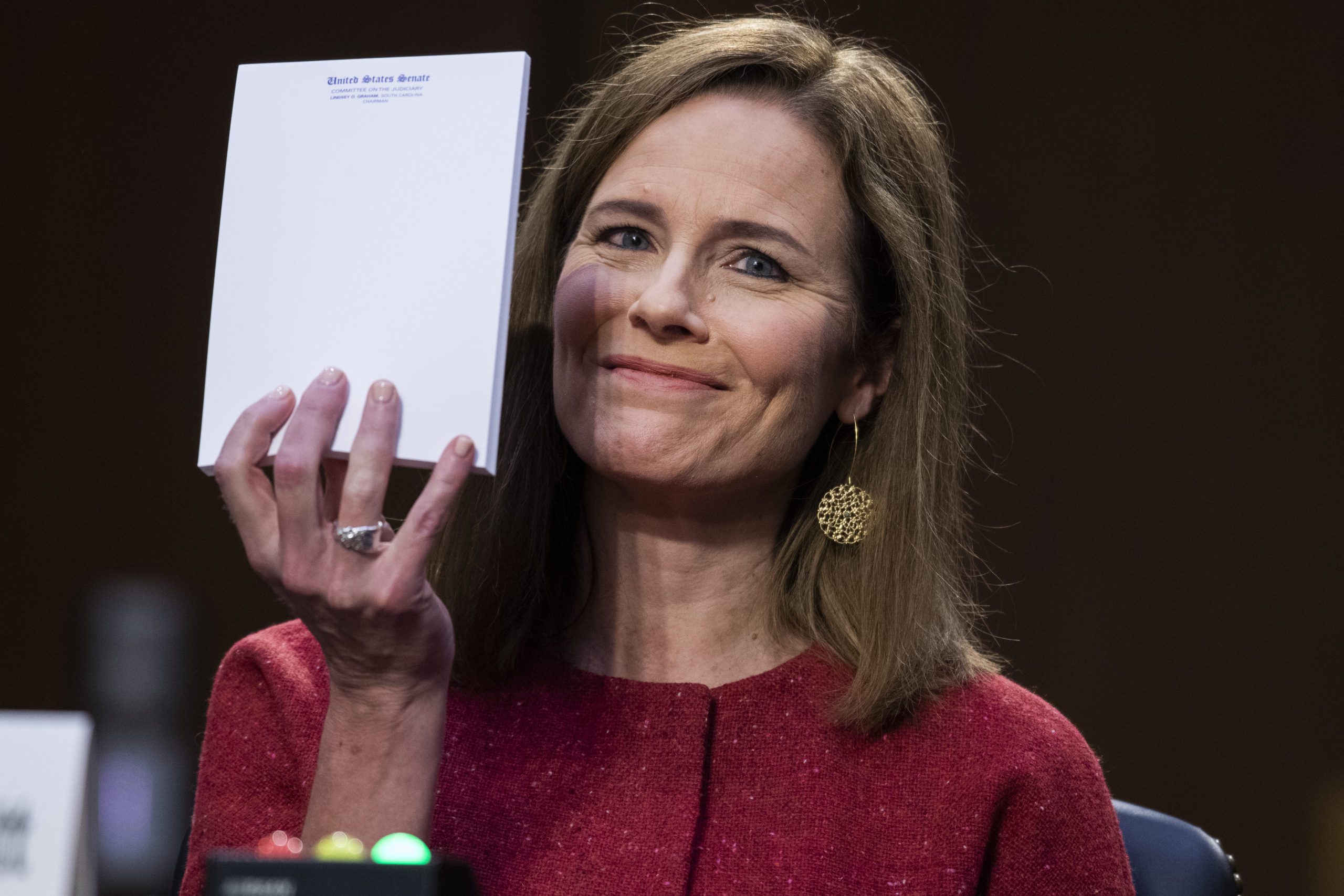
Gorsuch and Barrett seem to recognize that this looks bad. Both authored concurring opinions that aimed to explain and defend the major questions doctrine as a valid interpretive principle that—in theory, again—can be used against any future presidential administration, whether Democratic or Republican. But their defenses lay bare that the doctrine is nothing more than a convenient tool for the Court’s conservatives to amass power and frustrate policies that conflict with their ideological preferences.
Barrett’s concurrence contends that the major questions doctrine is no different from ordinary statutory interpretation. Judges must situate text in context and use “common sense” just like “all those who use language to communicate,” she said. Barrett presents the major questions doctrine as one way for judges to evaluate that context and “ascertain a text’s most natural meaning.”
In a competing concurrence, Gorsuch chided Barrett for trying to “soften” the major questions doctrine by mischaracterizing the Court’s precedents. “Commonsense principles of communication do not explain many of our major questions cases—this one included,” he said. He went on to recount the Court’s previous applications of the doctrine, including its ruling that “the term air pollutant does not include greenhouse gases” even though “greenhouse gases pollute the air,” and its conclusion that “the phrase ‘regulations necessary to prevent the spread of communicable diseases’ does not include eviction moratoriums” even though “eviction moratoriums were necessary to prevent the spread of COVID–19, a communicable disease.” Gorsuch further acknowledged that commonsense readings of the statutory language gave the Biden administration “a strong argument” for lawful authority in each of the major questions cases in which the Court held the administration’s actions unlawful anyway.
Still, though, Gorsuch claimed that the Court was right to employ the principle because judges need to rein in presidents. “Highly resourceful members of the executive branch have strong incentives to exploit any doubt in Congress’s past work to assume new power for themselves,” he said. “The major questions doctrine helps prevent that kind of exploitation.”
This justification troubled Barrett. “At times,” she said, Gorsuch’s opinion “suggests” that the real purpose of the major questions doctrine is not to help judges figure out what a law is supposed to mean, but to help judges put roadblocks in the path of the president. Barrett criticized this “judicial flex” as falling outside of the Court’s job description.
“If the Constitution permits Congress to give the Executive a particular power, who are we to get in the way?” Barrett asked. “Does the Judiciary really protect the Constitution by impeding the constitutional action of another branch?”
Gorsuch and Barrett’s concurrences set out to defend the major questions doctrine in different ways, but ended up supporting some of the strongest arguments against it. The major questions doctrine empowers the Republican majority to make nonsensical rulings that limit the executive branch whenever they feel the executive is acting too big for its britches. It is not about finding the right answer, but the answer that the majority wants.
The post Barrett and Gorsuch Try, Fail to Offer Coherent Defenses of the Major <span class="dewidow">Questions Doctrine</span> appeared first on Balls and Strikes.
Popular Products
-
 Classic Oversized Teddy Bear
$23.78 -
 Gem's Ballet Natural Garnet Gemstone ...
$171.56$85.78 -
 Butt Lifting Body Shaper Shorts
$95.56$47.78 -
 Slimming Waist Trainer & Thigh Trimmer
$67.56$33.78 -
 Realistic Fake Poop Prank Toys
$99.56$49.78