Can You Have A Tfsa, Rrsp And Fhsa At The Same Time? Yes. Here’s How They Fit Together
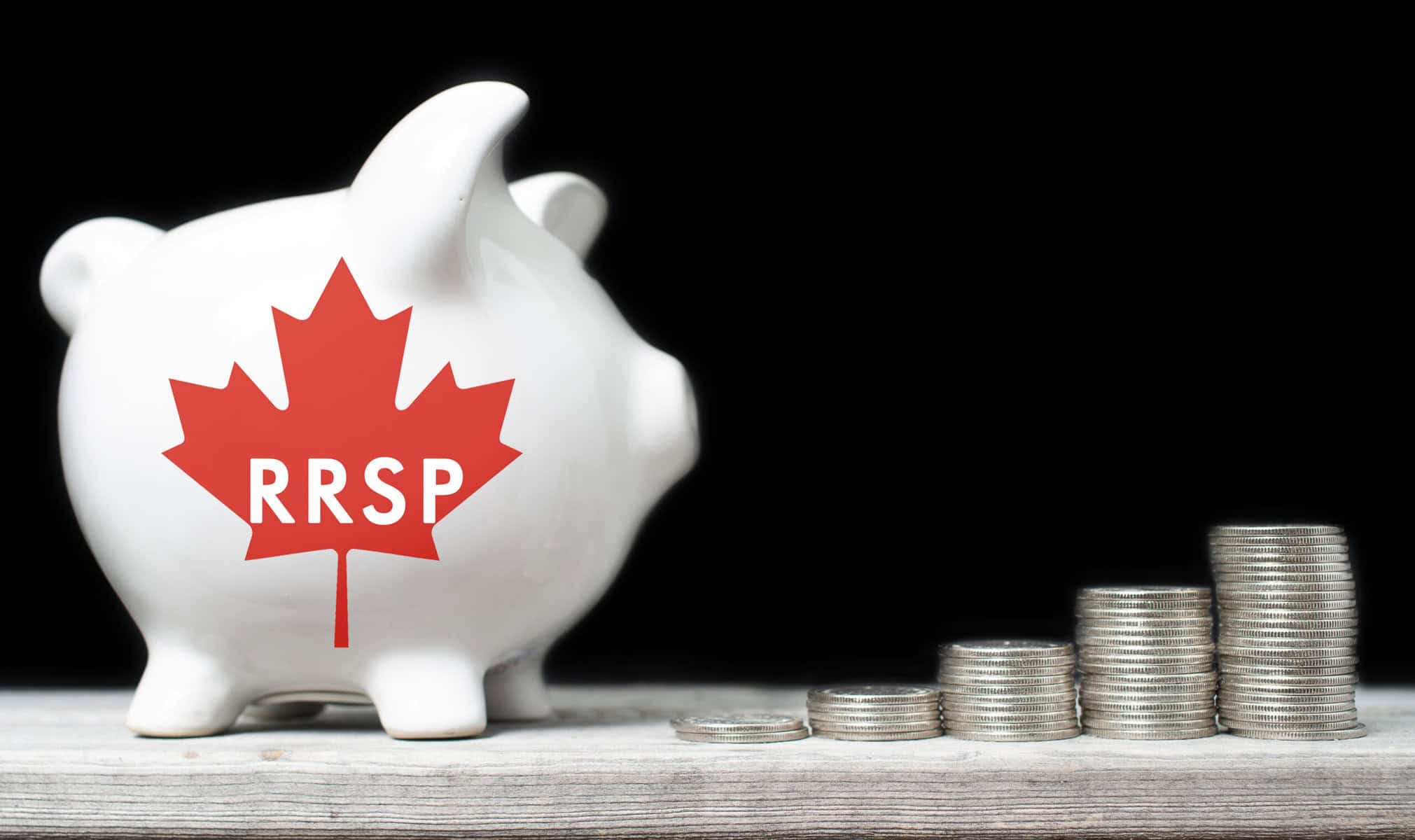
Choosing a savings account can feel like choosing one winner. For Canadians saving for a home and retirement at the same time, the better answer can be using several accounts for different jobs.
You can hold a Tax-Free Savings Account (TFSA), Registered Retirement Savings Plan (RRSP), and First Home Savings Account (FHSA) together, provided you qualify and respect each account’s rules. The useful decision is which dollar goes where first.
Three accounts, three jobs
A TFSA offers flexible tax-free withdrawals for eligible account income and gains. Contributions aren’t deductible. An RRSP generally gives a deduction when eligible contributions are claimed, with ordinary withdrawals taxed later. Meanwhile, an FHSA combines generally deductible contributions with tax-free qualifying home withdrawals.
For an eligible first-time buyer, the FHSA’s first-year participation room is $8,000, with a $40,000 lifetime contribution limit, with room starting when an FHSA is opened. Here’s an example with $12,000 available to save. Assume an eligible buyer has sufficient room in every account and a 30% marginal tax rate. An $8,000 FHSA contribution creates a $2,400 tax saving when deducted. Putting the remaining $4,000 in a TFSA keeps it available for moving costs or emergencies.
If the $2,400 tax saving is also saved, the original $12,000 outlay supports $14,400 across the plan, before investment returns. Meanwhile, an employer’s RRSP matching program can change the priority because the employer contribution is additional compensation. Taking that match can be more valuable than following an account order mechanically.
RY
Royal Bank of Canada (TSX: RY) is a candidate for long-term retirement money, not necessarily a near-term down payment. Its Canadian banking business, wealth management, and capital-markets operations provide several earnings sources.
RBC reported fiscal third-quarter adjusted earnings of $4.28 per share. Its $1.76 quarterly dividend represented about 41% of that figure. That leaves a useful earnings cushion, although banks still face credit losses when customers struggle. At its price of $273.78, the annualized $7.04 dividend yielded about 2.6%. A $10,000 budget bought 36 shares for $9,856.08 and generated $253.44 annually at an unchanged dividend.
| COMPANY | RECENT PRICE | NUMBER OF SHARES | ANNUAL DIVIDEND | ANNUAL TOTAL PAYOUT | FREQUENCY | TOTAL INVESTMENT |
|---|---|---|---|---|---|---|
| RY | $273.78 | 36 | $7.04 | $253.44 | Quarterly | $9,856.08 |
That payment doesn’t make RBC an appropriate substitute for cash needed to close a home purchase. A 15% price decline would reduce the holding by roughly $1,478, considerably more than its annual dividend. Understanding how to buy stocks includes matching the holding period to the expense.
Considerations
An eligible buyer can also use the RRSP Home Buyers’ Plan alongside a qualifying FHSA withdrawal for the same home. However, the RRSP program generally creates a repayment obligation. The FHSA’s qualifying withdrawal, meanwhile, does not. They aren’t interchangeable sources of free money.
A TFSA adds flexibility around those more specific goals. It can hold the emergency fund or investments, depending on when the money is needed. Using several accounts doesn’t require duplicating the same investments in each one. If RBC is already a large retirement holding, adding it to every account can concentrate the same banking risk. The accounts serve different tax purposes, while the household still owns one combined portfolio.
Bottom line
All three accounts can work together. In our example, the FHSA supplies the home-buying deduction, the TFSA protects flexibility, and the RRSP can serve retirement or an employer match. RBC can contribute to the long-term investment portion. The account choice earns its value when the investments inside it suit the job.
The post Can You Have a TFSA, RRSP and FHSA at the Same Time? Yes. Here’s How They Fit Together appeared first on The Motley Fool Canada.
Should you invest $1,000 in Royal Bank Of Canada right now?
Before you buy stock in Royal Bank Of Canada, consider this:
The Motley Fool Canada team has identified what they believe are the top 10 TSX stocks for 2026… and Royal Bank Of Canada wasn’t one of them. The 10 stocks that made the cut could potentially produce monster returns in the coming years.
Consider MercadoLibre, which we first recommended on January 8, 2014 ... if you invested $1,000 in the “eBay of Latin America” at the time of our recommendation, you’d have over $19,000!*
Now, it's worth noting Stock Advisor Canada's total average return is 103%* - a market-crushing outperformance compared to 88%* for the S&P/TSX Composite Index. Don't miss out on our top 10 stocks, available when you join our mailing list!
Get the 10 stocks instantly
* Returns as of October 6th, 2026
More reading
- CPP and OAS Alone Probably Won’t Cover Retirement: How to Fill the Gap
- This Dividend Giant Just Hiked Its Payout By 7%
- Using Your TFSA as a Retirement Account: Pros and Cons
- Brokerage Account Basics: What Canadian Beginners Should Look For
- The Best Canadian Stocks for Conservative Investors Right Now
Fool contributor Amy Legate-Wolfe has no position in any of the stocks mentioned. The Motley Fool has no position in any of the stocks mentioned. The Motley Fool has a disclosure policy.
Popular Products
-
 Fake Pregnancy Test
$61.56$30.78 -
 Anti-Slip Safety Handle for Elderly S...
$57.56$28.78 -
 Toe Corrector Orthotics
$41.56$20.78 -
 Waterproof Trauma Medical First Aid Kit
$169.56$84.78 -
 Rescue Zip Stitch Kit
$109.56$54.78