Craft Breweries Roll-ups Are Coming Unraveled
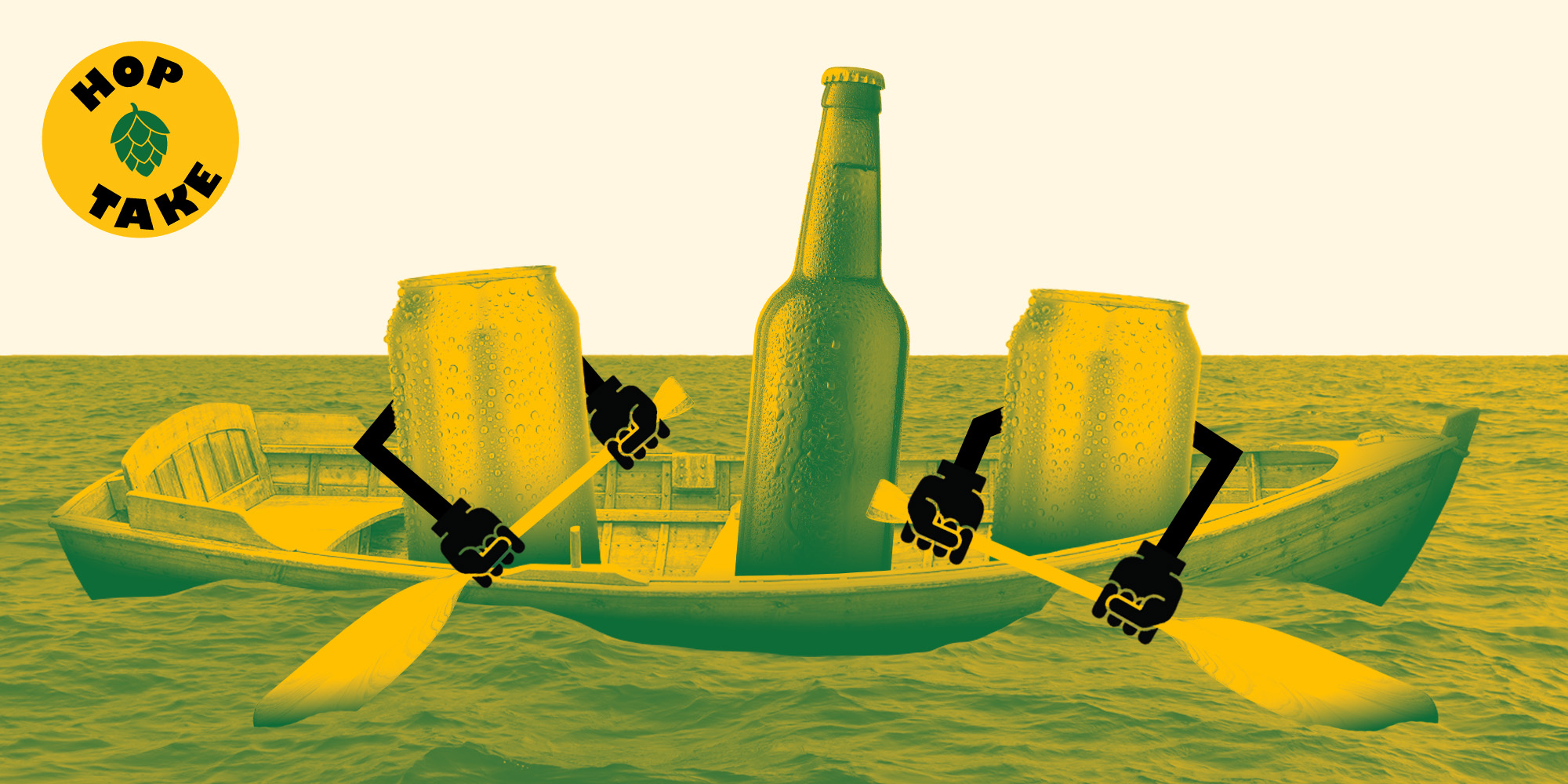
Earlier this month, I flew to Hamilton, Ontario, to deliver the keynote speech at the Ontario Craft Brewers Conference. The industry is different on the other side of the border for myriad reasons that I won’t get into here. Many of the guild’s members told me they see American craft brewing as a bellwether for where the trade is headed north of the border. For example, the roll-up trend, which has been the dominant thesis for stateside suppliers seeking survival since well before the pandemic, has lately begun rolling through the Canadian scene as well.
Best of luck to all, because down here, the evidence is pretty mixed that cramming more craft breweries under one roof will prevent its collapse. In fact, some American craft-brewing roll-ups — the “strategic acquisitions,” the “beverage platforms,” the “collectives,” — have begun to unravel.
Earlier this month, Wilding Brands, an ambitious amalgamation of half a dozen-ish Colorado craft beverage firms, abruptly shuttered its dedicated production facility in Denver, with plans to shift to a contract model. Around the same time, a gnarly lawsuit surfaced on the docket in the Superior Court of Massachusetts alleging that the parent company of Boston has-been Lord Hobo Brewing had stiffed the founders of Maine’s Lone Pine Brewing ever since acquiring it in November 2024. That roll-up, the Evergreen Collective, also shifted to a contract model in May.
These are just the latest indicators that craft combos are not a panacea for the woes of the contemporary industry. Others abound, if you know what to look for. Made By The Water, a private-equity assemblage of Catawba Brewing Co., Palmetto Brewing Co., Oyster City Brewing Co., and Faubourg Brewing Co., shuttered facilities across the Southeast and then its own website after a few short years. Indie Brew, an alliance launched in 2021 by Georgia’s Scofflaw Brewing to offer “best-in-class professionalization of certain core business functions” looks similarly defunct: after signing on Bearded Iris and Neon Cowboy, its domain is also parked, and the latter two brands have gone out of business. Circle of Crowns, an alliance of Crown and Hops, Full Circle Brewing Co., the defunct Speakeasy Ales & Lagers brand, and Sonoma Cider, never really got off the ground. And so on, and so forth.
Of course, small outfits on the industry’s “long tail” are often undercapitalized and overambitious. But at the upper echelons of the segment, the roll-ups are similarly struggling. Monster Beverage Corporation acquired private-equity combo CANarchy Craft Collective in 2022 for $330 million, two thirds of which it has since written down as its sales have sagged. The firm has found itself with the unpleasant task of closing down iconic first-wave facilities from Oskar Blues and Cigar City, among others. Then of course, there’s Tilray Brands, which has gathered unto its beery corporate bosom some two dozen craft breweries since first buying SweetWater Brewing Co. in 2020. As I wrote in August of this year, shortly after the vice conglomerate unceremoniously shuttered Terrapin Beer Co.’s sprawling production facility in Athens, Ga., the move followed:
previous consolidations and closures at Hop Valley, Revolver, and Redhook, as well as Atwater, which wasn’t “closed” so much as “hastily sold back to its owners less than two years after it was acquired.”
[…]
Midway through 2025, the firm’s garrulous chief executive, Irwin Simon, told investors that he was targeting some $33 million in cuts, which doesn’t sound like a lot until you remember it’s almost half of what he paid for an eight-brand gaggle of Anheuser-Busch InBev also-rans just a couple years prior. By the end of February 2026, the company’s filing reads, “we considered the Project 420 plan to be completed due to reaching the cost savings target that we had set out to achieve even though there are still ongoing initiatives relating to additional cost savings, SKU rationalization and distributor rationalization.”
Since then, Tilray has gone through yet another wave of layoffs, as I first reported at Fingers in late October. “Tilray has completed multiple acquisitions, and we continue to integrate those businesses, including facilities and organizational structures, to create more efficient and focused operations,” Tilray’s chief corporate affairs officer Berrin Noorata told me at the time. “Like most companies in our industries, we continuously focus on improving profitability and efficiencies to offset inflation and higher input costs.” The cuts, she assured me, had nothing to do with Tilray’s stock price, which is now down 76 percent year-to-date.
Of course, some roll-ups are faring better than others in the chop. Artisanal Brewing Ventures, founded a dozen years ago and composed of Victory Brewing Co., Southern Tier Brewing Co., Sixpoint Brewery, and Bold Rock Hard Cider, has made a decent go of it, though its sales declines are outpacing the category in multi-outlet grocery, mass retail, and convenience stores tracked by the market research firm Circana through mid-November. The Left Hand Collective, launched in April 2025, signed up another member, Bootstrap Brewing, this past February, bringing some half a dozen brands under its Rocky Mountain aegis. Barrel One Collective, which houses a staggering 15 brands across New England, has pushed up some green shoots since its formation in late 2024. In Chicago, the joint-venture between Half-Acre Beer Co. and Maplewood Brewery & Distillery, announced this past March, shows promise. There are others.
Beer is a scale business. This has always presented a conundrum for craft brewers. How to operate in the black without buying power, distribution networks, or advertising budgets? You can fake some things in this trade, but you can’t fake size, and besides, craft brewers’ entire pitch early on was that they weren’t Big Beer. When the going was good, price squared this circle. The American drinking public was willing to pay more for India Pale Ale (et al.) because it was new and novel and special. Now it is not, and all the macrobrewers have shifted their expansionary aspirations to wine-based riot punches and spirits-based canned cocktails, and John and Jane Q. Guzzler are adrift in the vibecession. And yet the conundrum remains.
“I’m not 100% sure it’s cheaper in the short term, but it’s just a different business model,” Wilding’s chief development officer told BusinessDen, which first broke the news. “There are economies of scale that can be achieved through a contract brewer.”
You could say the same of a roll-up, and many have. The problem isn’t that this is necessarily wrong. It’s that actually achieving those economies of scale requires the right ownership structure, partners, and market conditions — not just another nearby brewery in bad shape that’s willing to enroll.
???? Hop-ocalypse Now
Don’t cry because it’s over, laugh because it’s ending like this: Brendan Whitworth, the chief executive officer of Anheuser-Busch InBev’s subsidiary in North America, announced earlier this month that he’d be stepping down to take the top job at the upscale gym chain Equinox. We’ve talked before about how the beer industry has been overrun with business-school types from the broader consumer-packaged-goods world, to its detriment. But I’d never really imagined that the luxury #wellness sector would wind up with the trade’s mid-career poobahs. Best of luck at the new job, Brendan. Thanks for your catastrophic interview two months into the Bud Light fiasco, and for that cage match on the White House lawn earlier this year!
???? Ups…
Congrats to Meg Papanastassiou on her new gig as the Brewers Association’s director of marketing and communications… World Beer Cup registration is now open for the 2027 contest, go get ‘em… The California Cider Cup announced its inaugural running for March 2027… Congrats to Allagash Brewing Co.’s new marketing director, Emily Keeney, who hails from Oatly…
???? …and downs
Maryland’s biggest craft brewery, Heavy Seas Beer, filed for Chapter 11 bankruptcy protections… The Beer Institute is making its final push to keep the federal hemp-derived THC ban on track for next month… The Milwaukee Brewers deserved better than this weak-sauce Miller Lite can for winning their first-ever World Series…
The article Craft Breweries Roll-Ups Are Coming Unraveled appeared first on VinePair.