Eu Strips Ai, Chips And Quantum From Industrial Plan Aimed At Countering China
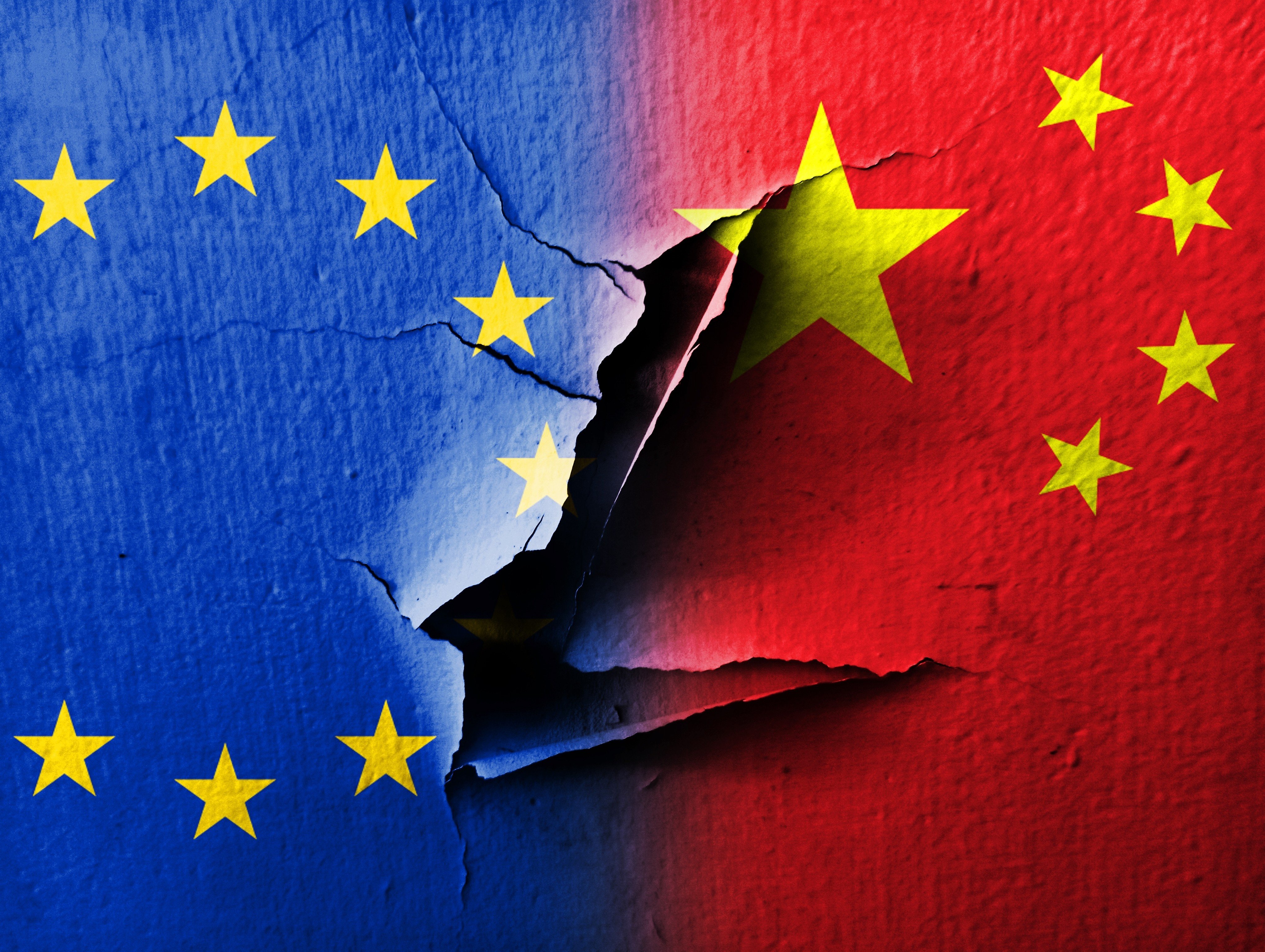
The European Union’s ambitious industrial policy to challenge China has been gutted, removing AI, semiconductors and quantum computing from a list of strategic technologies that must be “made in Europe” to tap billions in government funds.
Biotechnology and robotics are other cutting-edge sectors to be cut from the Industrial Accelerator Act (IAA) ahead of the proposal’s formal unveiling by the European Commission on Wednesday, a leaked draft showed.
Plans to exclude non-EU-based producers from government contracts and funds have been kicked down the road for six months, but the draft suggested those countries that align with the bloc’s economic security policies could eventually be included.
The IAA is designed to promote local industries at the expense of competing companies from outside the EU market.
While China is directly referred to only twice in 93 pages of legislation and annexes, the act is seen as a crucial prong of Brussels’ efforts to de-risk from the Asian giant.
It aims to reduce EU dependence on China by mandating local content rules for strategic sectors such as electric vehicles and solar for public procurement and state support schemes, meaning a high proportion of qualifying products should be made in Europe.
But it has been subject to intense debate, with the 27 member states divided over how far to veer from their traditional open-markets approach and whether to include friendly non-EU partners in the plans.
Also removed from previous drafts analysed by the South China Morning Post were advanced sensing technologies, space and propulsion technologies and advanced materials and manufacturing technologies.
Instead, a late draft – which could yet change before publication – focused on some heavy industrial products such as steel, cement, aluminium and chemicals, as well as paper, refined petroleum and plastics.
Some of these industries have complained that they are being hit by Chinese overcapacity.
The document also listed technologies essential to the EU’s net-zero production plans, including electric vehicles, solar photovoltaic, onshore and offshore wind, battery storage, heat pumps, hydrogen electrolysers and nuclear fission, many of which are subject to intense competition from China as well.
In the case of EVs, at least 70 per cent of local content must be made in Europe if they are to qualify for public procurement contracts or state support, which is essential to ensuring inclusion in, for example, government fleets.
The 70 per cent figure excludes the value of the EV’s battery, a significant carve-out given that this can account for 40 per cent of a vehicle’s cost.
Furthermore, it stipulates that foreign entities should hold no more than 49 per cent stakes in joint ventures in the designated sectors. This could hit Chinese EV and battery makers’ investment plans for Europe.
Foreign investors will be encouraged to transfer technology and know-how to their local partners if they wish to benefit from juicy state contracts, in what is the first major legislative attempt in Europe to mirror a model pioneered by Beijing over decades.
Nicknamed a “reverse Deng” after ex-paramount leader Deng Xiaoping, the flex is likely to encounter pushback from Chinese businesses and government alike.
The act’s publication has been delayed seven times, as capitals and commissioners have fought tooth and nail over its scale and scope. Industries too are divided.
Some car companies such as BMW have come out against the “buy-Europe” provisions, while others including Stellantis have been supportive.
The debate is seen as a battle for the soul of Europe’s industrial future. Long seen as a champion of free trade and open markets, Europe has faced a clamour in recent years, led by France, to embrace a more protectionist approach.
Industrial policy, a dirty word in Brussels for many years, is now back in fashion and Stephane Sejourne – the EU’s industry chief and a close ally of French President Emmanuel Macron – has become the face of a vocal “buy-Europe” campaign.
“Our European independence comes with a cost, but it is much smaller than the cost of our dependencies,” Sejourne said in February.
“China has ‘made in China’, the US have ‘buy American’, Canada has ‘buy Canadian’. It is time for Europe to stand up for itself and to have a similar scheme.”
But others have pushed back. Germany, while open to some level of reform, has sought to tamp down the most hardcore Parisian instincts, along with a group of pro-market countries including Sweden, the Netherlands and Finland.
“When the European Commission proposes the IAA, it should thus avoid ‘made-in-Europe’ requirements and instead embrace a ‘made-with-Europe’ approach,” analysts from the Brussels-based think tank Bruegel wrote in a note.
“This would strengthen Europe’s industrial base while remaining open to trusted partners, consistent with international commitments and supportive of global decarbonisation,” they added.
Like everything else in the EU policy world, the result will be a compromise, but EU leaders have made clear they believe they face an emergency.
“China now exports almost twice as much clean tech as we do,” European Commission President Ursula von der Leyen told a business forum in Antwerp last month. “This is not just a trade statistic. It is a signal of where industrial capacity is concentrating and of how quickly global market positions can shift. So, the urgency could not be greater.”
Despite the sense of urgency, the bloc’s processes are likely to churn slowly.
After Wednesday, the proposal will be fought over once more by member states and the EU parliament before a final act emerges, and that is unlikely to happen any time this year. There will then be bedding-in periods that could take years.
In the meantime, Europe’s dependencies on China and the United States for hi-tech and clean-tech products are deepening, according to trade data.
Beijing’s next five-year plan, to be launched a day after the EU’s strategy, is expected to show continued state support for those industries Europe wants to protect. History suggests that China, unlike the EU, will not be dawdling before implementation.
Popular Products
-
 Adjustable Shower Chair Seat
$107.56$53.78 -
 Adjustable Laptop Desk
$91.56$45.78 -
 Sunset Lake Landscape Canvas Print
$225.56$112.78 -
 Adjustable Plug-in LED Night Light
$61.56$30.78 -
 Portable Alloy Stringing Clamp for Ra...
$119.56$59.78