Europe Needs Tax Competition
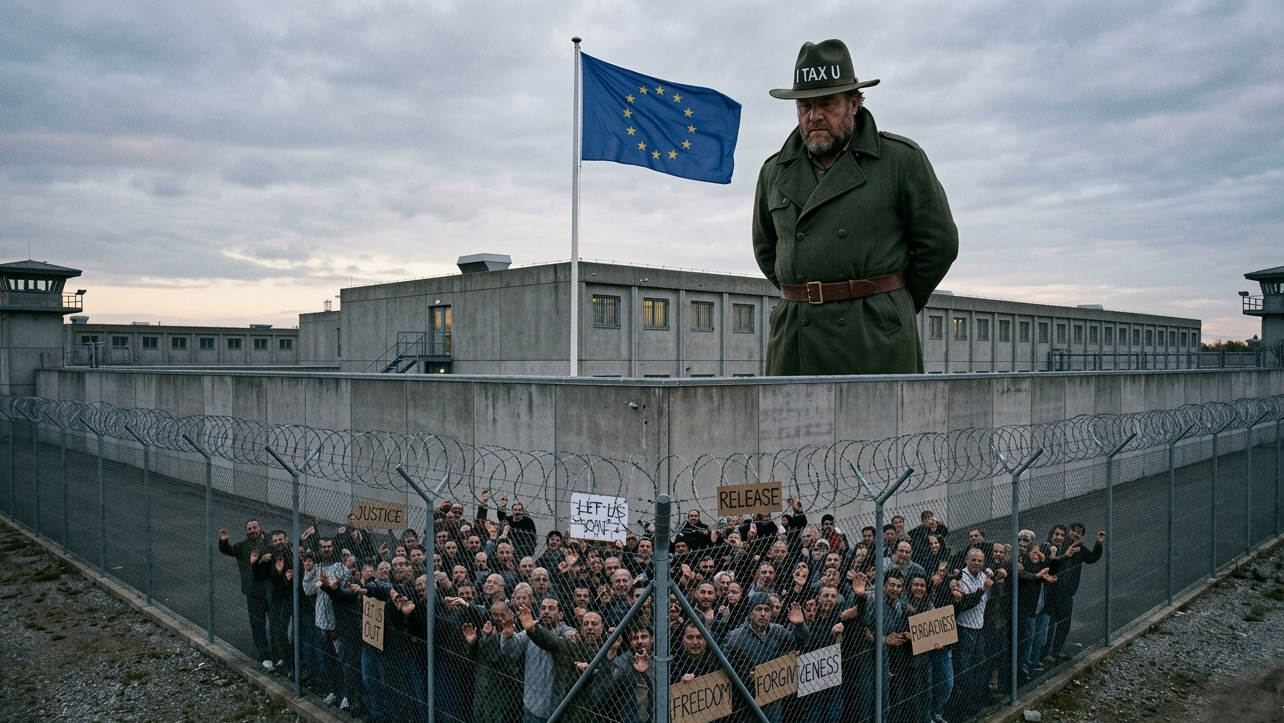
There is a saying in libertarian circles that “theft is illegal because government hates competition.” The allusion that tax is theft is a fun quip to throw around among friends, but it is not a very serious point to make in public discourse.
With that said, though, there is truth to the second part of the saying: government does not like competition. This is evident wherever government maintains a monopoly on education or health care: private options are often marginalized or even non-existent.
Tax policy is another area where many governments, especially in Europe, are adverse to competition. Highly taxed European governments have formed a tax cartel under the wings of the European Union, with the explicit purpose of preventing low-tax jurisdictions from competing with Europe for investments and banking services.
The tax cartel was manifested in a publication by the European Economic and Financial Affairs Council in 2016. Since then, it has entrenched itself with regular updates to its list of ‘non-cooperative’ jurisdictions around the world that refuse to bow their heads to the tax bullies from Brussels.
This blacklist is not just for show. The EU has been cooperating with the OECD, a Paris-based think tank, on an aggressive global crusade against low taxes. In 2021, they reaped their first major victory: an international agreement on a 15% minimum corporate income tax. This agreement is now so widely accepted that in January, it was renewed in modified form by 145 countries.
Unfortunately for the EU, other taxes do not lend themselves that easily to global tax cartel practices. While the OECD stopped at the corporate income tax, the EU continues its efforts to glorify Europe’s high taxes generally and to bully low-tax jurisdictions into the high-tax fold. In the latest updated version of the blacklist—published last month—ten countries and territories are listed for refusing to ‘cooperate’ with the EU’s tax cartel: American Samoa, Anguilla, Guam, Palau, Panama, Turks and Caicos Islands, U.S. Virgin Islands, Vanuatu, and Vietnam.
They forgot to add the Klingon Empire.
From a European government perspective, this blacklist serves a ‘noble’ purpose: it shields the world’s highest-taxing governments from competition. However, foreign competition is not exactly the biggest problem that high-tax Europe is faced with; you know taxes are high when practically the entire German business community writes a panic-stricken letter to Chancellor Merz explaining that “conditions for the economy in Germany have deteriorated significantly” in recent years. They desperately pinpoint high electricity taxes “for all businesses and consumers” and loudly call for lower income taxes on households and businesses.
You also know taxes are high when France accuses Italy of using “fiscal dumping”—a derogatory acronym for low taxes—to lure French billionaires across the border. This caused an almost comical dispute between Paris and Rome, where the Italian government frantically tried to avoid being branded as a tax outcast. The Meloni government went to great lengths to explain that they even had doubled one tax and overall do what they can to maintain their good standing as a high-tax jurisdiction.
The tradition of ultra-high taxes in Europe makes it easy for any country in the world to inadvertently compete with the Europeans. Perhaps this is why Brussels is so eager to blacklist anyone who offers Europe’s taxed-to-the-max residents a little bit of financial breathing room: the more options Europeans have to avoid paying taxes in Europe, the more the European governments will be forced to adjust themselves to this global competition.
In the latest version of the blacklist, Brussels has added two more jurisdictions for “non-cooperation”: the Turks and Caicos Islands and Vietnam. The Turks and Caicos was taken off the list two years ago but put back on there in February. The reason is not very specific, referring only to “the enforcement of economic substance requirements.”
These meaningless statements gain more substance when we consider that the Turks and Caicos are home to a number of investment banks and wealth management firms. The nation’s banking industry prides itself on operating in the old ‘Swiss’ tradition. It is not very far-fetched to assume that the government in this little island nation cares more about the integrity of its country’s bank customers than the tax insatiability of European governments.
This also appears to be the reason why Vietnam was added to the EU’s blacklist of low-tax jurisdictions. Their government displeased the EU by not meeting “the necessary standards for the exchange of tax information.” In short, the Vietnamese refuse to tattle on who has a bank account in the country.
Vietnam will probably ignore much of the tax noise coming from Europe. The Vietnamese economy is very much oriented elsewhere, with the United States, China, South Korea, and Japan being its largest trading partners. Foreign direct investment in Vietnam comes primarily from South Korea, Singapore, China, Hong Kong, and the United States.
It is not far-fetched to assume that the same group of countries also leads foreign financial investments in Vietnam. With that said, though, to the extent Europeans invest their money in Vietnamese banks instead of European banks, they should be allowed to do so without interference from a bureaucrat-run tax cartel in Brussels.
Proponents of high-tax cartels have in the past argued that they need global tax cooperation to enforce laws on money laundering and white-collar crimes. In other words, low-tax jurisdictions would somehow be more prone to harbor such activities, an assertion that has never been proven. Until proponents of high-tax cartels present indisputable evidence to this effect, it is only fair to ask them to refrain from expanding the practices of their high-tax cartel.
But even if the money-laundering accusations were true, there would be no rational connection between such illegal activities and the demands from tax cartels for global tax-rate harmonization. All that law enforcement would need in order to pursue money launderers and global crime syndicates is banking transparency under the rule of law.
It is high time for the European Union to stop bullying other countries and territories that choose not to crush their economies with crippling taxes. Instead of pointing fingers at the few examples that still exist of sound, low-tax jurisdictions, the EU should consider the incredible harm that Europe’s high taxes are doing to the present and the future of the European economy.
Popular Products
-
 Electric Toothbrush & Water Flosser S...
$43.56$21.78 -
 Foldable Car Trunk Multi-Compartment ...
$329.56$164.78 -
 Mommy Diaper Backpack with Stroller O...
$111.56$55.78 -
 Ai Dash Cam with Front & Rear HD, GPS...
$295.56$147.78 -
 Smart Auto-Recharge Robot Vacuum Cleaner
$613.56$306.78