Fallout From Venezuela’s Quakes Turns Political, As Opposition Leader Machado Seeks Return
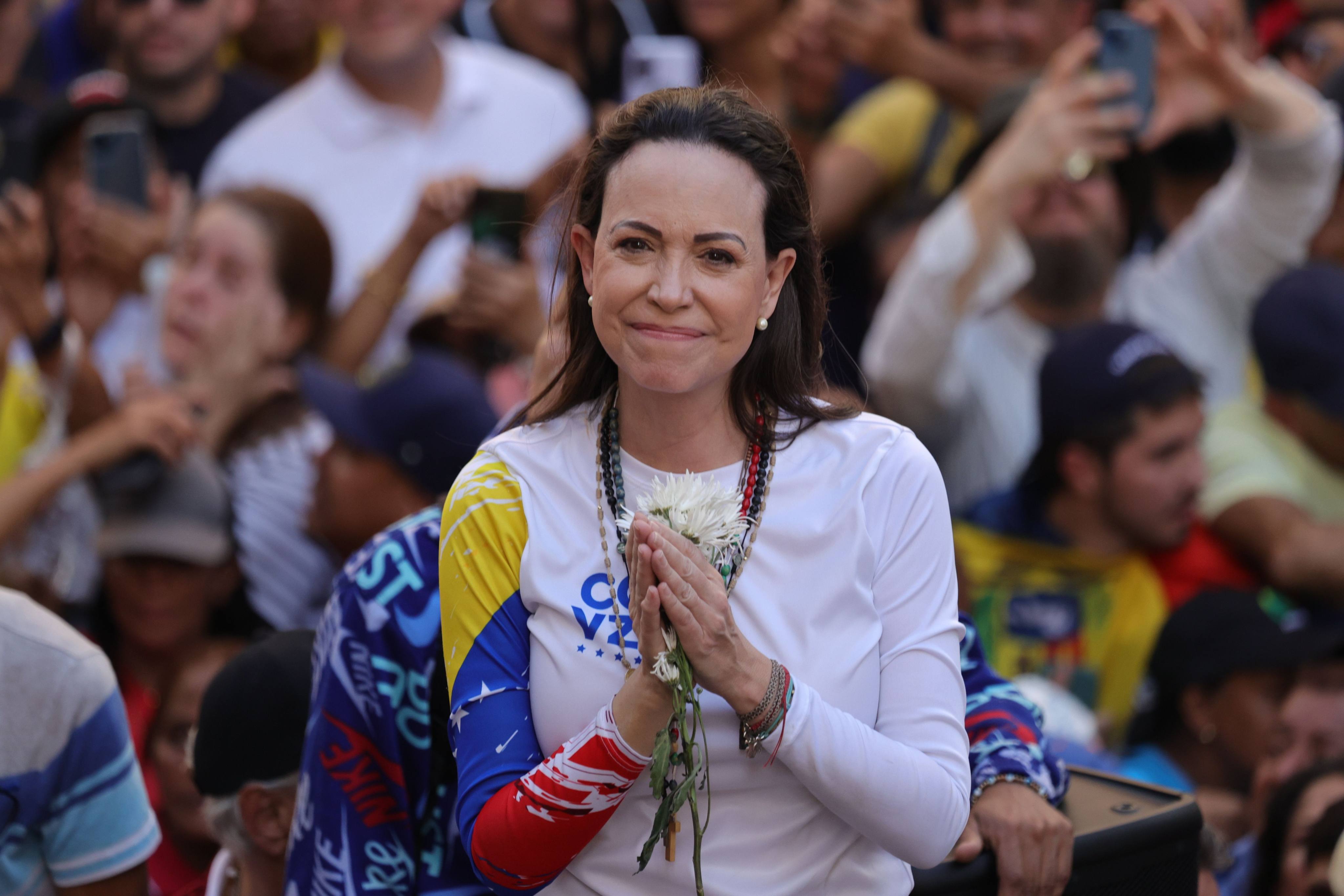
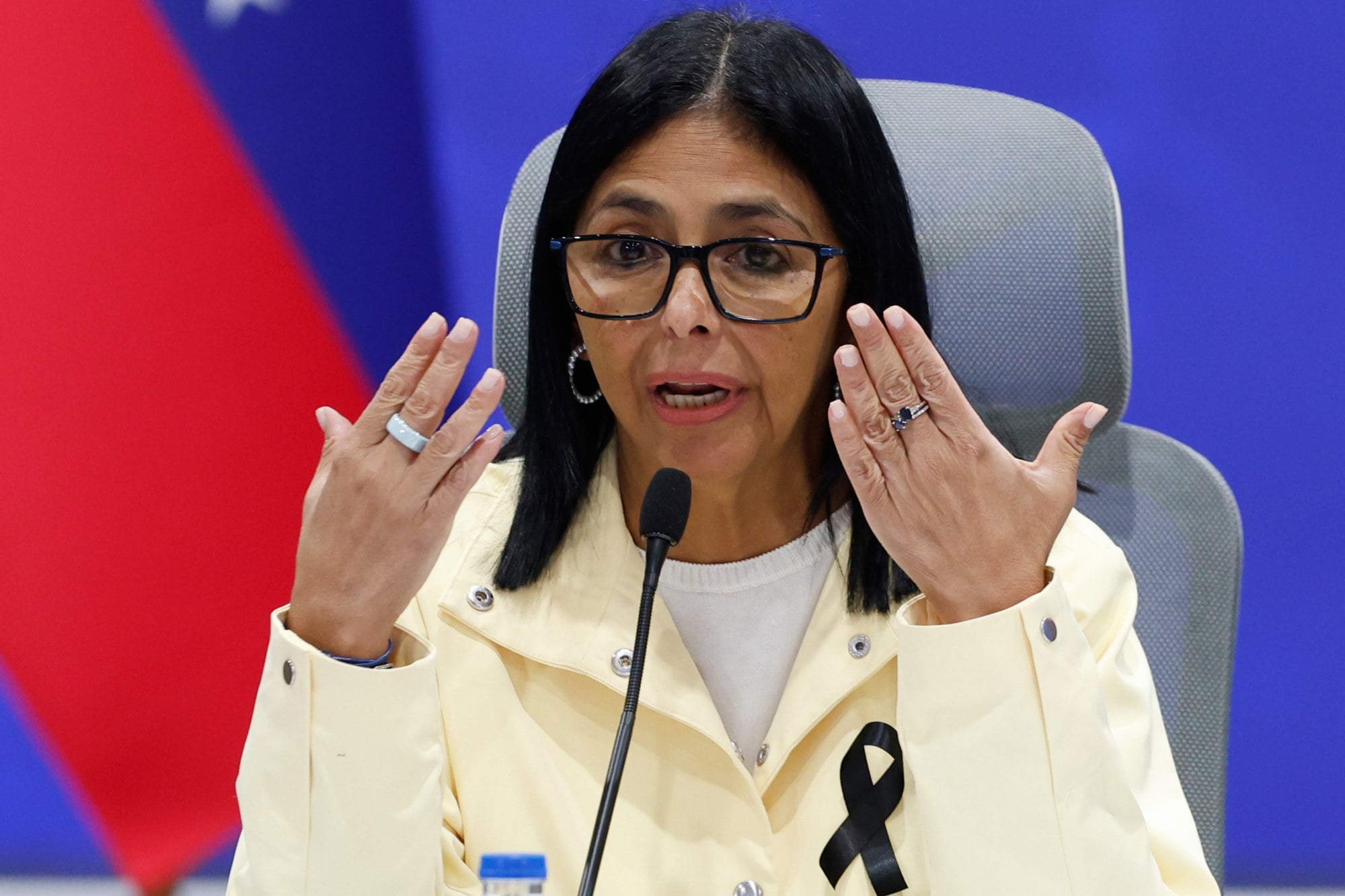
The fallout from Venezuela’s powerful twin quakes has evolved into a major test for acting President Delcy Rodriguez, sending her scrambling to prevent the humanitarian disaster from becoming a political one as her mandate as interim leader expires on Friday.
A day after Rodriguez angrily defended the competence of her government’s relief effort at her first news conference since the June 24 disaster, her main rival, exiled Venezuelan Nobel Peace Prize laureate Maria Corina Machado, issued her own appeal.
Machado on Friday argued that the government’s quake response exposed its critical weaknesses and that she should return to Venezuela to help “the transition process, especially after the tragedy”.
“My presence stabilises the situation; it is part of the organising forces that the country needs at a time when the total absence of the state has become evident,” Machado said, referring to widespread criticism of the government’s earthquake response as slow and disorganised.
“The country needs figures it can trust.” She spoke to reporters from Panama.
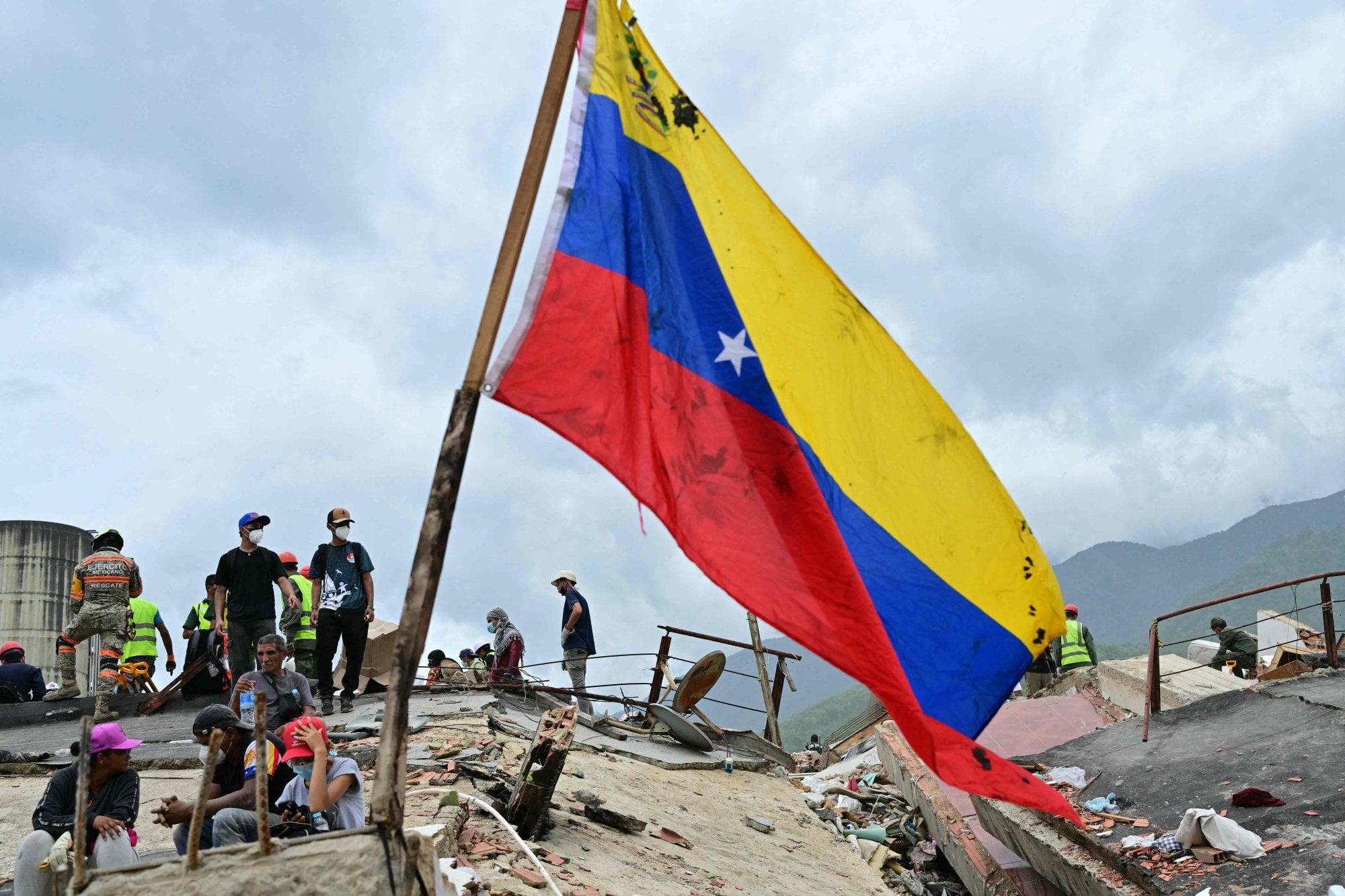
The quakes have killed more than 2,295 people and injured over 11,000 others, according to the government, which has not updated the tallies since Wednesday.
Her opposition movement has set up a digital database to locate the missing – a list of 36,000 people on Friday. The party has mobilised volunteers to collect donations in Venezuela and solicited aid from the country’s vast diaspora.
Machado was barred from running in a 2024 presidential election in which President Nicolas Maduro claimed victory. An independently verified vote count carried out by the opposition found that the candidate that Machado endorsed, Edmundo Gonzalez, was the real winner.
When the earthquakes hit, Machado saw an opening to return home for the first time after fleeing last December to accept a Nobel Peace Prize in Norway. Ever since the US captured Maduro in a brazen military operation in January, Machado has been seeking a comeback and calling for a democratic transition.
But the Trump administration has thrown its support behind Rodriguez since Maduro’s ousting, praising her business-friendly reforms of the country’s lucrative oil sector.
Two senior US officials, speaking on condition of anonymity to disclose private diplomatic discussions, said that the Trump administration has grown frustrated with Machado and dissuaded her from returning to Venezuela in the aftermath of the earthquakes.
One official said that Machado had sought help from Washington for ferrying her to Venezuela from the Dutch Caribbean territory of Curacao and also from Panama.
The second official said the US suspected she wanted to return to lead protests against Rodriguez and push for political change at a time when the focus should be on quake recovery. This official added that the Trump administration could not prevent Machado’s return but was not in a position to facilitate it.
Upon learning of Machado’s plans, Rodriguez shut down commercial air traffic into Caracas, the US official said. Those cancelled flights were set to bring hundreds of relief workers to assist with earthquake recovery efforts, the official said.
Seemingly concerned that anger over the earthquake response could jeopardise her leadership, Rodriguez on Thursday blamed any criticism of the government on what she called “narratives manufactured in propaganda laboratories”.
She claimed that rescue crews deployed immediately with adequate equipment to disaster zones – contrary to complaints by residents that they were left alone to search for their loved ones without official teams or heavy machinery for the first 48 hours.
“Those propaganda operations, driven by partisan political interests, are despicable,” she said. “We did not wait one day, two days or three days. We activated immediately.”
Rodriguez went on to say that thousands of civil and military rescuers as well as 11 international field hospitals had been deployed to quake-affected areas, adding that the government had approved the creation of a fund to receive donations for reconstruction.
On Friday, state-run media broadcast her visiting Hernan Alberto Gil Flores, a 43-year-old security guard pried from a collapsed basement after surviving nearly eight days under the rubble, in his hospital bed.
His dramatic rescue on Thursday served as a rare bright spot in the days since the earthquakes.
Under Venezuela’s constitution, temporary absences are to be filled by the vice-president – which was Rodriguez’s former role under Maduro – for up to 90 days, after which they can be extended by the national assembly for an additional 90 days.
On Friday, that 180-day interim period expired. There was no immediate comment from authorities on what, if anything, they would do in response to the expiration of Rodríguez’s mandate.
The National Assembly, controlled by Rodríguez’s party, can trigger a snap election if lawmakers declare the post permanently vacant.
International organisations and governments, including the US, have pledged hundreds of millions of dollars in emergency relief aid to stave off a full-blown humanitarian catastrophe in Venezuela.
With infrastructure and sewer systems damaged, aid workers are scrambling to prevent the spread of disease through contaminated water.
But nine days after the quakes, the scale of human suffering is still coming into focus.
“We know that there are still dead bodies under the collapsed buildings, and it’s difficult to give a number on this, but several thousands for sure,” said Andreas Spaett, the Venezuela country coordinator for international aid group Medecins Sans Frontieres.
“I do believe this is one of the major natural catastrophes in the history of humanity.”
Popular Products
-
 Electric Toothbrush & Water Flosser S...
$43.56$21.78 -
 Foldable Car Trunk Multi-Compartment ...
$329.56$164.78 -
 Mommy Diaper Backpack with Stroller O...
$111.56$55.78 -
 Ai Dash Cam with Front & Rear HD, GPS...
$295.56$147.78 -
 Smart Auto-Recharge Robot Vacuum Cleaner
$613.56$306.78