Gap Bucks Retail Headwinds With Massive China Expansion Amid Localisation Drive
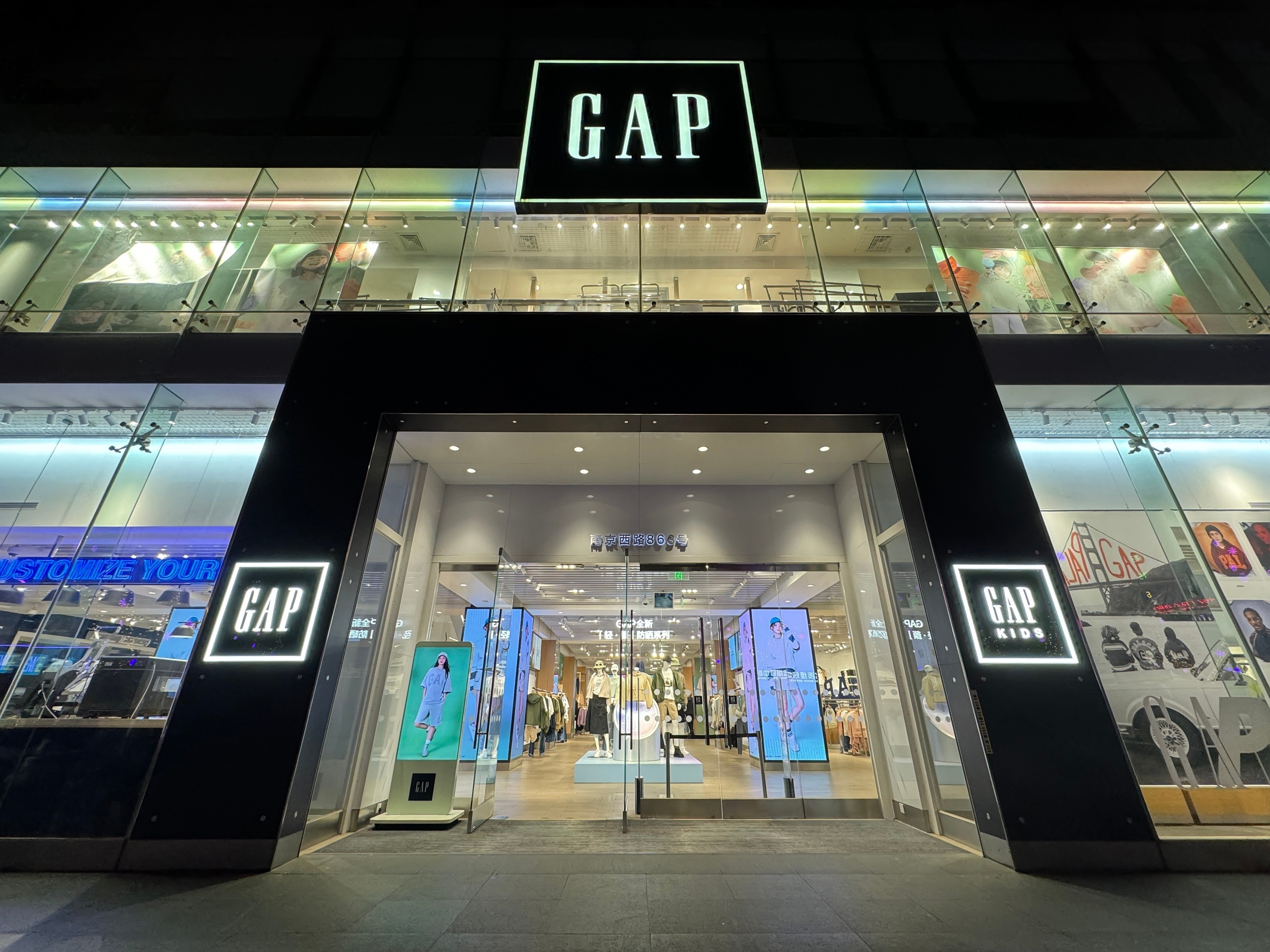
Amid widespread store closures by foreign fast-fashion players in China, US apparel brand Gap is defying industry headwinds.
It plans to open 50 new stores in mainland China this year and return to Hong Kong by year’s end, following a localisation overhaul that has attracted more Chinese consumers.
This expansion comes at a time when the world’s second-largest consumer market faces sluggish overall retail sales, with brands such as Zara and H&M scaling back their number of stores.
With Gap having gone through a period of contraction and store closures, the American fashion brand is striving to rebuild its growth track in China. Since Chinese e-commerce operator Baozun took over Gap’s mainland China, Hong Kong and Macau operations in early 2023, Gap has pursued its “China-for-China” localisation strategy and recorded its first profit in the fourth quarter of last year.
Gap posted 20 per cent same‑store sales growth in China for the first quarter, a record high. Its plan to open 50 stores this year – from first-tier to third-tier cities, as well as in the Tibet autonomous region – has been steadily advancing, and 10 outlets were expected to have been opened in the second quarter, Baozun said in its first-quarter earnings report in late May.
“To establish a solid footing in the current business environment, foreign companies must carry out radical and structural localisation,” said Wang Tianshi, an analyst at the Shanghai-based LeadLeo Research Institute. “They need to flatten the organisational structure and devolve decision-making power to local teams.
“For merchandising, brands need to fully cater to tastes in China’s county-level markets and specific consumer segments, and reduce uniform global procurement.”
Following three years of restructuring – with local teams leading product design, and operation efficiency improvement driven by digital and supply-chain upgrades – Gap’s business in China has entered a new phase of growth, according to Baozun.
Meanwhile, US premium apparel brand Ralph Lauren posted a 40 per cent year‑on‑year jump in China sales in the first quarter of its 2027 financial year, with the three-month period ending in June, according to its earnings report released last week.
The company’s regional revenue in Asia rose 24 per cent, year on year, over the same period, fuelled by China’s outperformance, even as the broader luxury sector faced headwinds in the country. Ralph Lauren CEO Patrice Louvet credited the momentum to this year’s Ralph Lauren Polo Cup, as inaugural matches took place in Beijing in May.
“Ralph Lauren’s signature products have seen a balance between recognisability and broad appeal, catering to middle-class consumers’ demand for quality,” said Fu Yifu, a special research fellow at Su Merchants Bank, in Nanjing, Jiangsu province. “Through high-end flagships and lifestyle offerings, the brand reinforces its premium lifestyle image, elevating product purchases into a form of identity affirmation.
“Chinese consumers have grown more rational and discerning, raising the bar for brands’ innovation capacity and market responsiveness. For businesses, competition is no longer about scale, but about building irreplaceable value within niche segments.”
Popular Products
-
 Adjustable Shower Chair Seat
$107.56$53.78 -
 Adjustable Laptop Desk
$91.56$45.78 -
 Sunset Lake Landscape Canvas Print
$225.56$112.78 -
 Adjustable Plug-in LED Night Light
$61.56$30.78 -
 Portable Alloy Stringing Clamp for Ra...
$119.56$59.78