George Peterson’s Nfa Suppressor Case Exposes The Danger Of Federal Gun Registries
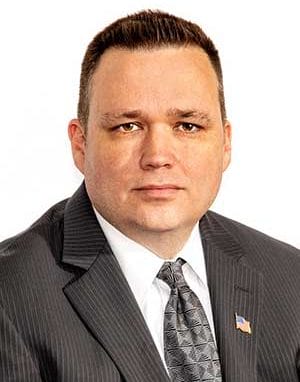
George Peterson was a law-abiding citizen and federal firearms licensee (FFL) who believed in the principles of the United States Constitution. He was raising his children in his Louisiana home, living the American dream. He had a loving family and his dream of owning a firearms business. Nothing could be any better.
That all changed one Thursday morning in 2022, just days after former President Joe Biden signed the Bipartisan Safer Communities Act (BSCA) into law. It started with a knock on the door. Then a rush of 50 to 100 Bureau of Alcohol, Tobacco, Firearms and Explosives (ATF) agents and local law enforcement officers barged into the home that Peterson shared with his wife and juvenile children. These agents came in with ballistic helmets and body armor, armed with M4 rifles. The agents of the federal government held the man’s children, ages 12, 16, and 18, at gunpoint. At the same time, his FFL business was also raided.
“So, this happened back in 2022, where it was just a typical Thursday morning, and knock on the door, next thing I know, we have 50 to 100 ATF agents and local law enforcement in my home and in my office, where my FFL was, my little shop was,” Peterson told AmmoLand News. “And basically they came in with ballistic helmets, body armor, pointing M4 machine guns, assault weapons at my children and me, my juvenile children, ages 12, 16, and 18. They had machine guns pointed at them. And this was all over paperwork basically.”
The raid would be understandable if he were a dangerous, violent criminal, but Peterson was a family man with no criminal record. The show of force was out of the blue.
Mr. Peterson didn’t know what was going on. His first thought was that it was over a tax issue. He was a little behind on paying sales taxes. This was a one-man show, and his taxes got complicated by local, online, and gun-show sales. He has been working with an accounting firm to get up to date.
“I was a little bit behind on my sales taxes, but I had an accounting firm that was working with me to get things caught up, you know, because it’s a complex business,” Peterson told AmmoLand News. “You know, you have online sales, you have your local sales, you have your gun show sales, you have your uh concealed carry classes. It can get a little complicated. And I was basically a one-man show at the time. And so I had an accounting firm helping me to kind of get things caught up. But that’s what I thought it was.”
Little did Peterson know that taxes were the least of his concerns. They accused him of straw purchases, making too many trace requests, and failing to keep his paperwork up to date. With two bomb squad trucks parked on his front lawn, the agents started their search of his property with Assistant US Attorney Charles Struss Jr. on-site and calling the shots of the raid.
“Assistant US attorney Charles Strauss Jr,” Peterson said. “He was actually on site for the raid. He actually orchestrated and coordinated the raid. It wasn’t done with law enforcement. It was done through the prosecution. So, the prosecution actually was the ones who did the raid, orchestrated it, and it was because of the bipartisan Safer Communities Act…the US assistant US attorney, actually told my attorney that Peterson will never traffic firearms again. That was one of his statements.”
After the raid, George Peterson was arrested. He wasn’t arrested for anything listed in the affidavit. During the raid, the ATF and local law enforcement forced their way into a safe in the man’s bedroom. Law enforcement found a solvent trap that had been milled into a suppressor. The item lacked a serial number, so agents considered its existence a violation of the National Firearms Act (NFA).
“So, the only thing I was charged with, even though the affidavit for the ATF had all these allegations, you know, like straw purchases and, too many, too many times to crime trace requests,” Peterson said. “They, I never filed any of those Fourth Amendment violations. The multi-handgun reports and my paperwork were sloppy. The only thing that they charged me with was the possession of a uh solvent trap suppressor that was in my safe in my bedroom.”
Mr. Peterson, through his attorney, negotiated a contingent plea agreement with the prosecution. He would plead guilty to the charge as long as he had a right to appeal. Mr. Peterson was sentenced to 24 months’ imprisonment for committing a victimless crime.
“So, my local attorney, uh, my good friend Rick Toffen, actually negotiated with the prosecution and the court to do a contingent plea agreement where we would plead guilty to the charge as long as we have the right to appeal,” Peterson said. “So, we didn’t even really have a trial, per se.”
Mr. Peterson would appeal to the United States Court of Appeals for the Fifth Circuit, where he would lose before a three-judge panel. In response to the request for an en banc hearing, the Department of Justice (DOJ) would make an astonishing claim: suppressors are not arms and are not protected by the Second Amendment.
This statement sparked outrage across the firearms and political worlds. This opinion flies in the face of even the ATF’s opinion. Less than a week after the court filing, the DOJ withdrew its brief.
“The acting US attorney filed some documents agreeing with the court, you know, agreeing that you know the district court that suppressors are not protected by the Second Amendment,” Peterson told AmmoLand News. “They’re just accessories.”
This is when the Firearms Policy Coalition (FPC) and the law firm of Cooper and Kirk stepped in to help Peterson. They would represent him in front of the full bench of the Fifth Circuit during an en banc rehearing if granted. The DOJ’s lawyers would argue that the NFA is constitutional because it imposes only a modest burden on a constitutional right, even though modest burdens are not allowed under other amendments.
The Fifth Circuit would deny an en banc hearing, relying heavily on Footnote Nine of the Supreme Court’s Bruen decision. Footnote Nine states that a permitting system is not necessarily unconstitutional. Even though Peterson’s charges didn’t have anything to do with concealed carry. This ruling meant Peterson would need to rely on the United States Supreme Court to grant a writ of certiorari to remain free.
Amicus briefs poured in from across gun rights groups, urging the Supreme Court to take the case. Unfortunately for Peterson, the Supreme Court would deny cert. This denial would be the end of the road for Cooper and Kirk, but Peterson hasn’t given up. He plans to launch a habeas corpus collateral challenge. This is a long shot, but it is his best chance of avoiding prison. Right now, he is waiting to find out when he reports for his two-year sentence.
Federal Judge Orders More Briefing in Challenge to NFA Registration Scheme
About John Crump
Mr. Crump is an NRA instructor and a constitutional activist. John has written about firearms, interviewed people from all walks of life, and on the Constitution. John lives in Northern Virginia with his wife and sons, follow him on X at @right2bear, or at www.crumpy.com.
Popular Products
-
 Put Me Down Funny Toilet Seat Sticker
$33.56$16.78 -
 Stainless Steel Tongue Scrapers
$33.56$16.78 -
 Stylish Blue Light Blocking Glasses
$85.56$42.78 -
 Adjustable Ankle Tension Rope
$53.56$26.78 -
 Electronic Bidet Toilet Seat
$981.56$490.78