Hong Kong To Boost Ip Economy With New Academy, Patent Evaluation Support

Hong Kong’s finance chief will unveil new measures in his budget to strengthen the city’s growing intellectual property (IP) economy, focusing on nurturing top-tier talent and helping local tech firms evaluate their patents, the South China Morning Post has learned.
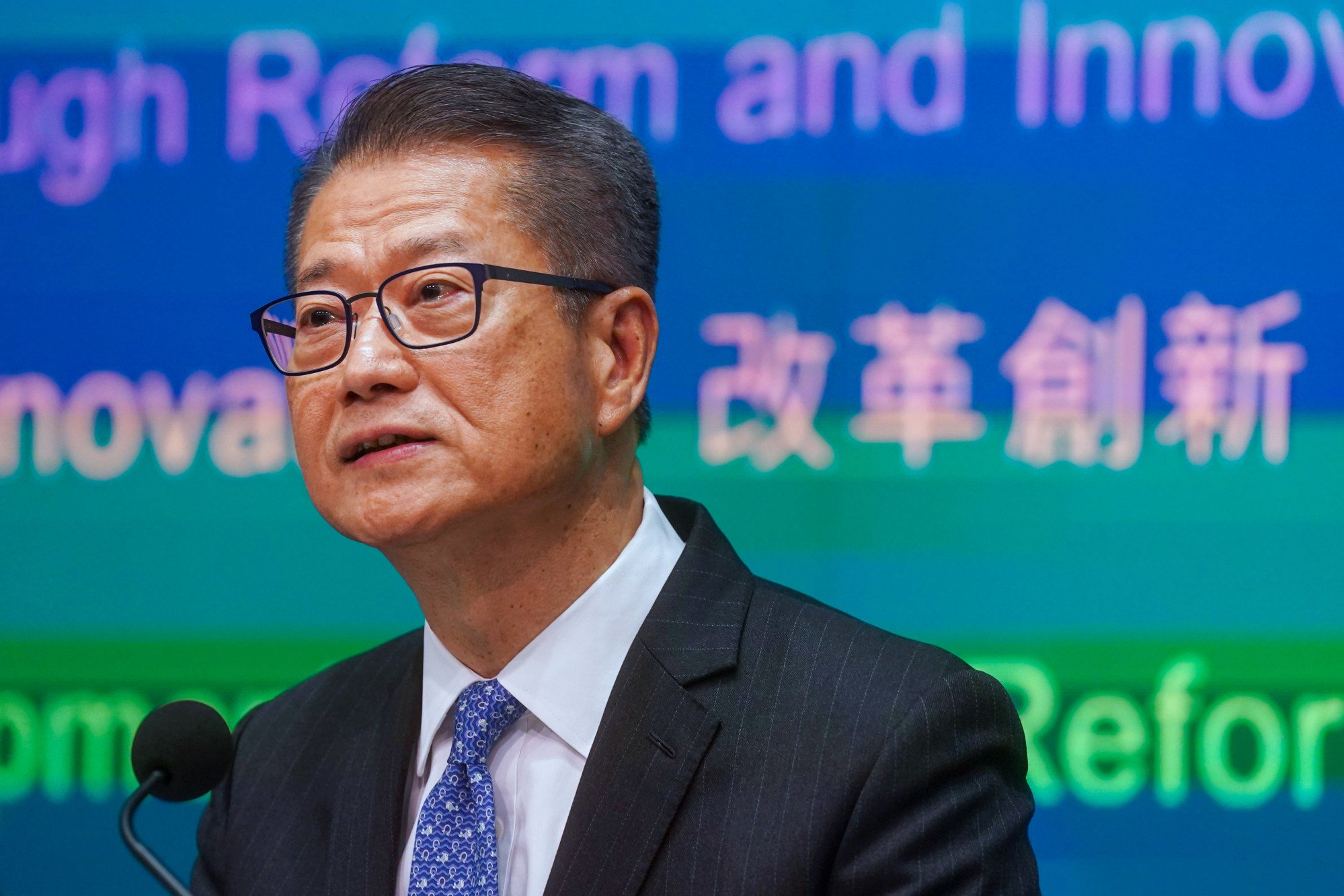
The initiatives, expected to be announced on Wednesday, come as Financial Secretary Paul Chan Mo-po faces mounting expectations to make strategic use of the city’s earlier-than-expected operating surplus while investing in long-term growth, with different sectors expecting sweeteners to help ease business pressures and improve livelihoods.
“Strengthening the IP economy will help diversify the city’s economic development, which is one of the themes of the budget speech. It will also encourage innovations and align with national priorities,” a source said.
Mainland China’s 14th five-year plan calls for enhancing Hong Kong’s role as a global hub across eight major sectors, including transforming the city into a leading regional hub for IP trading.
Currently, the IP industry accounts for about 30 per cent of Hong Kong’s gross domestic product and jobs.
According to sources, Chan will announce the establishment of the Intellectual Property Academy, backed by a cash injection of tens of millions of Hong Kong dollars, to train professionals for the city’s expanding IP sector.
The academy is expected to work with the Vocational Training Council and the Intellectual Property Department to offer qualifications and career paths for the emerging workforce.
“One group of professionals highly sought after would be those with financing expertise. The academy will nurture talent to meet the demands from the industry,” the source said.
Observers earlier told the SCMP that there was a bottleneck in the city’s emerging IP industry. They cited an example in which Pop Mart, a toymaker from mainland China, decided to go public in Hong Kong but registered its overseas IP in Singapore.
Some local companies have struggled to turn home-grown IPs into commercial successes, as lesser-known brands often found it difficult to locate experts to assist with financing.
Another key measure will see the Hong Kong Technology and Innovation Support Centre (HKTISC) tasked with helping local tech companies evaluate the quality of their innovations and assess the values of their patents.
Established last year under the Hong Kong Productivity Council, the HKTISC is the first local institution to be recognised by both the China National Intellectual Property Administration and the World Intellectual Property Organisation (WIPO).
The centre offers local start-ups and small and medium enterprises patent information and services during their process of creating, protecting, managing and commercialising their IPs, to protect their inventions and promote trading in the sector.
Commerce minister Algernon Yau Ying-wah earlier told the SCMP that the government had sought Beijing’s endorsement for Hong Kong’s inclusion in the Madrid Protocol, the global standard for filing international trademarks.
Administered by WIPO, the protocol allows a single trademark application to secure protection across up to 131 member countries, including many of Hong Kong’s major trading partners such as the United States, Japan and the European Union.
In his 2024 policy address, Chief Executive John Lee Ka-chiu announced plans to amend and streamline IP litigation procedures in the High Court to ensure cases were handled more efficiently.
Chan on Sunday revealed the cover for his budget address would be in purple, symbolising Hong Kong’s strengthening economic momentum amid a volatile external environment.
While some accounting firms have forecast an operating surplus of about HK$500 million (US$63.97 million), Chan has cautioned against a volatile external environment and uncertainties in the process of economic transformation, saying he must manage finances prudently and maintain “a certain level of reserves”.
Lawmaker Ray Wong Wing-wai, a technology company founder, said setting up an intellectual property academy would be “a good start”, adding that it could offer expertise such as assessing the market potential of new inventions and helping creators enter the market.
He noted that creators in the city, including those from local universities, were producing strong innovative works but often lacked the know-how to gauge their commercial value.
Professionals trained by the academy could act as connectors to the market, he added, endorsing inventors so they could secure financing more smoothly.
Wong also noted that academy graduates could serve creators and inventors on the mainland, where a large number of patent applications were filed each year.
Additional reporting by Danny Mok
Popular Products
-
 Gas Detector Meter
$311.56$155.78 -
 Foldable Garbage Picker Grabber Tool
$93.56$46.78 -
 Portable Unisex Travel Urinal
$49.56$24.78 -
 Reusable Keychain Pepper Spray – 20ml
$21.56$10.78 -
 Camping Survival Tool Set
$41.56$20.78