Like Shenzhen, The Northern Metropolis Is Animated By The Spirit Of Experimentation
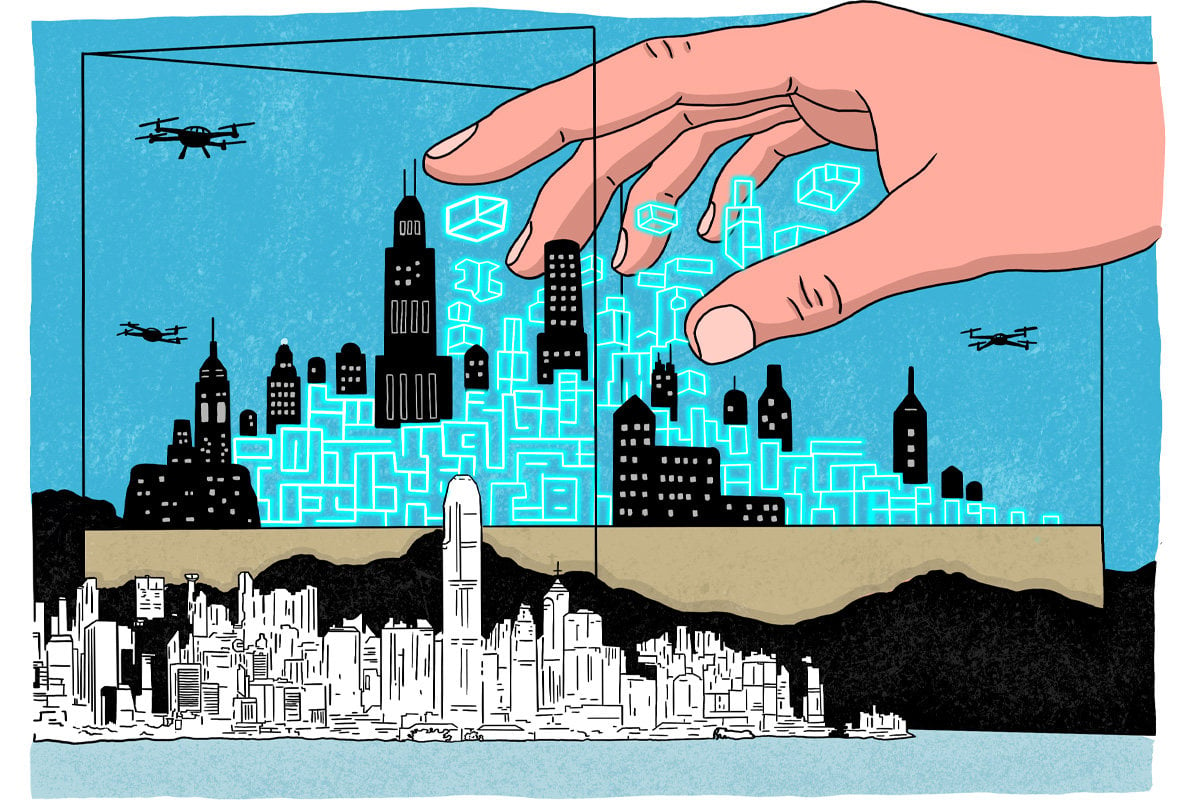
At the heart of Hong Kong’s first five-year plan lies the Northern Metropolis – a massive tract of land spanning roughly a third of our entire city. Much ink has been spilled over what this project represents and why it matters, but if I had to summarise it in a single sentence, I would call it the “Shenzhen of Hong Kong”.
To me, Shenzhen stands as the most miraculous growth story on Earth. Forty-eight years ago, it was a sleepy fishing village with a single muddy main road and just tens of thousands of residents. Today, it is the undisputed tech capital of China and one of the world’s premier innovation hubs.
While the exact circumstances, history and status of Hong Kong and Shenzhen differ, both the Northern Metropolis and Shenzhen stem from the very same strain of Chinese political thinking – one that is frequently overlooked and misunderstood by the outside world.
Back in 1979, China was an isolated, impoverished nation freshly emerging from the trauma of the Cultural Revolution. The new leadership under Deng Xiaoping desperately wanted to open the economy, yet they faced entrenched domestic resistance, a lack of funds and technical know-how and no proven blueprint to follow. Opening up too quickly on a national scale risked severe political instability, and the cost of failure was simply too high.
Xi Zhongxun, the father of future president Xi Jinping, was in charge of Guangdong province at the time. In April 1979, he proposed that Beijing allow Guangdong to establish experimental economic zones in Shenzhen, Zhuhai and Shantou. Deng immediately endorsed the idea, designating them China’s first “special economic zones”.
These zones were granted the latitude to learn from the best business and economic practices of the capitalist West – particularly from Hong Kong, sitting right across the border. They functioned both as a contained buffer for experimentation and as a beacon to inspire the rest of the country. Rather than wasting years debating theory or building ideological consensus, the tangible success of these zones blazed a trail for the nation, gradually winning over even the most staunch initial sceptics.
This model allowed the Communist Party to maintain socialist governance on the mainland while digesting, adapting and localising capitalist best practices. Eventually, these trial policies were rolled out nationwide, sparking one of the greatest economic booms in human history.
Today, Hong Kong faces a strangely familiar crossroads. Our traditional model as a city of compradors is no longer sustainable. Our future depends on seizing the opportunities created by China’s economic rise and actively integrating into the national blueprint.
Hong Kong needs fresh land, capital, talent and big ideas to jump-start its engine and resolve deep-seated social issues. Yet, as the city recovers from the aftermath of the 2019 unrest, many people remain hesitant – worried that closer integration might jeopardise the city’s capitalist system and the “one country, two systems” foundation.
Enter the Northern Metropolis. It is designed to function as a special zone within our Special Administrative Region – a sandbox where bold new ideas can take root and flourish, rather than an attempt to fix legacy problems within the confines of the existing framework. It allows for new regulatory approaches, a seamless technology ecosystem and the freer movement of cross-border capital, data and people. All these, if they were to be introduced citywide, would entail much more debate and a longer period of adjustment.
Instead, they now can be tested in designated zones free from the straitjacket of traditions and ideological rigidity. Positive results here will foster further reforms and create a virtuous feedback loop. Fortunately for us, unlike Deng and Xi, who had to launch the Shenzhen experiment blind, we actually have a proven playbook to reference.
This approach highlights the pragmatic core of Chinese statecraft: prioritising tangible results over ideological dogmatism. It requires staying flexible and adaptive while remaining vigilant not to undermine the fundamental principles holding society together. Progress relies on balancing speed with stability, using initial wins to generate momentum, and focusing on maintaining dynamic growth rather than getting bogged down in minor details and debates.
Nobody in 1979 could have scripted every detail of Shenzhen’s meteoric rise. Deng could never have predicted that a quiet border town would become a global nexus for electric vehicles, telecommunications, drones, smartphones and advanced microchips – most of these hadn’t even been invented yet.
At the same time, Shenzhen’s miracle was no accident; it was the fruit of methodical planning across successive generations of leaders. Long before others caught on, Shenzhen drew up visionary policies – launching comprehensive schemes to attract top-tier global talent over two decades ago, and building a citywide EV charging network as early as 2009, well before “EV” became a household term.
Shenzhen is a masterclass in striking the balance between top-down planning and bottom-up innovation. It is a cliché to say that innovation cannot be commanded by decree, but often it also needs a guided push to break inertia or create the right environment. In his book Complexity, science writer M. Mitchell Waldrop described this as “the edge of chaos”: a delicate balance point between order, purposefulness and enough room for flexibility. That, he says, is the key for any creativity.
Popular Products
-
 Fake Pregnancy Test
$61.56$30.78 -
 Anti-Slip Safety Handle for Elderly S...
$57.56$28.78 -
 Toe Corrector Orthotics
$41.56$20.78 -
 Waterproof Trauma Medical First Aid Kit
$169.56$84.78 -
 Rescue Zip Stitch Kit
$109.56$54.78