Medicine For Minerals: Us Foreign Assistance In Africa
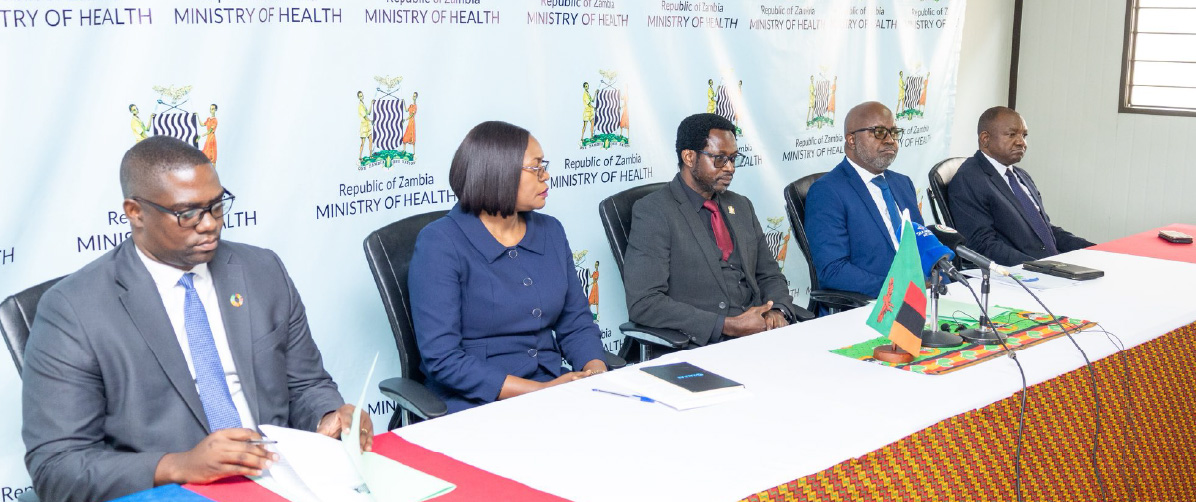
In a March 16, 2026 article, The New York Times reported that it had obtained the draft of a memo indicating that the State Department is considering “withholding lifesaving assistance to people with HIV in Zambia as a negotiating tactic to force the government of the southern African country to sign a deal giving the United States more access to its critical minerals.” The memo reportedly says the Trump administration is considering “significantly cutting assistance” as soon as May to increase pressure on Zambia. Responding to a query from the newspaper, the State Department press office, in an unsigned email, said that it would not comment on purportedly leaked documents or on deliberative diplomatic discussions, falling short of a denial of the alleged memo’s existence. The Zambian minister of information and government spokesperson also declined to comment on the issue. There has also been no official US reaction to African media coverage, which predates the article, alleging that proposed US health funding for some African countries was tied to granting Washington greater access to mineral resources and sensitive health data of citizens in participating countries. There are reportedly 16 such agreements signed with African countries, including Nigeria, Uganda, and Kenya, although the Kenya deal has been suspended pending resolution of a court case challenging it. While this is an issue that, because of all the other problems they face, most people in the United States will pay scant attention to, for the 1.3 million people in Zambia who rely on a daily HIV treatment provided by the US President’s Emergency Plan for AIDS Relief (PEPFAR), as well as medications to treat tuberculosis and malaria, it is literally a life and death matter.
While the main requirement on countries receiving health funding is that they commit to increasing their own health spending—and that is, in fact, the main requirement being placed on Zambia—it required in addition steps that would give American businesses more access to Zambia’s vast mineral resources, and a renegotiation of Zambia’s contract with the Millennium Challenge Corporation (MCC) requiring regulatory changes in mining and other industries.
A Troubled History
The current situation is not the first time that there have been issues with American health funding to Zambia.
Zambia has been a recipient of PEPFAR since the program’s inception in 2003, receiving over $6.7 billion in support of its national HIV response, with over 1.2 million Zambians receiving lifesaving HIV medications at no charge.
Zambia’s health sector faced a major crisis in January, 2025, when the incoming Trump administration froze all US foreign aid, including PEPFAR. The freeze disrupted the supply of crucial HIV medications and left clinics in Zambia with drugs that they were initially prohibited from distributing. Subsequently, a waiver was granted to exempt humanitarian support, and at that time, Zambia had a five-month supply of HIV drugs on hand and an additional 14 months’ supply on order. In addition to the negative impact on HIV treatment, the aid suspension also undermined programs in maternal and child health, malaria, and tuberculosis prevention. While there was some relief in March, in May, an additional $50 million cut in funding was announced due to concerns about drug theft. The American ambassador announced the cut in aid for medications and medical supplies at a press conference on May 8, 2025, saying, “For more than a year the United States has requested tangible action by the Government of Zambia to respond to the country-wide, systematic theft of these products. In the face of minimal responsive action by the government, the United States is taking necessary steps to safeguard, and ensure the accountability of American taxpayer funds.” The thefts were reportedly discovered in late 2021 and, according to the US Embassy, as of May 2025 the Zambian government’s actions were significantly short of demonstrating a commitment to safeguarding US assistance.
The cuts were set to take effect in January 2026 and were in addition to the administration’s cuts in January 2025. The delay in implementation was to give the Zambian government time to make alternative arrangements.
What Does Any of This Have to Do with the Alleged Memo?
Considering the checkered history of humanitarian assistance programs in Zambia, how does the purported memo recommending using health aid as a lever to wrest mineral concessions from the country fit? The aforementioned theft of US-provided medications would, indeed, seem to justify reducing or even terminating assistance. But that’s not what the memo proposes.
“We will only secure our priorities by demonstrating a willingness to publicly take support away from Zambia on a massive scale,” the alleged draft says. The memo’s language, as reported by the Times, is unambiguous.
-
- The United States proposes to give Zambia $1 billion in health funding over five years, if Zambia commits to $340 million in new spending on its own, which is less than half the amount the country received before the Trump administration took office.
- The memo proposes steps that would give American businesses more access to Zambia’s mineral deposits and, by extension, end what the United States sees as preferential access by China to Zambian mines.
- There is also a proposed renegotiation of the contract with the MCC, restructuring it to require regulatory changes in mining and other industries.
According to the draft memo, Zambia will have to agree to all three conditions by May to retain a portion of the health aid it now receives through PEPFAR. The draft goes on to say that Zambia could not be allowed to backtrack because other countries are watching. “If Zambia won’t sign, sharp public cuts to American foreign assistance would significantly demonstrate to aid-receiving countries the seriousness of our interest in collaboration and our insistence on tangible benefits under our America First foreign policy,” the draft reportedly says. The memo reportedly states that in December 2025, the United States suspended health funding talks because Zambia was not engaging on the minerals issue.
African reactions to the issue have been mixed. While the abrupt termination of HIV assistance is a life-or-death matter for those who rely on it, and who would like to see an agreement, there are also concerns about linking health assistance to trade and commercial issues. On social media, the mood appears mostly anti-America. Professor Ibbo Mandaza, a Zimbabwean academic, author, and publisher who is the director of SAPES, a Harare-based NGO established in 1987 as a driver of regional integration in southern Africa, said, “Hardly anyone is surprised here in Africa, especially after the withdrawal of USAID last year. But, the public reaction lends itself less to a critique of Trump than the demand that the state takes responsibility for healthcare, including the provision of support for HIV victims.”
The closest thing to an official US Government statement even remotely related to the issue of assistance to Zambia and corruption (which, however, does not discuss the issues contained in the alleged draft memo) is a Jan. 21, 2026, article by the American ambassador to Zambia on the Department of State’s Substack. The article attempts to justify the administration’s transactional approach to diplomacy, but it offers no specific information on Zambia.
Writing in The Hill on March 23, 2026, Conor M. Savoy, a visiting fellow at the Center for Global Development and the former lead for foreign policy engagement at USAID, said, “This is not a wise use of US foreign assistance. It is coercion dressed in the language of strategy, and it will fail on its own terms.” While the administration’s demand for a return on foreign assistance is not wrong, its methodology is flawed. In the first place, for reasons not entirely clear, Zambia, like neighboring Zimbabwe, has effectively rejected the deal, robbing the United States of whatever leverage it might have had. Secondly, this approach is likely to undermine progress on the Lobito Corridor, the US-backed commercial route linking Angola, the Democratic Republic of Congo, and Zambia. Thirdly, and perhaps even more importantly, this approach merges two categories of assistance, humanitarian and strategic, that should remain separate. PEPFAR is a humanitarian and life-saving program, and conditioning its aid on mineral concessions does not make it strategic. Savoy said, “It makes strategic assistance look predatory, and it makes the entire US offer less credible.” Global health funding should not be used as a bargaining chip in the pursuit of strategic and commercial goals.
Mandaza said, “Most of us in Africa, and the world generally, make a distinction between the USA as a country and the current administration. We hope the USA will be restored to its former self with a new administration.”
Where Might This Be Headed?
In the absence of an official acknowledgement or rebuttal from the US Government, there is little that can be done other than address the potential fallout from the leaked memo and offer some thoughts on a more rational approach to this issue.
The response from people in Africa, and not just in Zambia, is a factor that cannot be ignored, especially given the US aim to offset China’s growing influence on the continent. As it was so succinctly put in the headline of Savoy’s piece, “The US is sabotaging its own Africa strategy.” The administration’s transactional approach in Zambia could undermine progress on the Lobito Corridor, which the memo does not mention. American credibility is damaged by offering health assistance (humanitarian) in exchange for mineral access (strategy), while not addressing the corruption issue that caused the proposed suspension of aid in 2025. It is as if the quid pro quo of mineral access wipes the slate clean of the alleged theft of previous assistance.
If the US goal is to offset Chinese influence, this action misses the mark. By making our assistance look predatory, we fail to offer a credible alternative to Chinese assistance and, as Mandaza said, “Notwithstanding its excesses in extractive industries across Africa, China is riding high.”
This is not to say that action should not be taken to address corruption in the receipt of humanitarian aid. Suspending aid until constructive and corrective action is taken by the Zambian government is, in fact, justified. But mitigating deficiencies in humanitarian assistance programs should be handled separately from actions aimed at achieving strategic or economic goals. When the two programs are conflated, both suffer. The key to achieving desired goals is credibility, and when we appear less credible, we sabotage ourselves, and we cause harm to the people we claim to be trying to help.
Popular Products
-
 Enamel Heart Pendant Necklace
$49.56$24.78 -
 Digital Electronic Smart Door Lock wi...
$211.78$105.89 -
 Automotive CRP123X OBD2 Scanner Tool
$649.56$324.78 -
 Portable USB Rechargeable Hand Warmer...
$61.56$30.78 -
 Portable Car Jump Starter Booster - 2...
$425.56$212.78