Otp Bank Delivers Strong Nine-month Results Despite Rising Costs

OTP Group reported solid third-quarter performance and remains on track to meet its financial targets for 2026. Speaking at a press conference in Budapest on Wednesday, Deputy CEO László Bencsik said the bank’s results for the first nine months of the year provided a solid foundation for even stronger growth next year. Management currently sees no reason to revise its existing forecasts.
In the first three quarters of the year, OTP Group posted adjusted profit after tax of HUF 887 billion (EUR 2.433 billion), compared with HUF 886 billion (EUR 2.431 billion) a year earlier, after prorating exceptional items booked for the full year in the first quarter.
Foreign exchange-adjusted net interest income increased by 19% between January and September, while the Group’s net interest margin remained above 4.6%. This suggests that the full-year figure is likely to exceed last year’s 4.34%.
The Group also maintains a comfortable capital position.
Its Common Equity Tier 1 (CET1) capital ratio stood at 17.8% at the end of September, significantly above the regulatory minimum requirement of 11.1%.
Organic, foreign exchange-adjusted loan growth reached 12% in the first nine months of the year. For the full year, the bank expects lending growth of 15%, in line with its previous forecast.
One area of concern is the increase in operating expenses, which rose by 15% year-on-year, outpacing the 10% growth in revenues. Bencsik stressed that curbing this trend is a top priority in the short term. As a result, the cost-to-income ratio could exceed last year’s 41.7%. Return on equity (ROE) is also expected to fall below the previous year’s 21.6%, primarily due to lower financial leverage.
Retail banks in Hungary are restructuring account packages with free and low-fee offers, driven by rising fintech competition. Continue reading
The Group’s performance was affected by the indefinite extension of Hungary’s interest rate cap, which prompted the bank to set aside HUF 27.6 billion (EUR 76 million) in after-tax provisions in the second quarter. A further HUF 27.3 billion (EUR 75 million) was provisioned for Swiss franc-denominated loans in Slovenia. These negative effects were partly offset by a one-off positive tax impact of approximately HUF 39 billion (EUR 107 million) resulting from the restructuring of OTP’s Slovenian subsidiary.
OTP’s Hungarian core business generated HUF 239 billion (EUR 656 million) in profit after tax during the first nine months of the year. The result was supported by an improved net interest margin of 3.33% and a more efficient cost-to-income ratio of 47%.
Nevertheless, the domestic operation’s return on equity remained relatively low at 9.5%.
The main reason is the substantial burden of government-imposed levies and regulatory measures. Special taxes, the windfall tax, the financial transaction levy, the interest rate cap and the loan repayment moratorium have so far cost the bank a combined HUF 316 billion (EUR 867 million). This figure is expected to rise to HUF 344 billion (EUR 944 million) by the end of the year. That would represent a doubling compared with 2024 and an increase of HUF 85 billion (EUR 233 million) over the previous year.
According to Bencsik,
based on the current tax plans, there is no prospect of relief from these “brutal burdens” in 2027 either. However, the bank hopes for a significant adjustment in 2028.
Operationally, OTP continues to maintain a strong market position in Hungary.
- Retail banking: Loan growth has been driven primarily by mortgage lending under the Otthon Start (Home Start) program, which increased by 25%. Given the high level of demand expected in the fourth quarter, the bank is currently focusing on this segment. OTP holds a 40.6% market share in deposits and 28.1% in household savings.
- Corporate banking: OTP’s market share rose from 21% to 22.3% by the end of September, compared with just 7.5% in 2008. Growth has been supported by sustained demand from micro-enterprises and small and medium-sized businesses.
Looking ahead, OTP forecasts economic growth of 2.5–2.8% in Hungary next year, alongside significant fiscal consolidation.
The Group is also optimistic about its other markets across the region. Montenegro’s anticipated accession to the European Union in 2028 could further strengthen OTP’s position, as its subsidiary CKB is the market leader in the country.
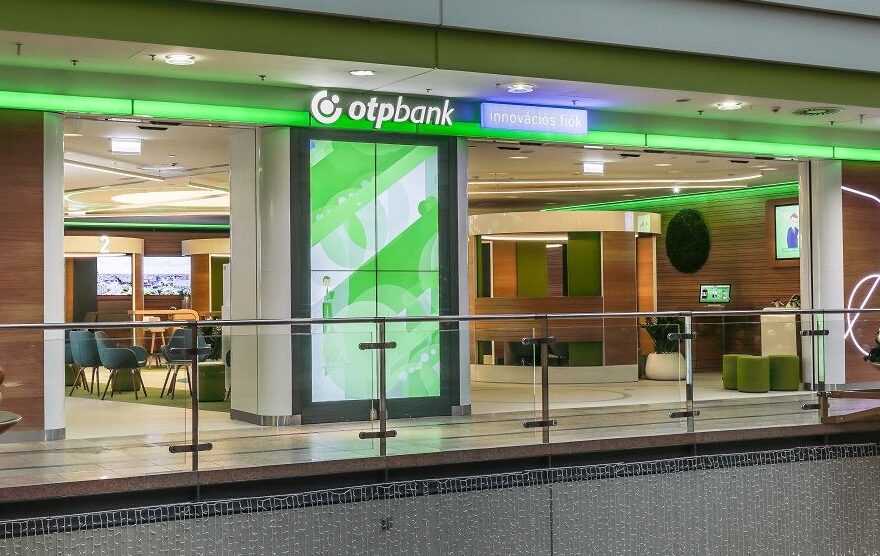
Hungary’s largest banking group secured a leading position in S&P’s 2025 performance ranking, driven by strong profits and stable growth.Continue reading
Via MTI, Featured image: Photo: Facebook/OTP Bank
The post OTP Bank Delivers Strong Nine-Month Results Despite Rising Costs appeared first on Hungary Today.
Popular Products
-
 Gas Detector Meter
$311.56$155.78 -
 Foldable Garbage Picker Grabber Tool
$93.56$46.78 -
 Portable Unisex Travel Urinal
$49.56$24.78 -
 Reusable Keychain Pepper Spray – 20ml
$21.56$10.78 -
 Camping Survival Tool Set
$41.56$20.78