Pfizer Ceo Albert Bourla: Israel Is A Global Force, Especially In Ai
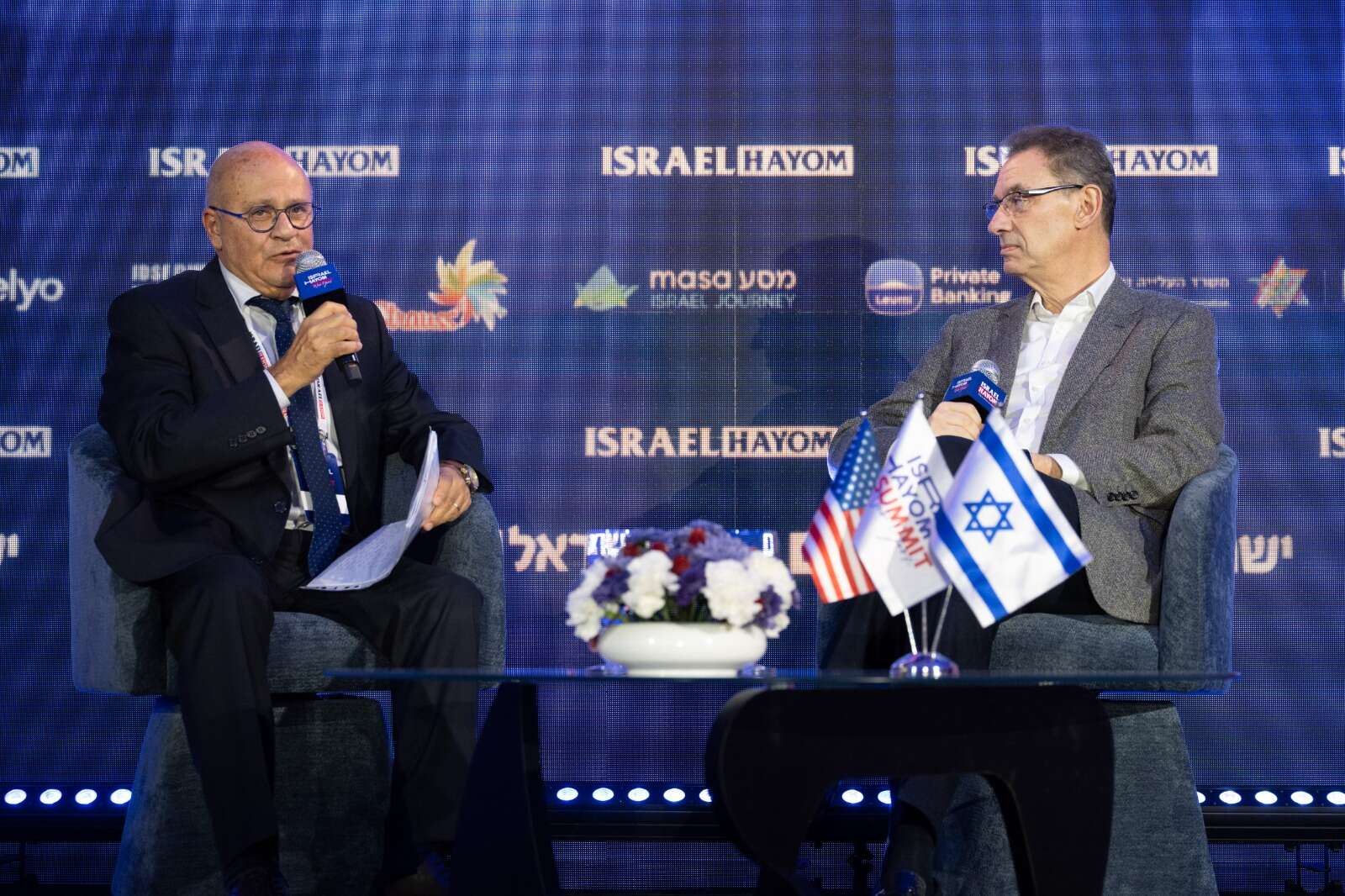
The Israel Hayom Summit opened Wednesday in New York, bringing together senior figures from Israel and the US, government officials, business leaders, heads of organizations and prominent members of the Jewish community. Held for the second consecutive year at the InterContinental hotel in Manhattan, the summit is attended by Israel Hayom publisher Prof. Miriam Adelson and features discussions, interviews and panels addressing the major challenges facing Israel, the US and the Jewish world.
"I learned that I would do anything for Israel," Pfizer Chairman and CEO Dr. Albert Bourla said during a conversation with Prof. Hezi Levy and journalist Danny Zaken. While emphasizing his personal connection to Israel, Bourla also spoke about the responsibility he felt during the development of the COVID-19 vaccine. "Of course, as CEO, I had a responsibility not to distinguish between my home country and Israel, the homeland of my ancestors. My responsibility was to save the world from COVID," he said.
Levy asked Bourla how growing up as the son of Holocaust survivors had influenced his decisions during the pandemic and his relationship with Israel. He recalled their cooperation with Prime Minister Benjamin Netanyahu and then-Health Minister Yuli Edelstein and asked Bourla to reflect on Israel's contribution to global public health.
"The reason we chose Israel, apart from the fact that I love the country, was that I was confident Israel could implement the program very quickly, with tremendous scientific enthusiasm, allowing us to see the vaccine's positive results within a very short time," Bourla replied. "The people I spoke with, including the prime minister at the time, convinced me of that, although I already knew it. And we did it."
According to Bourla, the data collected in Israel helped other countries make decisions about their own vaccination programs. "Israel's contribution to the fight against COVID was significant because all the regulatory authorities, including the FDA and the European authorities, were waiting for the data from Israel to understand how they could implement vaccination programs in their own countries."
'Nothing is impossible'
"My parents lived in a city with 55,000 Jews. I grew up in the same city a few years later, when only a few hundred Jews remained. It was almost total annihilation," Bourla recalled. "And among those few hundred, my father and mother met through a typical arranged match and decided to build a life together."
While many Holocaust survivors were reluctant to discuss their experiences, Bourla said his mother frequently shared her story with the family. "We would all sit together, the cousins and the entire family, and listen to stories about the Holocaust," he said.
His parents, he explained, chose to focus on the lives they had built after surviving rather than harboring hatred toward those who had persecuted them. "They ignored them, as though they were not even worth talking about."
Bourla recalled that whenever he complained about his homework, his mother would remind him that she had survived the Holocaust and insist that he get on with the task. "I grew up with the feeling that nothing is impossible," he said.
Speaking about his connection to Israel, he added: "When you grow up as a minority in a country, you learn that Israel is a sacred place for you. You learn that Israel is the place, the safe haven for all of us, whether we live in Israel or not."
Leadership in a time of crisis
The conversation also revisited the extraordinary challenges of developing a vaccine during the pandemic, including shortages of hospital beds and ventilators, difficult decisions about where patients should receive treatment and the need to act amid profound uncertainty.
"I still remember what a dramatic period that was," Bourla said. Recalling the ambulances filling the streets of New York and the isolation that kept families apart, he said: "I realized there was no option but to try to do the impossible."
Levy also highlighted the work of Lamaancha, an Israeli nonprofit providing medical guidance and assistance, and acknowledged its chairman, Rabbi Yossi Erblich, who was in the audience.
According to Levy, the organization assisted the government during the pandemic and now helps hundreds of thousands of patients seeking medical advice and access to specialists. He noted that its activities also focus on children with eating disorders and soldiers suffering from post-traumatic stress disorder (PTSD).
Turning to the impact of artificial intelligence on medicine, Bourla expressed strong optimism. "I am a big supporter of this trend. I think it is going to have a tremendously positive impact," he said.
Bourla explained that increasing life expectancy and the emergence of new diseases were driving demand for new medical solutions. "Advances in biology have improved our understanding of individual diseases, putting us in a much better position today to find solutions."
A revolution in medicine
"But the real revolution is happening at the intersection of technology and biology," Bourla continued, pointing to the potential for developing treatments for cancer, neurological disorders and cardiovascular diseases.
Discussing Israeli innovation, he noted that Pfizer, like many other companies, maintains numerous collaborations in Israel. "Israel is a global force right now, particularly in AI," he emphasized.
Bourla also addressed the growing potential of personalized medicine. "The ability to tailor a medicine to a specific patient will, in itself, lead to better outcomes from that treatment," he said.
Although expanding access to such treatments remains a challenge, Bourla stressed their importance in the search for new medical breakthroughs. "We are looking for solutions to diseases such as cancer. Personalized medicine will play a key role in that."
Asked whether doctors would still be needed a decade from now, Bourla said the same question was troubling lawyers, accountants and other professionals whose work depends heavily on specialized knowledge. He recalled a conversation with his son, who works in programming and had told him that artificial intelligence was already performing better than he could. His son wondered whether his profession would still exist in the future. "What I told him was that I don't know. There will probably be fewer people doing what you do, but those who remain will be the ones who understand AI. The best thing you can do right now is learn to understand it."
The post Pfizer CEO Albert Bourla: Israel is a global force, especially in AI appeared first on www.israelhayom.com.
Popular Products
-
 Classic Oversized Teddy Bear
$23.78 -
 Gem's Ballet Natural Garnet Gemstone ...
$171.56$85.78 -
 Butt Lifting Body Shaper Shorts
$95.56$47.78 -
 Slimming Waist Trainer & Thigh Trimmer
$67.56$33.78 -
 Realistic Fake Poop Prank Toys
$99.56$49.78