Posthaste: Here's How Trump's Fresh Wave Of Tariffs Will Hit Canada The Hardest
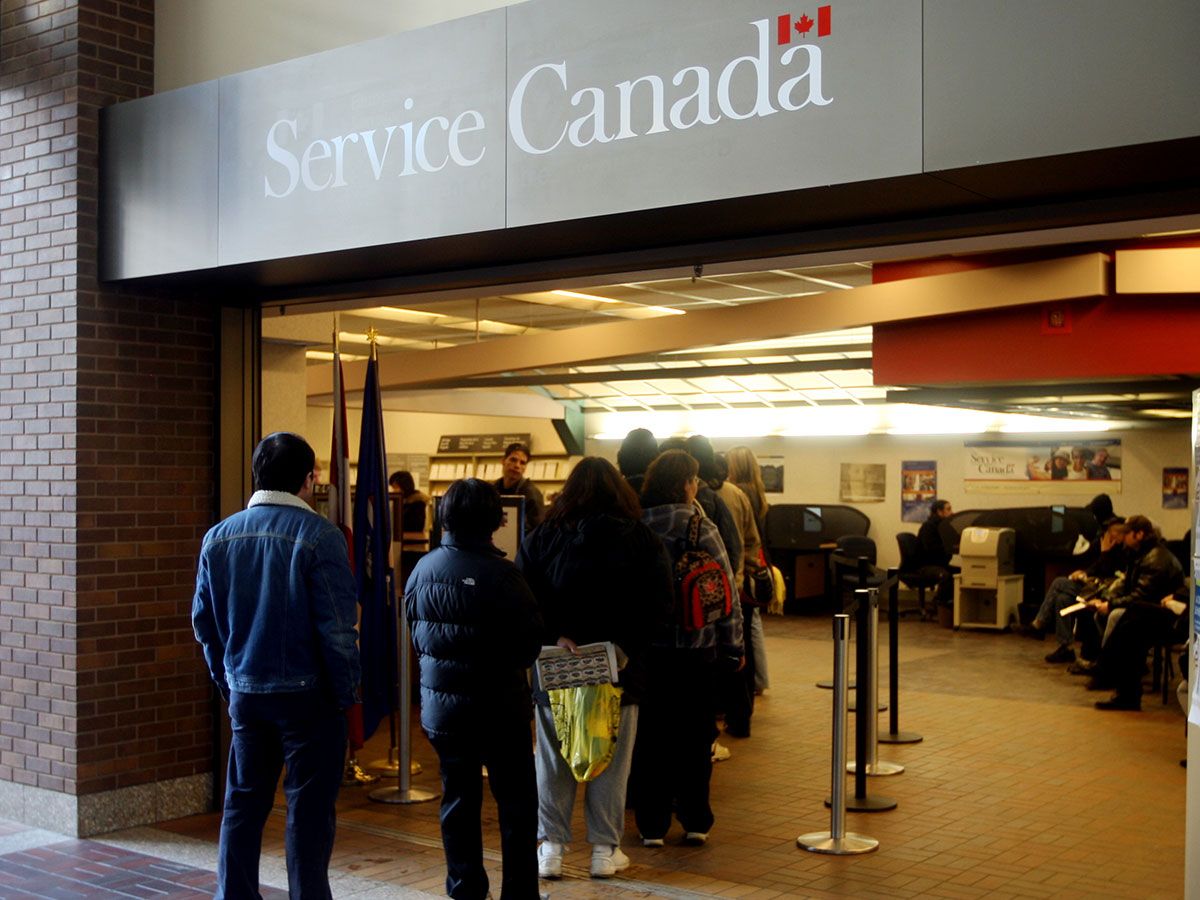

Donald Trump’s fresh wave of tariffs that took effect this weekend could cost tens of thousands of jobs across the country, according to a well-known economist.
Trevor Tombe, a professor of economics at the University of Calgary, estimates that the new levies could result in nearly 90,000 jobs lost — about 0.4 per cent of Canada’s labour force — many of them in provinces and sectors not directly exposed to the tariffs.
The new section-338 tariffs landed Saturday after Prime Minister Mark Carney suspended trade talks with the United States just hours before the Friday night deadline.
The 50-per-cent levies on $28-billion worth of Canadian goods covers a wide range of products including machinery and electronics, furniture, alcohol, food and clothing. Carney has pledged to match the U.S. tariffs dollar for dollar.
Tombe, writing for The Hub , estimates that if the tariffs remain in place and sales of the affected goods drop that 52,000 jobs in Canada are directly at risk. Another 35,000 jobs lost in suppliers and service providers to the exporters brings the total to over 87,000. Job losses on that scale would push the country’s unemployment rate from 6.4 per cent to 6.8, he said.
Ontario, the country’s manufacturing hub, will be hit the hardest. Tombe estimates this province could lose 36,000 jobs, Quebec, 18,000, British Columbia, 11,000 and Alberta, 9,000.
Alberta stands out as an example of the wide-reaching impact of the tariffs, he said. Even though its own exports are barely affected by the new levies, the province would lose jobs as services supporting exporters elsewhere are disrupted.
Despite this, economists, including Tombe, do not expect the new tariffs to derail Canada’s economy . Estimates on the hit to gross domestic product range from a decline of 0.5 per cent to a couple of tenths of a percentage point.
The $28 billion covers just 5 per cent of the goods Canada exports to the United States, or about 0.8 per cent of its GDP.
Royal Bank of Canada economists estimate that Canada’s average effective tariff rate rises to about six per cent from three per cent, “no longer the lowest among major U.S. trade partners, but still below the average U.S. tariff rate on imports from all countries (close to 7 per cent).”
The targeted exports do include some products previously exempted under the Canada-United-States-Mexico Agreement (CUSMA) , but 80 per cent of Canada’s exports to the U.S. will remain duty-free.
One big unknown is how this latest development will affect business sentiment, which was just starting to pick up again.
While the impact on trade “sounds digestible in the aggregate, some specific businesses/industries would be hit extremely hard,” wrote Robert Kavcic, senior economist at BMO Capital Markets.
“And, if the shelter of USMCA is in fact broken, and trust in the trade relationship is further scarred, that would do further damage to business confidence.”
Forty per cent of small Canadian businesses will be directly hit by these tariffs and a third of them expect revenues to drop by 50 per cent or more, said Dan Kelly, president of the Canadian Federation of Independent Business (CFIB).
“While I don’t want to second guess the decision of the Canadian negotiating team to walk away from the trade talks, the impact on small businesses will be immediate and significant,” he said on Saturday.
Retaliatory tariffs, which Carney said take effect the Tuesday after Labour Day, also hurt small firms as 50 per cent import from the U.S., he said.
The CFIB is urging the government to resume trade talks as soon as possible.
Sign up here to get Posthaste delivered straight to your inbox.
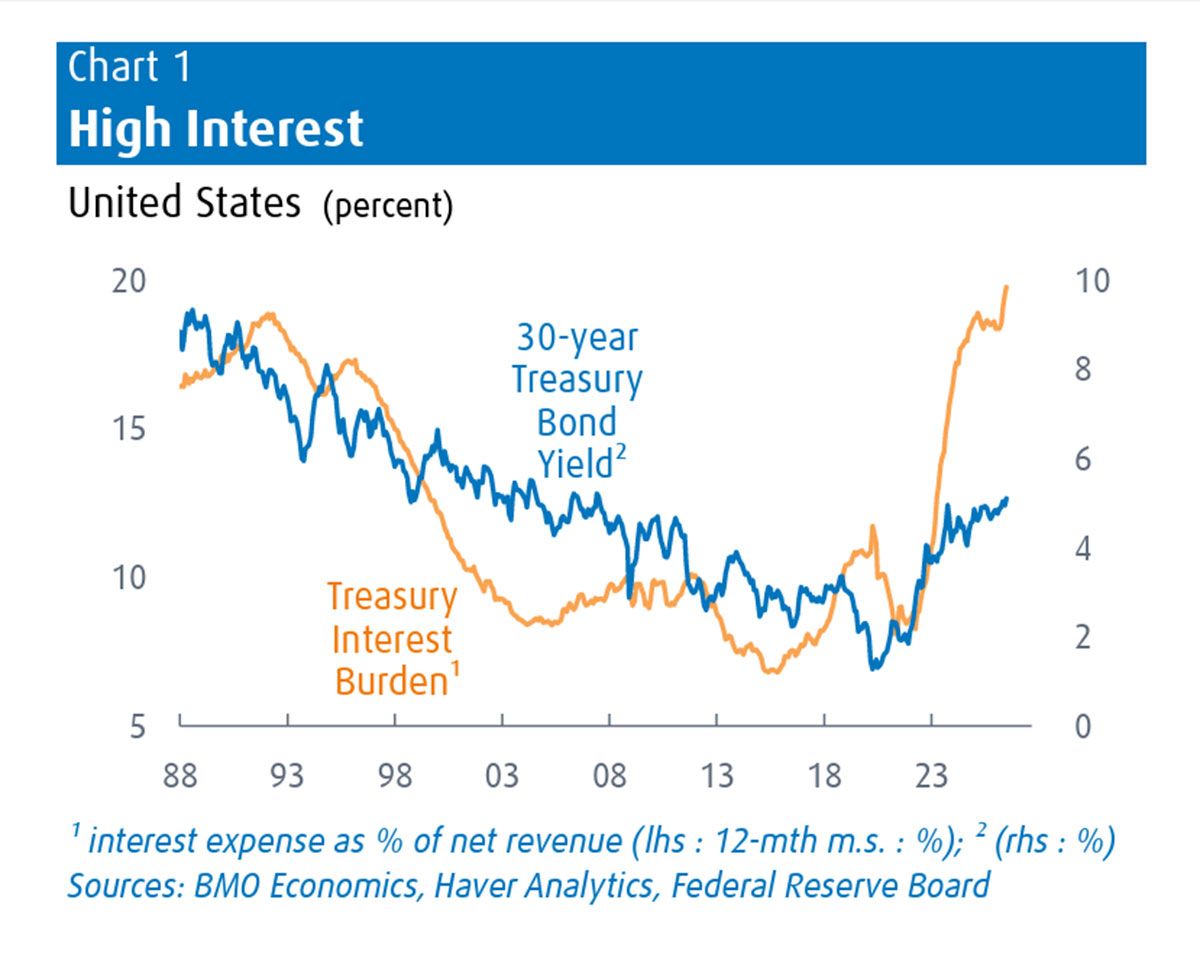
Citizens of the United States learned last week that their public debt had hit $40 trillion for the first time, after surging by a third in less than five years as interest costs soak up an increasing share of government revenues.
The news landed after Treasury Secretary Scott Bessent attempted to rein in a bond selloff that pushed the government’s long-term borrowing costs to 5.3 per cent for the first time since 2007.
U.S. debt service costs are now over $1 trillion a year in a budget where interest payments consume 20 per cent of total revenue, said Robert Kavcic, senior economist with BMO Capital Markets.

- Today’s Data: United States Chicago Fed national activity index


- Alberta suffered a $1.3 billion hit on Keystone XL – should it factor into Trump’s call to bring back the pipeline?
- The clock is ticking on fixed-rate mortgage bargains as bond yields surge higher
- The key to settlement negotiations lies in one simple sentence
Inflation has the same effect on your portfolio that termites do on a wood-frame house: it gnaws away unnoticed until the beams start to give.
Investors used to fight back against the pest of inflation with the classic 60/40 portfolio, owning stocks for growth and bonds for ballast. Then 2022 happened. Stocks and bonds fell together as inflation soared to its highest level since the early 1980s, leaving savers with no safe way out.
According to a Charles Schwab survey inflation is among the top of investors’ worry lists in the third quarter of 2026. Read on for tips on how to build a more durable defence against inflation right now.
 Interested in energy? The subscriber-only FP West: Energy Insider newsletter brings you exclusive reporting and in-depth analysis on one of the country’s most important sectors. Sign up here.
McLister on mortgages
Want to learn more about mortgages? Mortgage strategist Robert McLister’s Financial Post column can help navigate the complex sector, from the latest trends to financing opportunities you won’t want to miss. Plus check his mortgage rate page for Canada’s lowest national mortgage rates, updated daily.
Financial Post on YouTube
Visit the Financial Post’s YouTube channel for interviews with Canada’s leading experts in business, economics, housing, the energy sector and more.
Today’s Posthaste was written by Pamela Heaven with additional reporting from Financial Post staff and Bloomberg.
Have a story idea, pitch, embargoed report, or a suggestion for this newsletter? Email us at posthaste@postmedia.com .
- Housing market recovery could still be two years away, says RBC
- An energy shock much bigger than oil is brewing out there
Bookmark our website and support our journalism: Don’t miss the business news you need to know — add financialpost.com to your bookmarks and sign up for our newsletters here
Popular Products
-
 Wireless Health Tracker Smart Ring - R11
$131.56$65.78 -
 Electric Hair Straightener and Curlin...
$161.56$80.78 -
 Pet Oral Repair Toothpaste Gel
$59.56$29.78 -
 Opove M3 Pro 2 Electric Massage Gun
$901.56$450.78 -
 Portable Electric Abdominal Massager ...
$45.56$22.78