Sam “claws” Attention Back Openai
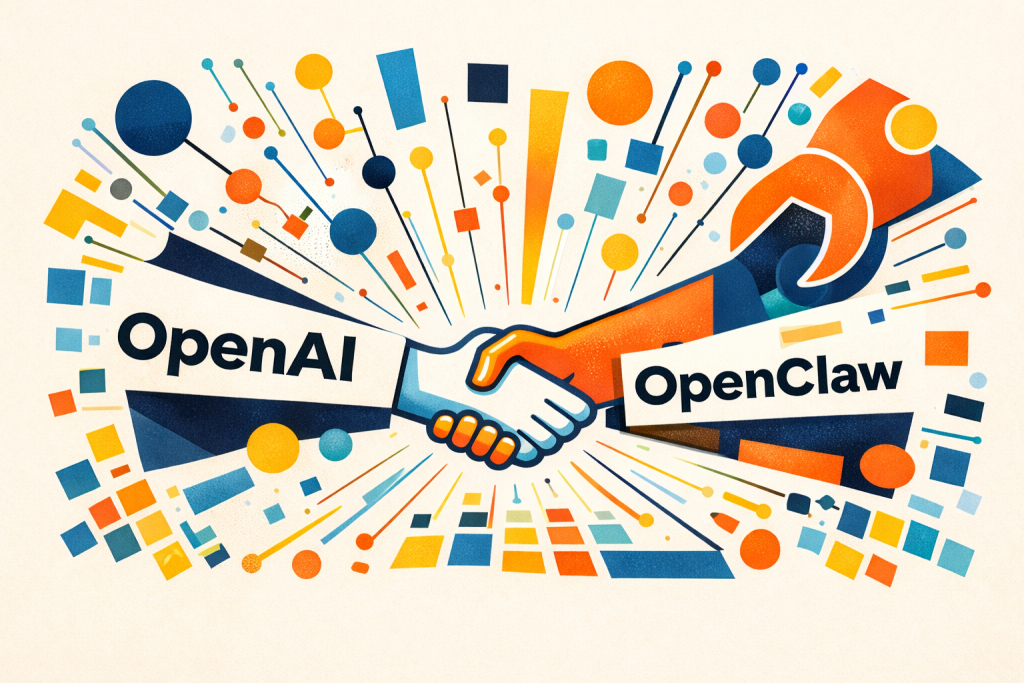
Sam Altman got his man. Not only to compete with Anthropic’s Claude Code, but also to show the world what is possible with Codex. And at the same time, he got a brand-new story to tell about invisible autonomous agents and to raise ever more money. And the extra olive in this vodka gimlet: he kept OpenClaw from the hands of rival Meta.
This weekend, OpenAI’s CEO announced that Peter Steinberger, the Austrian developer behind the viral open-source AI agent OpenClaw, was joining the company to “drive the next generation of personal agents.” Steinberger, who built OpenClaw as a side project that exploded to over 180,000 GitHub stars in a matter of weeks, had been courted by every major lab in Silicon Valley, including Zuckerberg’s Meta, which came very close to landing him. I first reported that Peter was talking to Zuck, Sam, and that everyone else was chasing him around.
The clapbacks have been clever and brutal. Ed Zitron compared it to “Excite buying Blue Mountain.” On Reddit, the best line was “snake oil salesman buys more snake oil.” Fair enough. But throughout tech’s history, we have seen snake oil play the role of Valvoline to the future. I still think this is a great move. Let me explain.
Codex Codex Codex. OpenAI’s coding tools have lost the developer mindshare. How else can you explain the explosive growth in Anthropic’s Claude Code? It went from a billion dollars in annual revenue to $2.5 billion in just six weeks. I wrote about that last week. That kind of velocity is existential if you are OpenAI. You cannot sit on the sidelines and watch someone else own the developer workflow. Codex needed a jolt. Peter is the lightning rod.
Shipper Not Shit Talker. What people outside the developer ecosystem don’t appreciate is that Peter pushes more code than almost anyone. And he uses OpenAI’s own tools. He is literally eating his own dog food. He has been running circles around people who are supposedly building these products. That is not just talent. When your best external power user becomes an internal driving energy, the gap between what your product promises and what it actually delivers narrows drastically.
Claw Points to the AI Future. As I wrote earlier this month, what I call “embedded intelligence” is the real on-ramp to the future. The hype is about frontier models. The disruption is in the workflow. OpenClaw is exactly that. AI that lives in the background, watches your conversations, learns context, and handles tasks. I compared it to Yahoo Pipes, IFTTT, and Apple Shortcuts. It is on that curve. Don’t look at OpenClaw as a standalone project. Think of it as a sign of things to come. Peter built the thing that showed people what is possible when AI actually does things instead of just talking about doing things. Now he is inside the building where he can wire that vision into a product used by hundreds of millions of people.
OpenAI’s Creativity Problem. This is the part nobody wants to say out loud. I mean, who wants to piss off the biggest, baddest AI daddy, right? So, I will say it. OpenAI has become a weird collection of mini-organizations that can build impressive infrastructure, come up with interesting ideas, but lately have been struggling with product imagination. And focus. In comparison, Anthropic is doing a few things well. The bet is that Peter will bring a new kind of thinking into the company. He is a creative person in a way that most people at OpenAI are not. He does not just write code. He thinks about what the code should do and feel like. That is a whole different muscle, and that’s what you need in order to imagine putting “AI to work.”
Meta-Play. Zuck was in the mix. He almost had Peter in the bag. And it would have been a very different story if Peter had gone that way. Any chance of OpenClaw being open would be gone. And no matter how much they tell you, Meta’s AI reality will always have an advertising-first mindset. That is their core corporate DNA. It will eventually revert to engagement metrics and distribution, and not to the craft of building something that developers actually want to use. Sadly, that DNA is spreading through OpenAI as well, especially as it has started building an organization staffed by ex-Facebookers.
Anthropic’s Missed Opportunity. Let’s just face it, Anthropic and its CEO are no marketing mavens. In fact, they are the exact opposite. They had a chance to own what was, at that time, a viral phenomenon. Instead they went legal with OpenClaw, forcing it to rename itself. Twice. Now the guy who built it works for their biggest competitor. OpenClaw has a foundation behind it. And no one knows how to misuse the word “open” better than OpenAI. Self-own?
Mo Money. Since that ill-timed comment by Jensen Huang about OpenAI and its inefficient business practices, OpenAI has been on a narrative losing streak. They needed a course correction. They needed narrative momentum. Peter gives them both. When you don’t have a narrative, you can’t raise money. Now they have one. Personal, autonomous, and invisible agents. Oh my, that’s catnip to any future investor looking to dream and fantasize.
The IPO End Game. As I wrote last week, whoever goes public first sets the standard. Anthropic has already hired its IPO advisors. When they file, every analyst covering OpenAI’s eventual offering will use Anthropic as the yardstick. Enterprise revenue, margins, path to profitability. OpenAI, with its 85 percent consumer revenue and growing roster of ex-Meta executives, risks looking like the next Facebook when it should be competing as a developer platform. Peter is Sam’s answer to that problem. He is the antidote to the creeping perception that OpenAI is becoming an ad-supported consumer company that happens to have a large language model. This hire says: we build tools, not feeds.
So what is ClawMan being paid to be OpenAI’s coding superhero? My guess is that his compensation is probably nine figures. That is the going rate for someone who can single-handedly shift the trajectory of your most important product bet. I mean, Zuck has been paying a lot more for far less sexy hires. Sam must have had to match whatever Zuck was dangling, right?
Whether Codex can actually eat Claude Code’s lunch in the next six months, who knows. And who cares. By then Sam will have found his shiny new penny. But I think for now, OpenAI has someone in the building who knows what a great coding experience looks like, because he has been building one himself.
February 16, 2026. San Francisco,
More Related Reading
The New Announcement Economy. How OpenAI mastered the art of the press release and why velocity now trumps reality.
How AI Goes to Work. The case for “embedded intelligence” and why OpenClaw is a sign of what’s coming next.
Mad Money and the Big AI Race. Anthropic versus OpenAI by the numbers, and why whoever files first wins the IPO narrative.
Popular Products
-
 Classic Oversized Teddy Bear
$23.78 -
 Gem's Ballet Natural Garnet Gemstone ...
$171.56$85.78 -
 Butt Lifting Body Shaper Shorts
$95.56$47.78 -
 Slimming Waist Trainer & Thigh Trimmer
$67.56$33.78 -
 Realistic Fake Poop Prank Toys
$99.56$49.78