San Francisco Is Expanding Access To Free Or Discounted Childcare. How Do Families Sign Up?
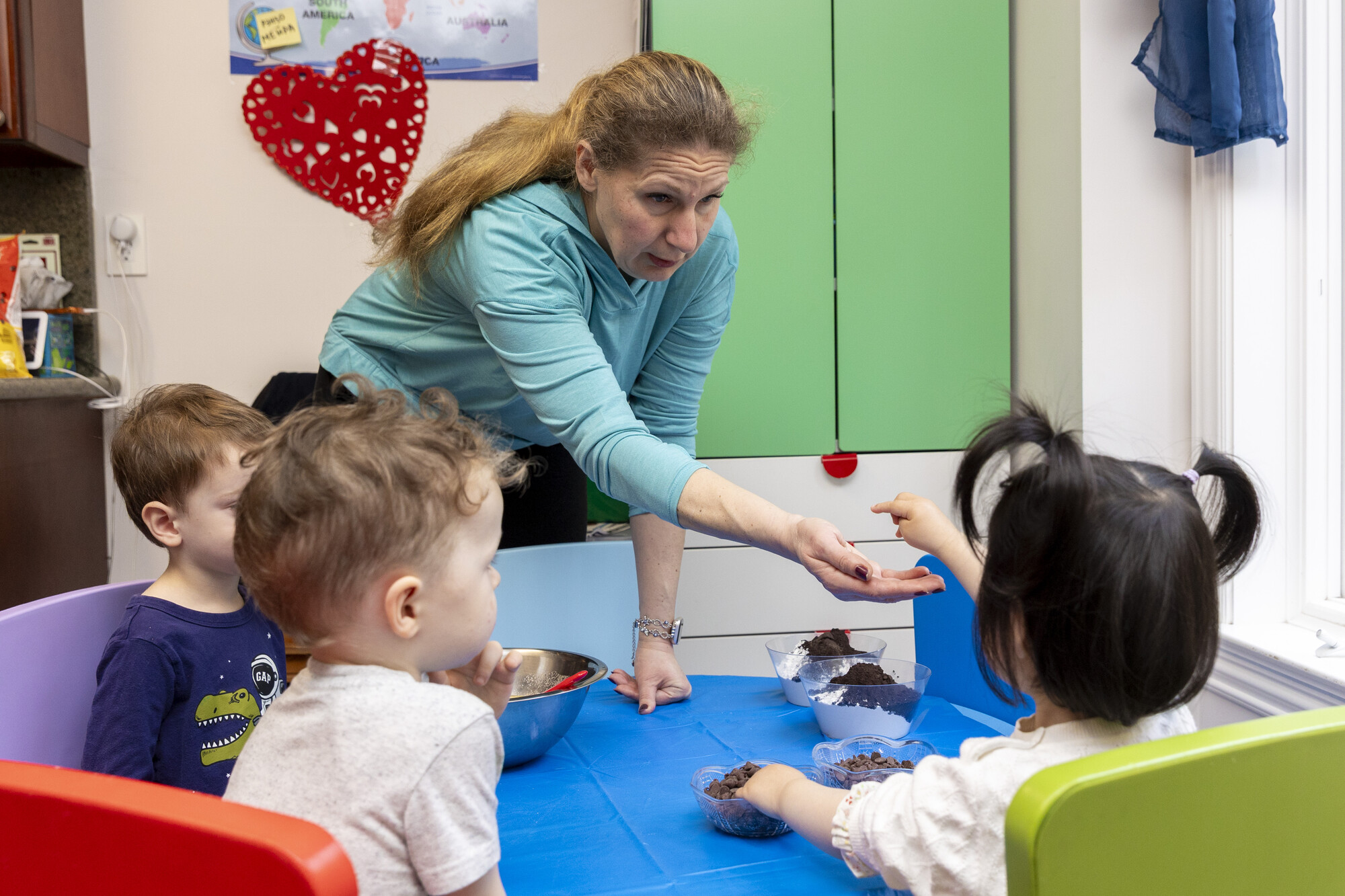
This story is part of How We Get By, a KQED series exploring how people are coping with rising costs in the Bay Area and California. Find the full series here.
San Francisco is widening access to early childhood education and care for children from birth to 5 years old — by offering families financial aid.
A few years ago, the city began using revenue from a local business tax, plus state and federal dollars, to fund free childcare and preschool for families with low and moderate incomes. Starting this summer, higher-income families can apply for a 50% tuition discount.
The expansion is expected to take some financial pressure off young families in the city as they grapple with the highest childcare costs in California.
But there’s a catch: financial aid is only available to families who enroll in any of the approximately 560 early learning programs participating in the city’s Early Learning For All, also known as ELFA, network.
Here’s what San Francisco families need to know about the system and how they can sign up.
Who qualifies for San Francisco’s financial aid for childcare?
Free tuition
Free tuition is available for families who live in San Francisco and earn up to 110% of the Area Median Income, or AMI. That means a single parent with a child, who makes up to $142,650 per year — or a couple with one child earning $160,500 per year — would qualify for free tuition.
Full tuition credit
Families earning between 111% and 150% of the AMI (that’s up to $194,550 for a family of two, and up to $218,850 for a family of three) can get full tuition credit to pay for most of the cost of childcare or preschool. The subsidy goes directly to the provider, but families might need to cover a co-pay and any extra hours of care.
The San Francisco Department of Early Childhood, a branch of the city’s government, sets the rates it will reimburse to providers in the ELFA network. For the 2026-27 fiscal year, which began July 1, families can save the following amounts in childcare per month for each child in these age categories:
- Infants (0 to 24 months): $3,027 per month
- Toddlers (24 to 36 months): $2,306 per month
- Preschoolers (3 to 5 years): $2,115 per month
50% tuition discount
Families earning between 151% and 200% of the AMI (that’s up to $259,400 for a family of two, and up to $291,800 for a family of three) can apply for 50% off the reimbursement rates — but they must pay the rest of the tuition costs set by the provider and any extra hours of care or fees. Here’s how much families can save in childcare per month for children in these age categories:
- Infants (0 to 24 months): $1,514 per month
- Toddlers (24 to 36 months): $1,153 per month
- Preschoolers (3 to 5 years): $1,058 per month
How is income eligibility determined?
The AMI is based on gross income, which is the amount you earn before any taxes or other deductions are taken out of your paycheck. Families can submit tax documents from the previous year or their most recent pay stubs. Eligibility is determined based on the documentation provided and the family’s household size, said Jonathan Rubinsky, a spokesman for the Department of Early Childhood.
How do I sign up for San Francisco childcare subsidies?
You can sign up yourself on the Department of Early Childhood’s online portal — or you can contact these three Childcare Resource and Referral agencies who can help you apply.
You can also contact a preschool or childcare program in the ELFA network and their staff will help you apply for the subsidy.
How do I choose among the hundreds of childcare programs and preschools in the ELFA network?
Families can browse through a centralized list of childcare and preschool programs in the ELFA network to learn about their locations, hours, prices, available spaces and educational approaches, such as immersing children in specific languages or in a Montessori or play-based curriculum.
You can also click on the provider’s state license number to look up details of their health and safety records, state regulators’ inspections of their facilities, and any citations or complaints they received.
Programs based in the provider’s home and licensed to serve up to 14 children are categorized as “Family Child Care.” Larger programs with multiple classrooms and staff are categorized as “centers.” Some families prefer a home environment for their children, while others prefer larger centers — and you can request a tour of the facility to inform your decision.
Parents of 4-year-olds can also opt for a school-based program called transitional kindergarten. The pre-kindergarten program is taught at San Francisco Unified School District elementary schools or early education centers.
I really want to enroll my child in a certain program, but they don’t have any openings. What can I do?
Some childcare homes or centers have waitlists because the demand for a space in their program is driven by parental choice, according to Meenoo Yashar, deputy director of early learning at the city’s Department of Early Childhood.
She said parents can contact the provider to find out when they might have an opening and get on their waitlist.
What’s the quality of these programs?
All of these programs meet the state’s minimum health and safety standards for licensed centers and family childcare homes. These include:
- Passing staff background checks
- Receiving staff training in pediatric CPR and First Aid
- Maintaining specific staff-to-child ratios
- Ensuring safe indoor and outdoor physical space
To join the Early Learning For All network, they also must meet the Department of Early Childhood’s quality standards, which are higher than state and federal requirements, according to an analysis by the Learning Policy Institute.
Yashar said those expectations include providing a “welcoming, culturally responsive environment” to parents, where there are multiple communication channels to tell them what’s going on in the classroom and how their children are developing.
Yashar said members must also provide a “rich learning environment with lots of opportunities for children to do exploratory play.” That means early educators are providing a variety of hands-on learning materials, and they’re also interacting meaningfully with children.
To join ELFA, educators get assessed on the way they engage with children, Yashar said. “Are they asking open-ended questions? Are there opportunities where children are talking to each other, or are they just being talked to?” she said. “We’re looking to see, are the teachers also helping the children understand what’s going to happen in their day?”
Providers in the ELFA network must also provide data regularly to the Department of Early Childhood. In return, they receive wage supplements for the teaching staff and funding to improve their facilities, including outdoor play areas. Teachers also receive professional development, coaching and access to mental health consultants.
The department also covers tuition for educators who want to complete their degrees in early childhood education at local colleges.
“This work has to do with optimizing brain development during a critical time, and so we want our educators to have access to higher education and understand the latest research and methodology for working with young kids,” Yashar said.
Higher pay has helped stabilize staffing in a sector plagued by workplace burnout due to low wages and lack of support and benefits. Last year, a study by UC Berkeley’s Center for the Study of Child Care Employment found that the turnover rate for teachers and assistant teachers in San Francisco was 17%, which is 23% to 35% lower than in other places in California.
“If you’re getting better paid, hopefully you’re going to stay in your job,” Yashar said. A stable staff is a marker of quality, she said, because it allows children to strengthen relationships with their educator.
Popular Products
-
 Gas Detector Meter
$311.56$155.78 -
 Foldable Garbage Picker Grabber Tool
$93.56$46.78 -
 Portable Unisex Travel Urinal
$49.56$24.78 -
 Reusable Keychain Pepper Spray – 20ml
$21.56$10.78 -
 Camping Survival Tool Set
$41.56$20.78