Singapore’s Future Island Plan Stirs Concern Over Reefs And Old Fishing Grounds

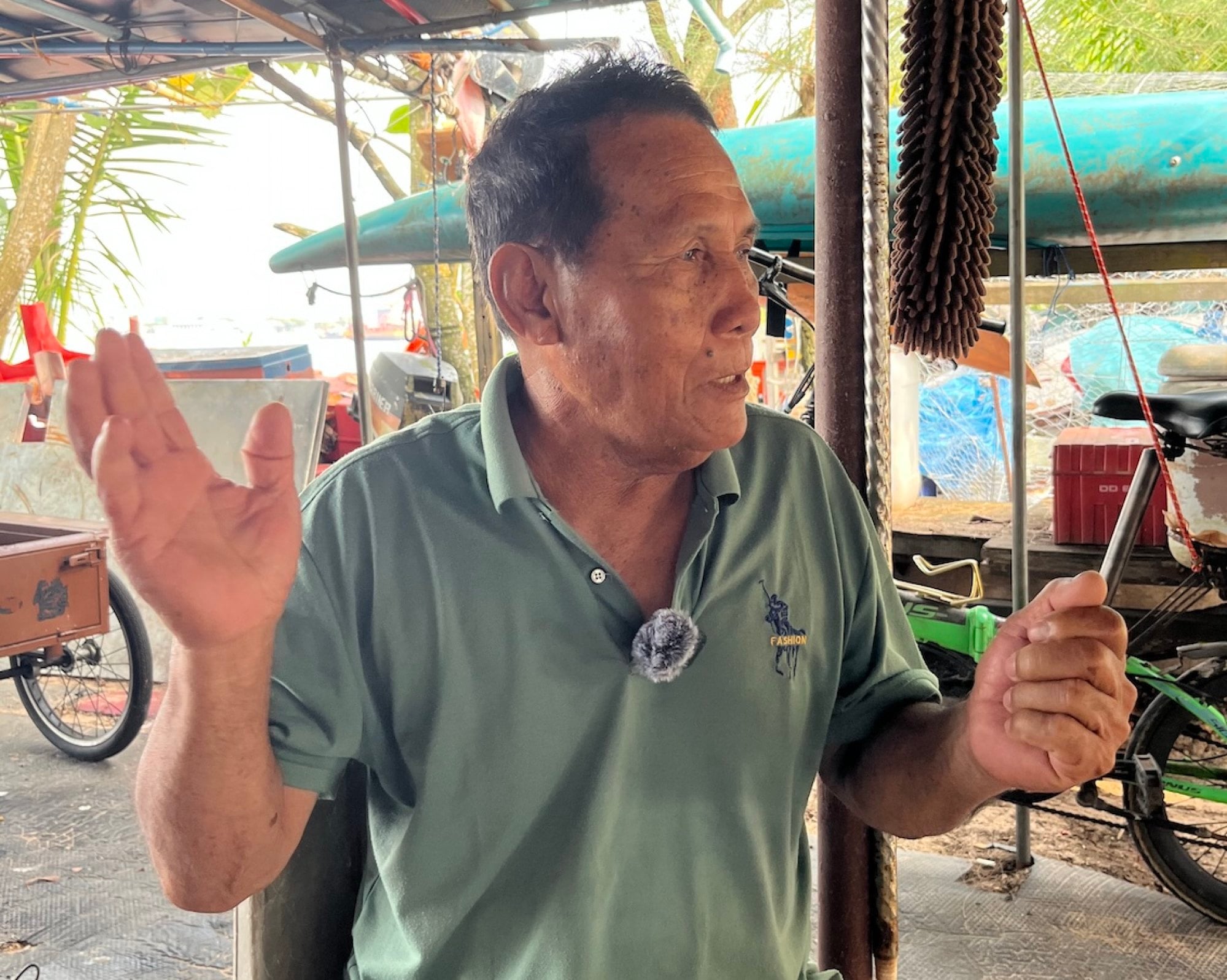
Few have spent as much time in the waters surrounding Singapore’s southwestern islands as fisherman Hamzah Mohamad, 71.
The former resident of Pulau Sudong has been fishing, primarily by setting up bubu – wire fish traps in Malay – in the rocky coral reefs surrounding Sudong, Bukom and Semakau for more than half a century.
He knows the underwater reefs by heart, what the wind changes mean for visibility and which fish species are in season.
But the seascape he has long known may be set for another transformation.
Prime Minister Lawrence Wong announced plans on Sunday to form a new island in the coming decades for industry, energy and defence needs by merging islands including Semakau, Bukom and Sudong, similar to how Singapore joined smaller islands through land reclamation to create the energy and chemicals hub Jurong Island.
Delivering his National Day Rally speech, Wong said: “Jurong Island shaped our economy for the last fifty years. This new Western island can help shape Singapore for the next 50 years and beyond.”
Wong framed the proposal as part of Singapore’s long-term approach to land use, saying the city state had to plan over decades to create options for future generations while balancing development with green spaces, biodiversity and heritage.
The proposed western island, he said, could support advanced manufacturing, new power generation infrastructure and defence needs, while a new link would connect Jurong Island with the future island.
For former islanders, environmental groups and marine advocates, the long-term plan has raised questions over how Singapore can balance future land needs with coral reefs, access to fishing grounds and its remaining maritime traditions.
The islands were once home to hundreds of residents who made a living mainly as fishermen and had to relocate to mainland Singapore in the 1970s when their islands were earmarked for redevelopment.
Sudong has since become a military live-firing zone with an airstrip, while Semakau was joined with the smaller island of Pulau Seking to form a landfill and Bukom houses an oil refinery.
Since 1991, there have been proposals to increase the land mass surrounding the three islands under Singapore’s long-term plan from the Urban Redevelopment Authority. In the 2011 edition of the plan, the islands were earmarked for “possible future reclamation”. As of the latest plan dated 2022, the islands were not merged.
Former islanders, non-governmental organisations and environmentalists said they were concerned about what the project could mean for coral reefs and their former home, with some telling This Week in Asia they feared it could become another example of nature, memory and maritime heritage giving way to development.
The Straits Times quoted Huang Danwei, director of the National Institute for Marine and Ocean Sciences, as saying reefs in Pulau Hantu and Semakau dated back about 8,000 years and that there was “no mitigation” for reefs directly buried by land reclamation.
In comments to local media, a Ministry of National Development spokesman said the government recognised the biodiversity value of the western islands and their surrounding waters, and was studying the plans carefully as it sought to create options for Singapore’s future land needs.
The spokesman told The Straits Times that the government would conduct “technical studies” to guide the development plans, including the reclamation profile.

These would include feasibility studies, site investigations and surveys, as well as engineering and environmental studies, to better understand possible development options and their preliminary impact on biodiversity and hydrodynamics.
The spokesman also told CNA that the government would “engage stakeholders early” before studies and work began and consider their feedback. Their knowledge and expertise would be tapped to assess potential biodiversity impact and identify measures to avoid and mitigate impacts where possible, he added.
This Week in Asia has contacted the Ministry of National Development for comment on whether heritage groups would be consulted ahead of any potential redevelopment works.
Firdaus Sani, founder of non-governmental organisation Orang Laut SG, told This Week in Asia that the indigenous orang pulau, or island people, and orang laut, or people from the sea, communities felt overlooked and helpless about whether they could still have access to the southern waters.
“If you were to look at it from a different perspective of indigenous associations outside Singapore, indigenous spaces and viewpoints might be treated more seriously. Now it seems like the priority is more an economic one, as we’re not even consulted about the plans, which is a shame,” he added.
Han Jok Kwang, 72, a former resident of Bukom and a business development adviser, was concerned about the sea life surrounding the islands, having spent his first 16 years on the island.
“My level-headed brain is telling me that humans need to take care of humans, but I worry about the rich marine life there,” said Han, whose grandmother was a resident of neighbouring Semakau.
“It’s a very big project, and it’ll probably take so long to build that nobody will be upset any more by the time it opens,” he added.
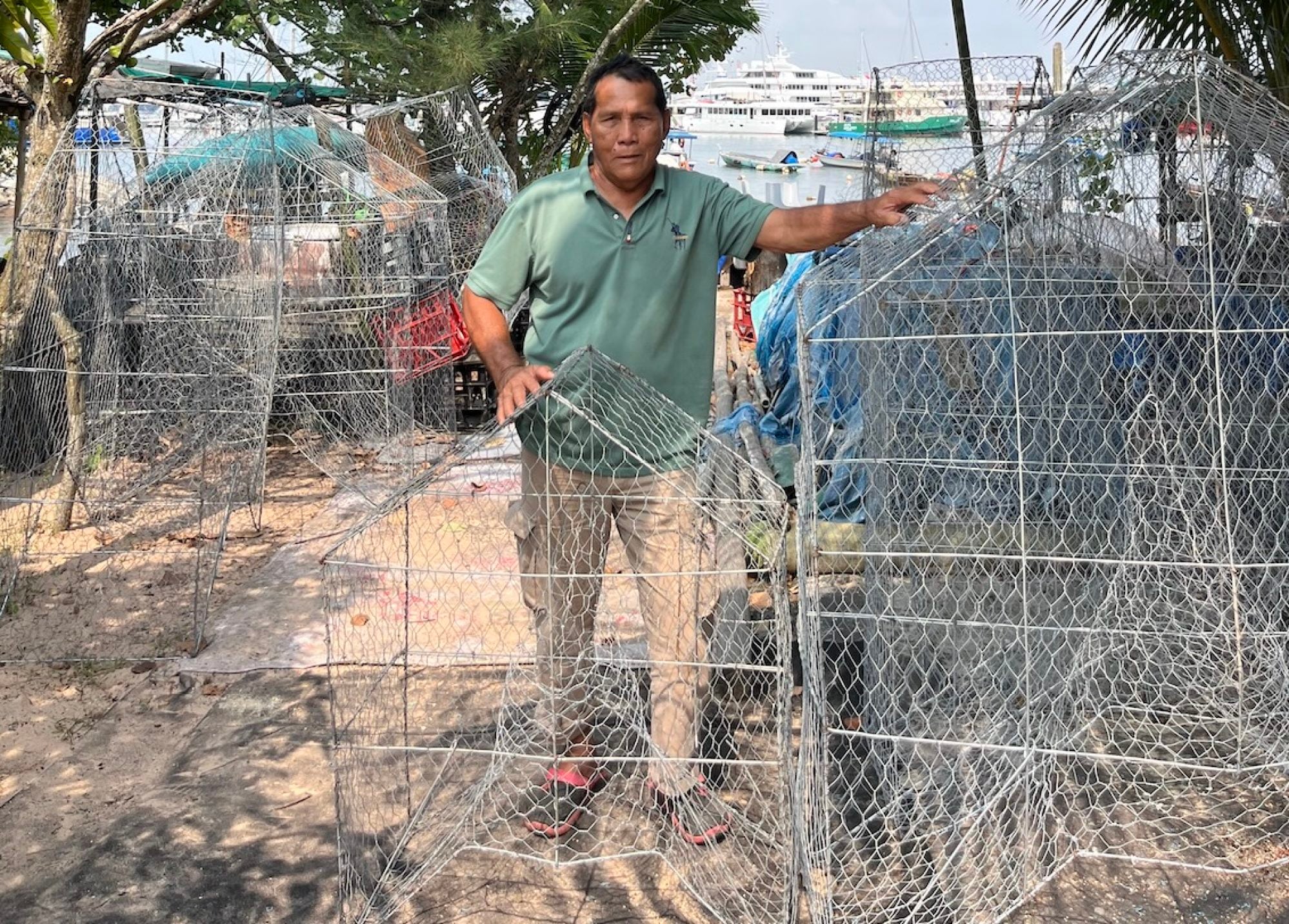
Several former residents from Sudong, like Hamzah, regularly take boats out to fish in the area surrounding their former homes using the bubu traps, traditionally made using materials such as bamboo or rattan, to earn an income – a vanishing trade in modern Singapore.
Firdaus said: “What happens to the community’s livelihood? What happens to history, memory, waterways that we remember and that we know, and some of the places that we deem sacred? Some of the islands also have deep roots to these spaces, more than a physical sense. There are a lot of these things that have not been considered.”
If the islands and surrounding waterways were reclaimed, the fishing grounds would disappear as well, he said.
“It’s literally erasing an entire fishing and maritime culture that we still have a connection to. It’s the only thing that they had left.”
While their origins are unclear, bubu traps are an indigenous craft practised by the early Malay and local islander communities like the orang laut for generations, long before Singapore’s independence in 1965. Maritime communities throughout Southeast Asia also use the device for fishing.
At West Coast Park, Hamzah and other former islanders have built makeshift shelters over the years along a fenced-up beach area where they keep their bubu traps and moor their boats.
He and his brother, Ahmad Sah Mohamad, known in the community as the Sudong brothers, spend most days under their shelters weaving their bubu traps and make a weekly pilgrimage to the waters around Sudong to collect their catch and replace traps – a traditional way of life that has been passed down through generations. They are not allowed to go near the island or land as it is a restricted area.
“Once this place is gone, I’ll have to learn almost everything again because I know these places so well, and how the water is like here and what kind of fish are in season here. I don’t know if there will be other coral reefs we can go to,” Hamzah said.
The retired contractor hopes the waters remain open for fishing as he relies on it for income, and that there will still be rocky coral reefs in the area for him to place bubu traps.
“I don’t know what I’ll do if the area is closed off. If I have to go somewhere else, it has to be somewhere with coral reefs because that’s the only way you can really place a bubu,” Hamzah said.
Orang Laut SG’s Firdaus said he was not hopeful about prospects for the traditional fishing practice.
“The truth of the matter is I don’t know. We could continue to try, as a way of preserving cultural heritage, but it’s not going to be truly a living heritage. It’s really going to be how museums are – static and remaining in the past,” he said.
Popular Products
-
 Adjustable Shower Chair Seat
$107.56$53.78 -
 Adjustable Laptop Desk
$91.56$45.78 -
 Sunset Lake Landscape Canvas Print
$225.56$112.78 -
 Adjustable Plug-in LED Night Light
$61.56$30.78 -
 Portable Alloy Stringing Clamp for Ra...
$119.56$59.78