South Africa-us Relations Must Be Based On Mutual Respect: President Ramaphosa
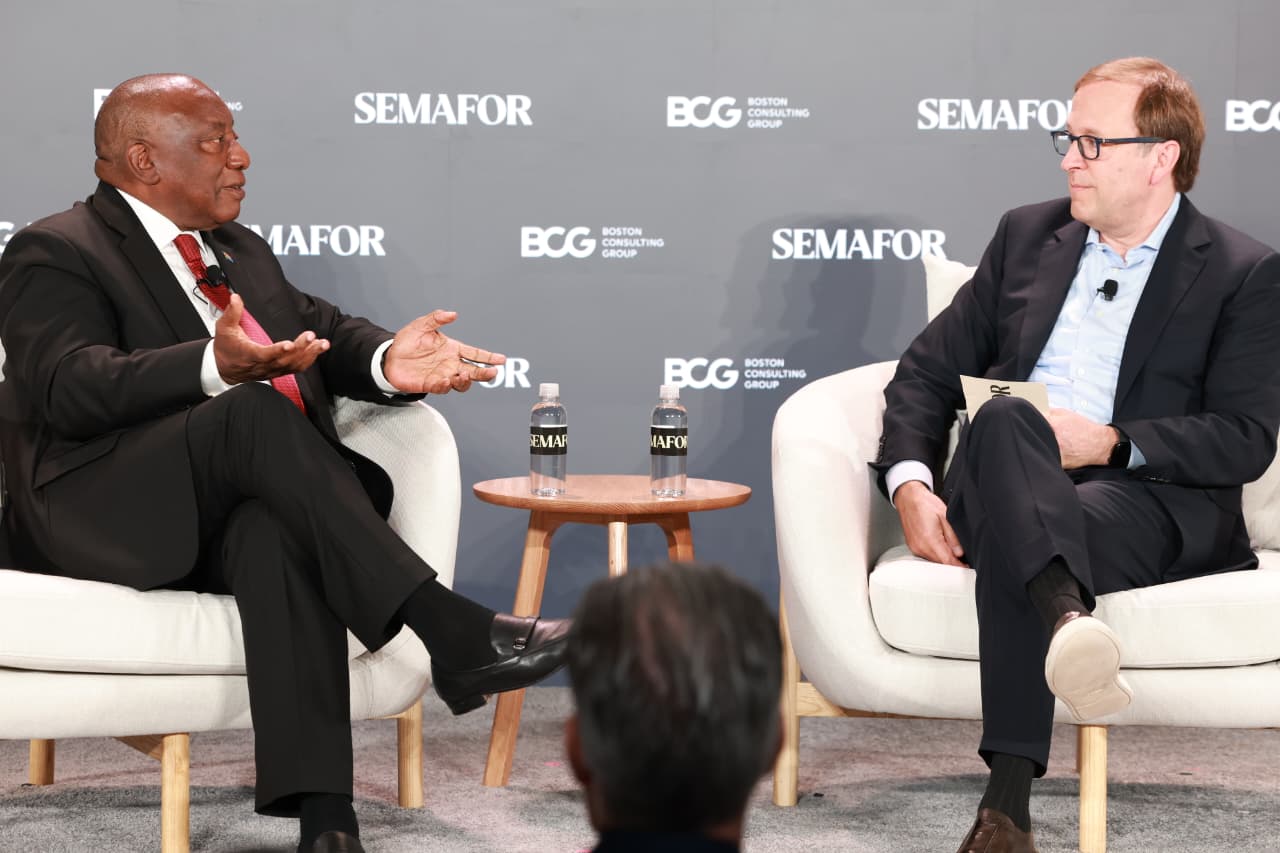
Silicon Valley, California- President Cyril Ramaphosa says South Africa remains committed to maintaining constructive relations with the United States (US), despite recent tensions between the two countries, emphasising the importance of mutual respect, transparency and dialogue in resolving differences.
The President acknowledged that the deterioration in relations had affected South Africa, but said government continued to engage Washington to address disagreements and correct what he described as misinformation about the country.
“No doubt, this what you call a rupture has had an impact. It's an impact that we are managing, and we've always said that relations between South Africa and the US are very important,” he said.
President Ramaphosa was speaking during a moderated conversation with ABC News Chief Washington Correspondent Jonathan Karl in Silicon Valley, California, on the sidelines of his high-level working visit to the United States from 15 to 21 November 2026.
The discussion touched on the strained relationship between Pretoria and Washington following President Donald Trump's Oval Office meeting with President Ramaphosa earlier this year, as well as the implications for trade, investment and diplomatic cooperation.
President Ramaphosa said the United States remained an important economic partner, given its position as the world's largest economy and the significant number of South African businesses exporting goods and commodities to the American market.
“The U.S. remains the largest economy in the world, and there are a number of our businesses that export commodities and products to the United States, so it is good for South Africa to have good relations with the US on the basis of mutual respect and a basis of being prepared to deal with each other fairly and transparently,” he said.
He said disagreements between the countries should be addressed through engagement and a willingness to find common ground.
“And if there are problems, we should be able to find ways of resolving problems, and on the basis of also respecting multilateralism and the way that we can overact in terms of international relations and what have you,” he said.
Oval Office meeting
Reflecting on the controversial White House meeting, during which President Trump presented material alleging that white South Africans were victims of genocide, President Ramaphosa described the encounter as an ambush and attributed the situation to misinformation.
“I would like to think that that moment that took place in the White House, I regard it as an ambush, an ambush, and in many ways, I think it was based on him being misinformed because the video that he showed was not depicting South Africa. The press clippings did not depict South Africa, and I sought to point out to him that this is not my country, and in fact, did say that there is no white genocide in South Africa. We don't do that. We would not do that anyway,” President Ramaphosa said.
The President said South Africa's constitutional democracy and commitment to human rights did not permit the targeting of any national group.
“We are Nelson Mandela's children, and we respect the human rights of everyone, black, white, everyone, and the constitution of our country would never allow us to do something like that. So, we never target any national group for either persecution or genocide. It will never happen in South Africa,” the President said.
He said the incident had contributed to an inaccurate understanding of South Africa and its policies in the United States.
“The other pity is that it has tended to underpin the way the US is related to us in South Africa as based on falsehoods and incorrect information, and we've sought to engage with the United States to correct that falsehood, but also to deal with the reality of where our country is and where we want to go in the cooperation with the United States,” the President said.
Asked about his communication with President Trump since the White House meeting, President Ramaphosa clarified that the two leaders had not spoken since that encounter.
“We haven't spoken since that interview. No, we haven't spoken since then. But prior to that, yes, we had been easily in conversation,” he said.
He added that he had attempted to contact the American President ahead of his current visit to the United States.
“I placed a call to him, and I think he was just too busy to respond. But he often takes my calls, so I'm sure he will return my call. I do have his cell phone number, and we do chat now and again when things are cool and calm,” the President said.
President Ramaphosa said it was appropriate for heads of state to inform their counterparts when visiting their respective countries.
Musk and Starlink
The conversation also turned to South African-born technology entrepreneur Elon Musk, who has been critical of the South African government's policies on transformation and empowerment.
Responding to Musk's characterisation of South Africa's policies as “apartheid 2.0”, President Ramaphosa said he believed the entrepreneur did not fully appreciate the historical impact of apartheid on black South Africans.
“Well, I think Elon, I mean, by nature he is very conservative, and he doesn't fully understand the extent of what the apartheid policies did to black South Africans…maybe he has not really appreciated and come to understand the harm that the apartheid policies did, and the way the apartheid policies chose white people only for advancement by law, by practice, by protocol, by everything, and the education that he received was much better education than what I received,” he said.
The President illustrated the disparities in educational opportunities under apartheid by comparing the resources allocated to his education with those available to Musk.
“When the party government spent 12 rand on his education, he spent one rand on my education. So, if one does not understand that one will never be able to understand precisely what needs to be done to remedy the harm that was done,” the President said.
The President said Musk's success was partly rooted in the education and opportunities he received in South Africa and urged him to give back by contributing to the country's development.
On the prospect of Musk's satellite internet service, Starlink, operating in South Africa, President Ramaphosa confirmed that discussions had taken place but said the matter remained subject to the country's regulatory framework.
“Well, there have been discussions and they revolve around policies. And he is one of those who has had difficulty in understanding the policy position,” he said.
He stressed that foreign companies seeking to operate in South Africa were required to comply with the country's laws and policies.
“And all countries have policies in terms of how they admit companies to operate. The United States has the same; it has its own policies. And when you want to come and operate here, you've got to subscribe to the policies of the country,” he said.
The President's visit to Silicon Valley is aimed at strengthening South Africa's economic and technological partnerships with the United States, including attracting investment and building cooperation with leading technology companies. – SAnews.gov.za
Popular Products
-
 Fake Pregnancy Test
$61.56$30.78 -
 Anti-Slip Safety Handle for Elderly S...
$57.56$28.78 -
 Toe Corrector Orthotics
$41.56$20.78 -
 Waterproof Trauma Medical First Aid Kit
$169.56$84.78 -
 Rescue Zip Stitch Kit
$109.56$54.78