Starbucks Plans 5,000 New Stores, But They Won’t Look The Same
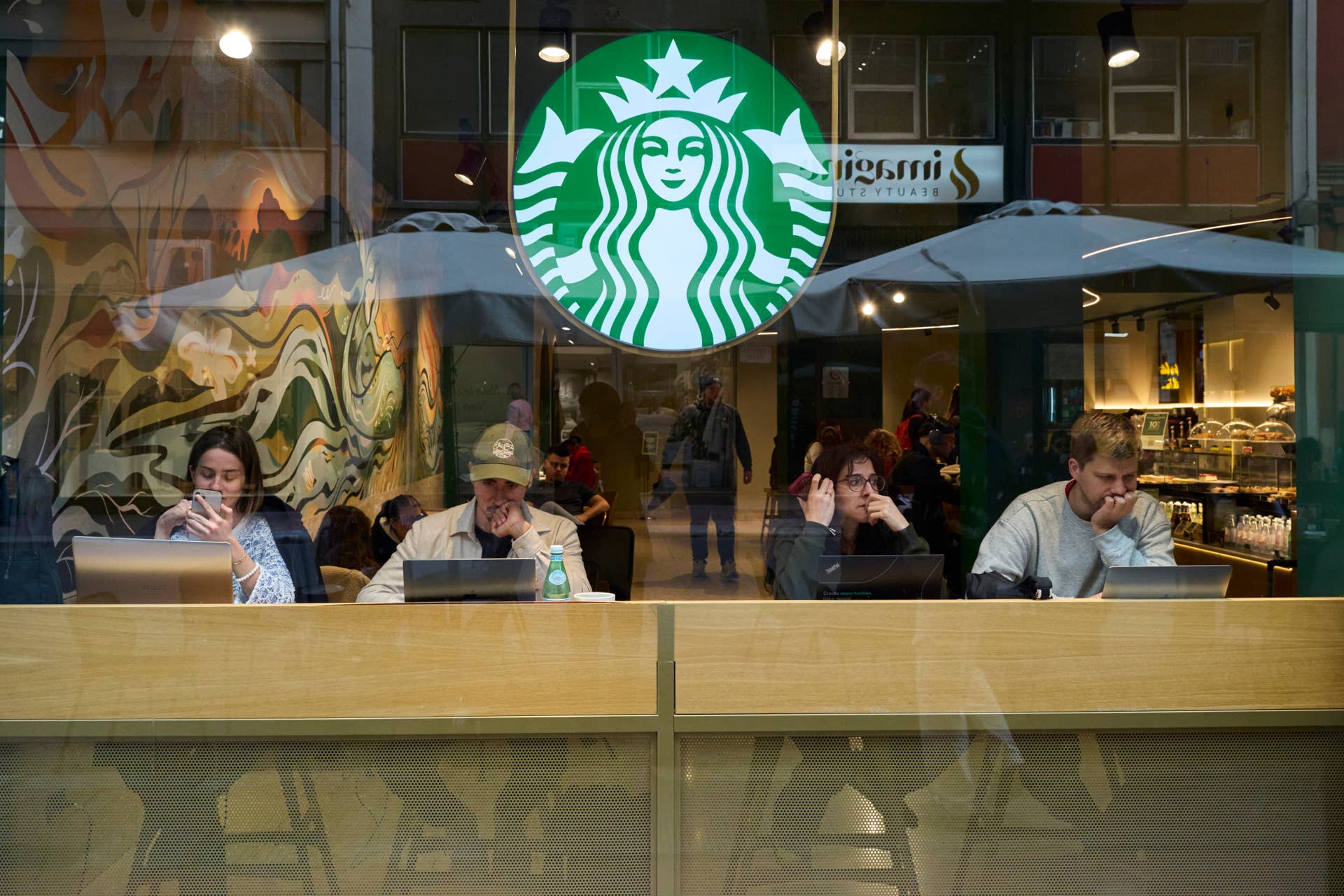
After closing hundreds of stores nationwide, Starbucks is reshaping its U.S. footprint as part of a broader turnaround strategy to reverse slowing sales growth and restore customer traffic.
The coffee giant has spent the past several years making significant changes across its business, including closing underperforming locations while investing in store upgrades, operational improvements, and new formats better aligned with changing consumer demand.
Although Starbucks (SBUX) remains the largest coffeehouse chain in the U.S., executives say its next phase of growth will look significantly different from its traditional expansion model.
Starbucks plans to open 5,000 additional U.S. stores
Speaking at the Evercore Consumer and Retail Conference earlier this month, Starbucks CEO Brian Niccol said the company plans to open 5,000 additional stores across the U.S.
According to Niccol, much of that growth will target underpenetrated markets stretching from Texas to Virginia, where Starbucks believes it historically lacked adequate store coverage.
Niccol said Starbucks had previously focused more on the West and East Coasts, creating expansion opportunities in regions across the middle of the country.
For example, Niccol pointed to markets such as Nashville, where Starbucks has historically maintained a smaller company-operated presence outside licensed locations, including hotels and suburban areas, despite population growth and high consumer demand.
The strategy aligns with several recent company moves, including the closure of two Starbucks Reserve Roastery locations in Seattle and a $100 million investment in a new support office in Nashville as part of its broader effort to strengthen its presence in the Southeast.
Industry analysts have increasingly viewed smaller-format retail expansion as a way for consumer brands to improve returns while extending geographic reach, particularly as construction, labor, and occupancy costs remain elevated. The approach allows companies to enter more markets while reducing upfront investment requirements.
Matthews VP & Associate Director and commercial real estate expert Daniel Gonzalez notes that small-space retail is a strategic response to meet consumer demand amid the rise of online formats.
"A small store can offer a personalized shopping experience that is not seen in big-box locations," said Gonzalez. "The limited space forces tenants to be intentional with their product selection, creating a sense of discovery and exclusivity. These features give customers a reason to leave their homes and engage with a brand in a tangible way."
New small-format store strategy
To accelerate expansion while controlling costs, Starbucks is increasingly focusing on developing smaller-format stores that require lower capital investment, less land, and shorter construction timelines than traditional locations.
"We can now build right on a half acre or an inline store for sub 1,000 square feet, there's probably another 5,000 sites that we can add on top of the 5,000 that we've already identified," said Niccol, according to a transcript by Morningstar. "And that's how you get to 10,000 additional stores in the U.S."
Despite the smaller footprint, the new locations will continue offering drive-thru services, delivery, in-store ordering, mobile ordering, and customer seating.
Because these stores require roughly half the acreage of traditional Starbucks locations, the company believes the format could unlock thousands of sites that previously would not have been economically viable.
Revised store remodeling efforts
Alongside opening new locations, Starbucks is accelerating a nationwide remodeling program to improve the customer experience and generate stronger returns on investment.
The company has already upgraded about 700 stores and plans to eventually renovate between 8,000 and 9,000 more locations.
According to Niccol, the remodels typically cost $150,000 or less per store and have increased customer transactions. Rather than relying on expensive, large-scale redesigns, Starbucks is emphasizing lower-cost improvements that can be implemented more quickly across a broader portion of its store fleet.
The company expects to remodel approximately 1,000 stores annually by the end of 2026, before increasing the pace to 2,000-3,000 in 2027, with a goal of reaching 8,000 by 2028.
Store closures remain part of Starbucks' turnaround strategy
The expansion push comes even as Starbucks continues reducing portions of its existing footprint under its "Back to Starbucks" turnaround initiative.
Rather than representing conflicting strategies, the closures reflect the company's efforts to reallocate resources away from formats and locations that the company believes no longer fit its operating model.
The initiative is designed to reinforce Starbucks' identity as a "third place" between home and work while improving customer traffic and sales performance.
Here's some of my previous coverage on Starbucks:
- Starbucks drops another summer surprise as competition heats up
- Starbucks, Dunkin’, and Luckin embrace non-coffee products
- Starbucks brings back viral drink after 7 years, adds new item
The broader transformation has also included cost controls and layoffs.
In August 2025, Starbucks revealed plans to close all its roughly 90 pickup-only stores in high-traffic urban markets.
A month later, the company outlined additional restructuring measures, including closing approximately 500 North American stores, eliminating around 900 non-retail corporate roles, and removing open positions over the following year, efforts that have continued into 2026.
Starbucks ended the second quarter of fiscal 2026 with 18,385 U.S. stores, representing a net reduction of 242 stores compared to the same period a year earlier.
Even with recent closures, Starbucks remains substantially larger than competing coffee chains in the U.S. by total store count, allowing the company to pursue optimization while continuing long-term expansion.
Early signs suggest Starbucks' turnaround may be gaining traction
While Starbucks' revised expansion initiative is still in its early stages, its latest quarterly results suggest that elements of the turnaround strategy may already be producing measurable improvements.
During the second quarter of fiscal 2026, U.S. comparable store sales increased 7.1%, primarily driven by a 4.3% rise in comparable transactions and a 2.7% surge in average ticket.
At the end of the quarter, stores in the U.S. and China represented 61% of Starbucks' global footprint.
Monthly visits to Starbucks locations increased 0.7% year over year during the third quarter of 2025, following declines of 1% and 0.2% in the first and second quarters, respectively, according to Placer.ai.
"We've been clear that topline improvement would come first, with earnings growth to follow," said Starbucks CFO Cathy Smith in an earnings report statement. "We have more work to do, but we're pleased to see the combination of our comp growth and cost discipline starting to show up in margins."
Starbucks rivals continue expanding nationwide
Starbucks is not alone in accelerating U.S. expansion.
Dunkin' celebrated the opening of its 10,000th U.S. location in late 2025 and plans additional openings in 2026, according to a company announcement.
Dutch Bros has outlined plans to reach 2,029 locations by 2029, CNBC reported.
Luckin Coffee has begun building its U.S. presence and now operates 14 locations across New York City following its U.S. debut in June 2025.
Popular Products
-
 Classic Oversized Teddy Bear
$23.78 -
 Gem's Ballet Natural Garnet Gemstone ...
$171.56$85.78 -
 Butt Lifting Body Shaper Shorts
$95.56$47.78 -
 Slimming Waist Trainer & Thigh Trimmer
$67.56$33.78 -
 Realistic Fake Poop Prank Toys
$99.56$49.78