Taiwan Semiconductor Is Copying One Of Intel’s Best Ideas — Here’s Why Investors Should Pay Attention
The post Taiwan Semiconductor Is Copying One of Intel’s Best Ideas — Here’s Why Investors Should Pay Attention appeared first on 24/7 Wall St..
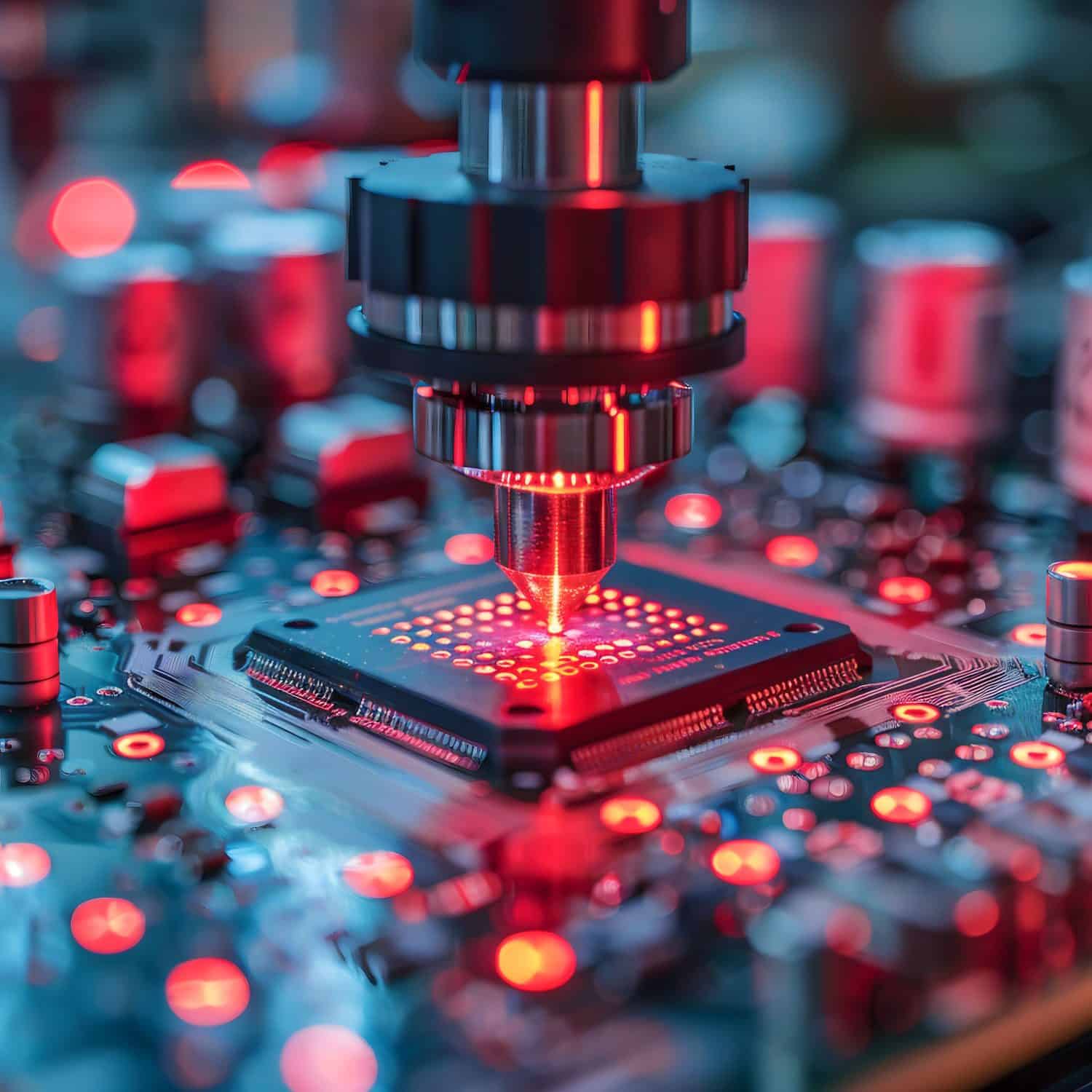
The artificial intelligence boom has reshaped the semiconductor industry in an unexpected way. Manufacturing the world’s most advanced chips is no longer the biggest bottleneck. Packaging them has become just as important.
Demand for advanced AI processors has outpaced the industry’s ability to assemble multiple chiplets and high-bandwidth memory into a single package, creating a supply crunch that has slowed deployments across hyperscalers and AI developers alike.
That’s why a report from The Information that Taiwan Semiconductor Manufacturing (NYSE:TSM) is developing an “EMIB-like” packaging technology stands out. The move appears to validate one of Intel‘s (NASDAQ:INTC) biggest technological bets and could be interpreted as an acknowledgment that TSM sees a new competitive threat emerging. The story, however, is more complicated than it first appears.
Intel’s Packaging Edge Is Real, Even If Its Market Share Isn’t
TSM dominates the leading-edge foundry market, producing nearly all of the world’s most advanced AI chips for customers like Nvidia (NASDAQ:NVDA), Apple (NASDAQ:AAPL), Advanced Micro Devices (NASDAQ:AMD), and Broadcom (NASDAQ: AVGO). That leadership extends into advanced packaging through its CoWoS family of technologies.
Still, Intel carved out a legitimate niche with EMIB, or Embedded Multi-die Interconnect Bridge.
Rather than using a large silicon interposer like traditional CoWoS designs, EMIB embeds small silicon bridges directly into the package substrate, connecting chiplets only where dense communications are needed. The approach lowers costs, improves yields, reduces thermal stress, and supports larger package sizes without running into wafer reticle limits.
| Feature | Intel EMIB | TSM CoWoS |
| Primary strength | Lower cost and scalability | Maximum bandwidth and density |
| Package size | Up to 6-12 reticle equivalents | 5.5 reticles today, targeting 14 |
| Best suited for | AI ASICs, inference chips, custom silicon | Flagship AI training GPUs |
| Key customers | Google TPU, AWS, MediaTek | Nvidia Blackwell, AMD Instinct |
The distinction matters because not every AI accelerator needs maximum bandwidth. Many hyperscalers building custom chips prioritize cost, yield, and package size instead.
TSM Isn’t Playing Defense — It’s Protecting Its Ecosystem
According to The Information, TSM is developing localized silicon bridge technology resembling EMIB while accelerating CoPoS, its panel-level packaging platform. That isn’t an admission that CoWoS has fallen behind. It’s recognition that customers increasingly want packaging flexibility.
Packaging is one of TSM’s fastest-growing businesses, but wafer manufacturing still generates roughly 85% to 90% of revenue. Even if Intel captured several billion dollars annually in outside packaging business, it would represent only a modest slice of TSM’s revenue base, which topped $120 billion last year.
Ironically, Chairman and CEO C.C. Wei has publicly welcomed Intel’s packaging efforts because more industry capacity ultimately allows TSM to sell more leading-edge wafers. During packaging shortages, customers can still fabricate chips at TSM while using another provider to assemble them.
At the same time, TSM isn’t giving customers a reason to look elsewhere. An EMIB-like technology helps preserve the advantages of offering manufacturing and packaging under one roof.
Competition Expands the Opportunity
Demand for advanced packaging is growing faster than any one company can supply. TSM is expanding CoWoS capacity at an annual pace exceeding 80%, partnering with companies like Amkor Technology (NASDAQ:AMKR) while adding U.S. packaging capacity. Intel continues advancing EMIB and EMIB-T, while Samsung and outsourced assembly specialists are investing aggressively.
More competition should grow the market rather than reshape it. Packaging remains the industry’s biggest bottleneck, so every additional source helps more AI chips reach customers.
Intel deserves credit for developing technology compelling enough that TSM appears to be adapting its roadmap. But that doesn’t make Intel the new foundry leader. TSM still combines industry-leading process technology, manufacturing scale, advanced packaging, and customer relationships in a way no rival can currently match.
Key Takeaway
Intel’s EMIB technology has become a credible force in advanced packaging — not because it’s replacing CoWoS, but because it offers a better fit for certain AI chips where cost, yield, and package size matter more than peak bandwidth.
Investors shouldn’t confuse that validation with vulnerability. The real story isn’t that Intel is taking meaningful share from TSM. It’s that AI demand has become so large the market can support multiple packaging winners, while TSM remains firmly in control of the higher-value wafer manufacturing business that generates the bulk of its profits.
Act now: the analyst who called NVIDIA in 2010 just named his top 10 AI stocks — and Taiwan Semiconductor Manufacturing didn’t make the cut. Grab the names FREE today.
The post Taiwan Semiconductor Is Copying One of Intel’s Best Ideas — Here’s Why Investors Should Pay Attention appeared first on 24/7 Wall St..
Popular Products
-
 Fake Pregnancy Test
$61.56$30.78 -
 Anti-Slip Safety Handle for Elderly S...
$57.56$28.78 -
 Toe Corrector Orthotics
$41.56$20.78 -
 Waterproof Trauma Medical First Aid Kit
$169.56$84.78 -
 Rescue Zip Stitch Kit
$109.56$54.78