The “design Thinking” Bubble That Needs To Pop
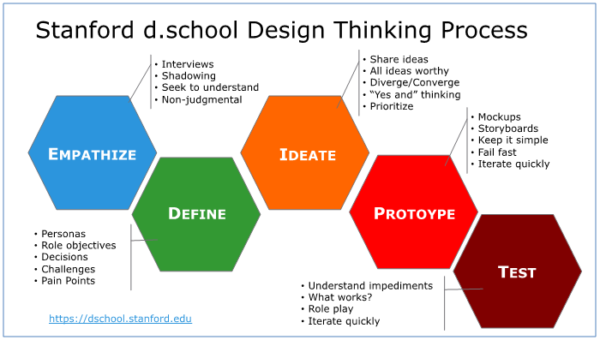
Design thinking was supposed to change everything. It promised to bring empathy, creativity, and iteration to problems that had resisted traditional analysis. It was adopted by business schools, consulting firms, governments, and multinational corporations. It spawned a thousand workshops, a million sticky notes, and an entire industry of facilitators who promised to unlock innovation through a five-step process.
The promise was compelling. The results have been mixed. And the time has come to ask whether design thinking, as it is commonly practiced, is a genuine tool for problem-solving or a bubble that needs to pop.
The Promise
Design thinking emerged from the work of designers and psychologists in the mid-twentieth century. It was formalized by IDEO and the Stanford d.school in the 1990s and 2000s. The core idea was simple: designers have a way of working that is particularly well-suited to complex, ambiguous problems. They empathize with users, define the problem, ideate solutions, prototype, and test. This process, it was argued, could be applied to any problem, not just the design of products.
The appeal was obvious. Design thinking offered a structured approach to innovation. It promised to break down silos, encourage collaboration, and put the user at the center of decision-making. It was democratic. Anyone could participate. You did not need to be a designer to think like one.
The Reality
The reality has been more complicated. Design thinking has been adopted by organizations that are not designed to support it. It has been reduced to a series of workshops, a set of templates, and a vocabulary of empathy maps and customer journeys. The process has become an end in itself, rather than a means to an end.
The critics have been vocal. Some argue that design thinking is not rigorous enough to solve complex problems. It emphasizes creativity and ideation but lacks the analytical depth required to understand systems, incentives, and constraints. Others argue that it is a form of corporate theater, a way for organizations to appear innovative without actually changing anything.
There is evidence to support these criticisms. Design thinking projects often produce beautiful presentations and compelling prototypes that never get implemented. The process generates ideas, but it does not generate the organizational will or the resources to execute them. The workshops are energizing, but they do not change the structures that determine what actually happens.
The Missing Ingredient
The missing ingredient is power. Design thinking assumes that the best idea will win. It assumes that empathy and iteration will lead to better outcomes. It ignores the fact that organizations are political. Decisions are shaped by budgets, hierarchies, and incentives. A brilliant idea that threatens the status quo will not be adopted, no matter how well it is prototyped.
The designer who understands this is the designer who can actually create change. They do not just facilitate workshops. They navigate the politics. They build coalitions. They make the case for change in the language of the people who control the resources. They understand that design is not just about solving problems. It is about persuading organizations to adopt solutions.
The Useful Parts
None of this means that design thinking is worthless. The tools and methods are valuable. Empathy research, rapid prototyping, user testing—these are legitimate practices that improve outcomes. The problem is not the tools. It is the way they are packaged and sold.
The most effective designers do not call themselves design thinkers. They do not follow a five-step process. They use the tools that are appropriate for the problem. They collaborate with engineers, marketers, and executives. They focus on implementation, not just ideation. They measure success by outcomes, not by the quality of the workshop.
The Bottom Line
Design thinking is not a bubble that needs to pop. It is a set of practices that needs to be integrated into a broader understanding of how organizations work. The process is not the answer. The answer is judgment, context, and the ability to navigate the real constraints that shape what is possible.
The designer who embraces design thinking as a philosophy will be disappointed. The designer who uses its tools with a clear-eyed understanding of organizational reality will be effective. The difference is not the methodology. It is the maturity. Design thinking is not a silver bullet. It is a set of tools. Use them wisely.
The post The “Design Thinking” Bubble That Needs to Pop appeared first on Designer Daily: graphic and web design blog.
Popular Products
-
 Put Me Down Funny Toilet Seat Sticker
$33.56$16.78 -
 Stainless Steel Tongue Scrapers
$33.56$16.78 -
 Stylish Blue Light Blocking Glasses
$85.56$42.78 -
 Adjustable Ankle Tension Rope
$53.56$26.78 -
 Electronic Bidet Toilet Seat
$981.56$490.78