The Fed Created Zohran Mamdani

The Fed Created Zohran Mamdani
Submitted by QTR's Fringe Finance
Usually, at least once a day, I come across something on the internet that almost causes me to lose my lunch. Yesterday, it was a photo of Zohran Mamdani and Curtis Sliwa holding hands and getting flu shots together.
As someone who observed the mayoral race in New York City closely, I found the spectacle disgusting on multiple levels. Not because political opponents can’t be civil to one another, but because it immediately brought me back to how Sliwa folded like a cheap shirt after an election in which, in my view, he couldn’t get over himself long enough to put his pride aside, step out of the race and give Mamdani’s main opponent, Andrew Cuomo, a clearer shot at winning.
Instead, Sliwa stayed in the race, presenting himself as some type of principled alternative while insisting that remaining in the race was somehow the honorable thing to do when, if he really gave a shit about New York, he should have just swallowed his pride, recognized the electoral reality in front of him and gotten out of the way. Just because you can stay in, doesn’t mean you have to.
But alas, Andrew Cuomo is no more and we are now stuck with this smiling communist buffoon, whose economic ideas make a 9 year old playing SimCity on an iPad in the back of a minivan look like Fiorello La Guardia.
For years, the United States has responded to financial crises with some combination of lower interest rates, enormous fiscal deficits and extraordinary amounts of liquidity. Whenever something breaks badly enough, policymakers rush in to stabilize the system. By now, I’m hoping people are starting to realize that when this happens, the benefits and costs of these “rescues” aren’t distributed evenly.
In fact, they disproportionately brutalize the middle and lower class, the very same group of citizens that politicians are almost always claiming to help. And such rescues are almost always supported by both political parties. (Read: The Devil Neither Political Party Will Name)
In these situations, financial assets can respond almost immediately to easier money and abundant liquidity. Stocks rise. Bonds rise. Real estate rises. Private-company valuations rise. People who already own substantial assets watch their net worth recover and, eventually, soar.
The person living paycheck to paycheck experiences this very differently. He doesn’t own enough stocks for another bull market to change his life. Instead, he notices that his rent costs more. His groceries cost more. Insurance costs more. Restaurants cost more. A starter home that was already expensive becomes completely unattainable.
???? 85% OFF FOREVER IF YOU SUBSCRIBE TODAY: I am again offering an 85% discount to anyone that wants to become a Fringe Finance annual subscriber today. It’s a discount you can keep and stays applied for as long as you wish to remain a subscriber: Get 85% off forever
Back in the day, inflation would slow (but never reverse) and economists would announce that the problem was getting better. But the middle and lower class was still stuck with higher rent, groceries and home prices. Nowadays, inflation hasn’t even slowed. Prices are still skyrocketing higher. And the middle and lower class is getting torn to shreds by higher prices.
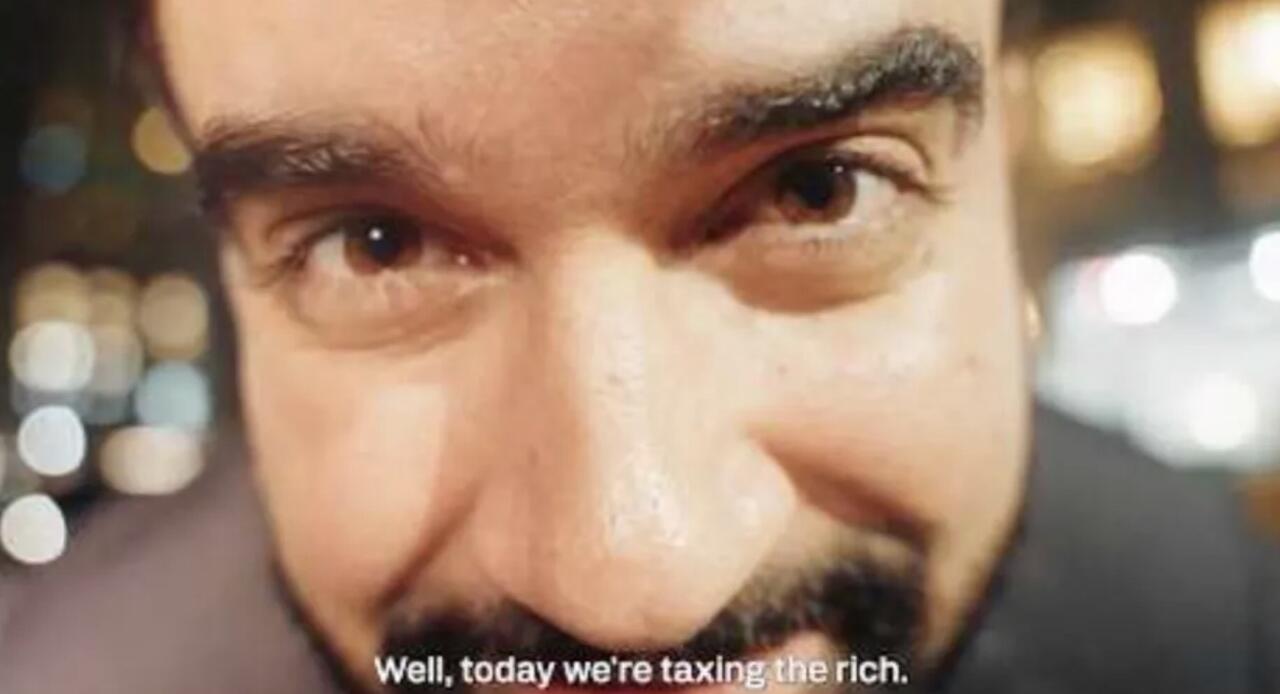
And that is the political environment that produces Zohran Mamdani…demonizing billionaires, proposing extremely regressive taxes, advocating for social revolution and just throwing around ideas of a state planned economy like he’s talking about the weather to a passerby in the park.
Which brings us to the great irony: the anger underlying his politics can be legitimate even if his proposed solutions make little sense on paper and even less sense in reality.
As I’ve said innumerable times on this blog, a voter doesn’t need to understand the Federal Reserve’s balance sheet to recognize that something feels profoundly wrong when working full time no longer seems sufficient to achieve the basic milestones previous generations considered normal.
And when that voter hears that the stock market has hit another record high, he doesn’t feel richer. He feels cheated…and pissed off…and envious.
Then along comes Mamdani offering to freeze his rent, subsidize his childcare, make his bus free and use government to intervene in the cost of everyday life. Is that man going to stop and thumb through history books to try and carefully determine what the historical outcome of such policies have been throughout history? Hell no. He’s going to volunteer to sell “Hot Girls For Zohran” T-Shirts in Union Square Park.

You can argue about the economics of Mamdani’s policies, but politically, the sales pitch isn’t difficult to understand. And the response from people who believe in markets cannot simply be to call these voters communists and lecture them about economics.
Instead, they have to answer a much more uncomfortable question. Why does the supposedly capitalist system increasingly seem to work spectacularly well for people who already own assets while becoming progressively harder for people trying to acquire them?
That is the question Mamdani is trying to present himself as answering. And most of us know he’s giving people the wrong answer. But that doesn’t make the question disappear.
In fact, there is something deeply ironic about responding to the consequences of years of economic intervention with demands for even more economic intervention…and then when your bullshit plans fail to make economic or basic common sense, turning to real entrepreneurs and business leaders for help.
We risk trying to cure distortions created partly by government policy with another layer of government policy, and then wondering why the distortions keep multiplying.
Eventually somebody has to address the disease rather than the symptoms. That means taking seriously what persistent inflation does to people who own few assets. It means acknowledging the distributional consequences of monetary policy. It means recognizing that rising asset prices aren’t synonymous with widespread prosperity. And it means understanding that “inflation is falling” is cold comfort to someone whose cost of living already jumped 20%, 30% or more.
If capitalism’s defenders want fewer socialists, they might start by making capitalism look like it works for people who don’t already own everything.
--QTR’s Disclaimer: Please read my full legal disclaimer on my About page here.
Popular Products
-
 Classic Oversized Teddy Bear
$23.78 -
 Gem's Ballet Natural Garnet Gemstone ...
$171.56$85.78 -
 Butt Lifting Body Shaper Shorts
$95.56$47.78 -
 Slimming Waist Trainer & Thigh Trimmer
$67.56$33.78 -
 Realistic Fake Poop Prank Toys
$99.56$49.78