These Are The Most Counterfeited Currencies In The World
Key Points
-
National currencies have gotten increasingly sophisticated to foil counterfeiters, but counterfeiters are catching up.
- Finally! You can open a SoFi Crypto account and access 25 plus cryptocurrencies without juggling apps or logins.
Counterfeiting has long placed burdens on the stability of national currencies. This illegal practice has evolved with advances in printing, digital imaging, and global commerce. Modern money incorporates sophisticated security features, like holograms, watermarks, and color-shifting inks. Even still, some currencies remain prime targets for counterfeiters due to their widespread circulation, acceptance on a global scale, and high face value. The ability to convincingly replicate a widely used currency can have consequences that reach far beyond a single country’s borders.
This article examines the currencies that are most frequently counterfeited around the world. We also take a look at the factors that make them primary targets. Each case shows how circulation volume and technological countermeasures create counterfeiting risks. By looking at both the scale of counterfeiting and the efforts to fight it, we can better understand the constant battle between currency designers and those attempting to replicate money.
This post was updated on February 20, 2026.
Why This Matters
Understanding which currencies are most counterfeited is crucial for governments, financial institutions, and businesses. But this topic is also important for everyday consumers to grasp as well. Counterfeit money undermines trust in cash transactions, creates financial losses, and can disrupt economies if unchecked. Knowing the vulnerabilities of certain types of money reminds us of the importance of protecting the integrity of the world’s monetary systems.
Who Are the Biggest Counterfeiters?
North Korea is one of the world’s foremost counterfeiters of U.S. dollars.
It would be a mistake to think of counterfeiters as small-time criminals running inkjet printers in a dark basement somewhere. Some are at that level of operation, but there are also drug cartels and mafia organizations mass-producing high-quality fakes with advanced technology. And sometimes a government is the prime suspect. North Korea has been linked to the production of high-quality fakes of U.S. dollars. This serves the dual purpose of bringing the country some hard currency for trade on the international market, and undermining the American economy by weakening the demand for dollars.
So How Do You Make a Good Counterfeit?
Making a counterfeit is not just a matter of creating a photocopy. They need special paper that looks and feels like real money. American paper money, for example, is made with a mixture of cotton and linen for durability. Counterfeiters also have to be able to replicate convincingly the security features of actual money, which can be advanced and too numerous and time consuming for a small-time criminal to create.
What Counter-Counterfeit Technology Do Governments Use?
Some of the most sophisticated technologies governments have developed to identify real money include:
- Holographic strips with an image that moves when you turn the bill different angles.
- Watermarks, which are images that are invisible until you hold them up to a light.
- Color-shifting ink changes color depending on the angle you look at it.
- Security threads are thin strips woven into a banknote that sometimes glow under UV light.
- Microprinting is text that is so tiny a regular printer will not be able to copy it clearly.
- Polymer banknotes are used in Australia and Canada because they are durable and hard to counterfeit
Laundering Fake Money
Money laundering doesn’t mean literally washing money of course. Although, come to think of it, counterfeiters do sometimes make money appear more genuine by roughing it up. It wouldn’t be a surprise if some of it got washed a little. Instead, fake or illegally earned currency is “laundered” when it is used to buy or invest in something that will give returns that appear to be legitimate. Counterfeiters tend to counterfeit larger bills, then spend them on small purchases and get real money in change. Counterfeit money can also be mixed with honest funds to invest in fake businesses or criminal activity.
Spotting a Counterfeit
You might encounter a fake banknote in any situation where someone is paying for something and getting a lot of change back. Here are some things the “experts” recommend for your situation:
- Feel the texture of the paper and compare it to another banknote if you’re uncertain.
- Hold the banknote up to the light to see if the watermark is a correct match for the printed information they have.
- Look for a security thread as this is difficult to fake.
- Check the bill under UV light, as some banknotes have a glow-in-the-dark feature that can confirm it is most likely a legitimate person. Well, a real once I guess.
- Look at fine details under a magnifying glass if you have one or with the magnifying feature on your phone camera. Are the fine details blurry or run together? That could be a sign of a counterfeit.
If you suspect you have a counterfeit bill, take it to the bank or a police station for verification. If it is fake, they will report the matter to the Secret Service for investigation.
The World’s Most Counterfeited Currencies
Counterfeiters like to make fakes of currencies that are strong and hold their value and are in high demand around the world. Here are some examples:
2. U.S. Dollar (USD)
The U.S. dollar is the world’s reserve currency and the most counterfeited. The $20 and $100 bills are particularly common targets. American currency is still wood-based, unlike the polymers now used in some other countries’ banknotes. However, this does make it possible to use a counterfeit detector pen, as you have no doubt seen when spending cash in a store. The ink of this pen leaves a dark mark on a counterfeit bill that is made with wood-based paper. On a fiber-based paper like the government uses in real banknotes, the mark remains a pale yellow color.
2. Euro (EUR)
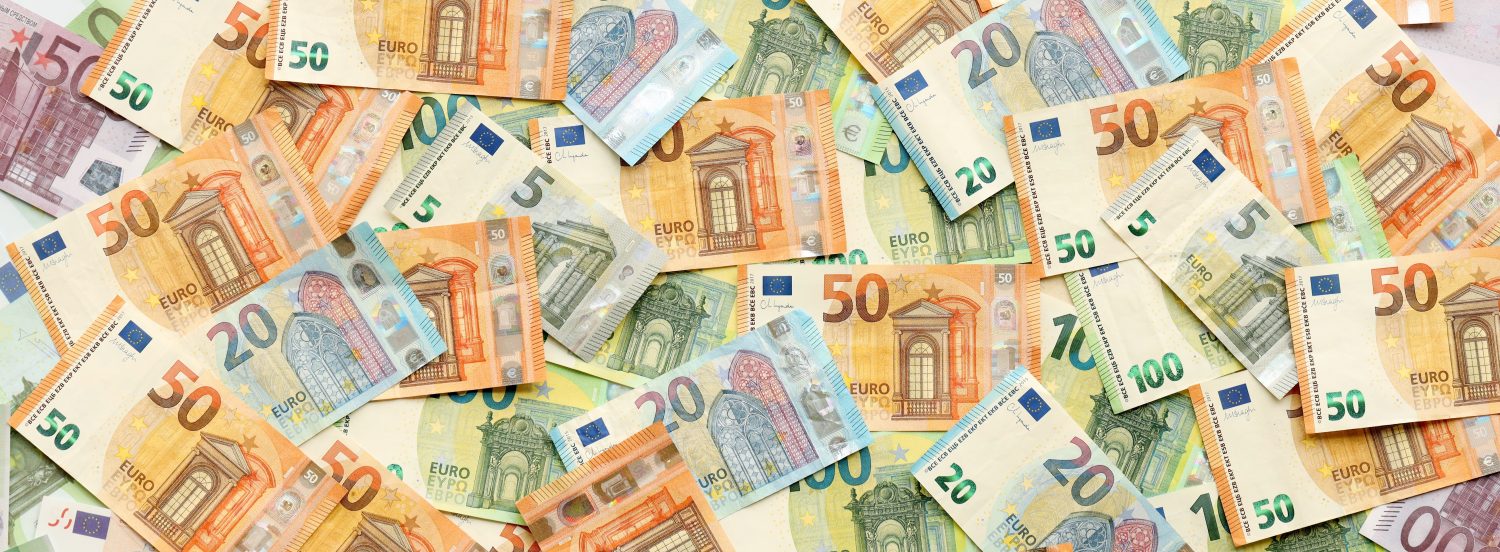
As the second most traded currency, the Euro is heavily counterfeited. The 20 and 50 Euro notes are popular targets for criminal activity. These are used across most of Europe so there are nearly infinite ways to move fake money around and find ways to convert it to legitimate, untraceable currency.
3. British Pound Sterling (GBP)
The 20 pound note is the most counterfeited denomination in the UK. Newer banknotes, like the 2024 10 pound note pictured above with the new king’s portrait, are more difficult to copy as Britain is using polymer for its money now rather than paper.
4. Indian Rupee
High-denomination notes like the 500 and 2000 rupee bills are prime targets of counterfeiters in India. Denominations that are frequently used do not arouse as much attention and suspicion when counterfeiters spend them.
5. Chinese Yuan
The most commonly counterfeited banknote in China is the 100 yuan note. China’s booming economy that is a mixture of socialism and market principles creates many opportunities for fraud, especially when passing banknotes off to people who may have a less sophisticated understanding of what to look for.
6. Canadian Dollar
Canada uses a modern polymer for its banknotes, which has drastically reduced counterfeiting. However, there are still older paper notes in circulation, so counterfeiters can make copies of the old ones and get them exchanged for new banknotes in transactions.
7. Australian Dollar
Australia’s money is made of a polymer that is pretty hard to replicate. So it is not one of the most counterfeited currencies, but counterfeits have been made and are pulled from circulation from time to time.
Finally! Access 25+ Cryptocurrencies The Easy Way
After years of waiting for a good option, SoFi now offers access to major cryptocurrencies like Bitcoin, Ethereum, and Solana, along with more than 25 total digital assets. What stands out isn’t just the selection, it’s the integration.
You don’t need a separate app, a new login, or a different funding source. Crypto lives next to the rest of your portfolio, which makes position sizing, rebalancing, and capital deployment far easier for investors who actively manage risk.
If you’re an active investor who wants crypto exposure without stepping outside a regulated financial ecosystem, SoFi is a top choice. Get started here.
The post These Are the Most Counterfeited Currencies in the World appeared first on 24/7 Wall St..
Popular Products
-
 Put Me Down Funny Toilet Seat Sticker
$33.56$16.78 -
 Stainless Steel Tongue Scrapers
$33.56$16.78 -
 Stylish Blue Light Blocking Glasses
$85.56$42.78 -
 Adjustable Ankle Tension Rope
$53.56$26.78 -
 Electronic Bidet Toilet Seat
$981.56$490.78