Turning Nature Into Fabric Art Through Eco-printing
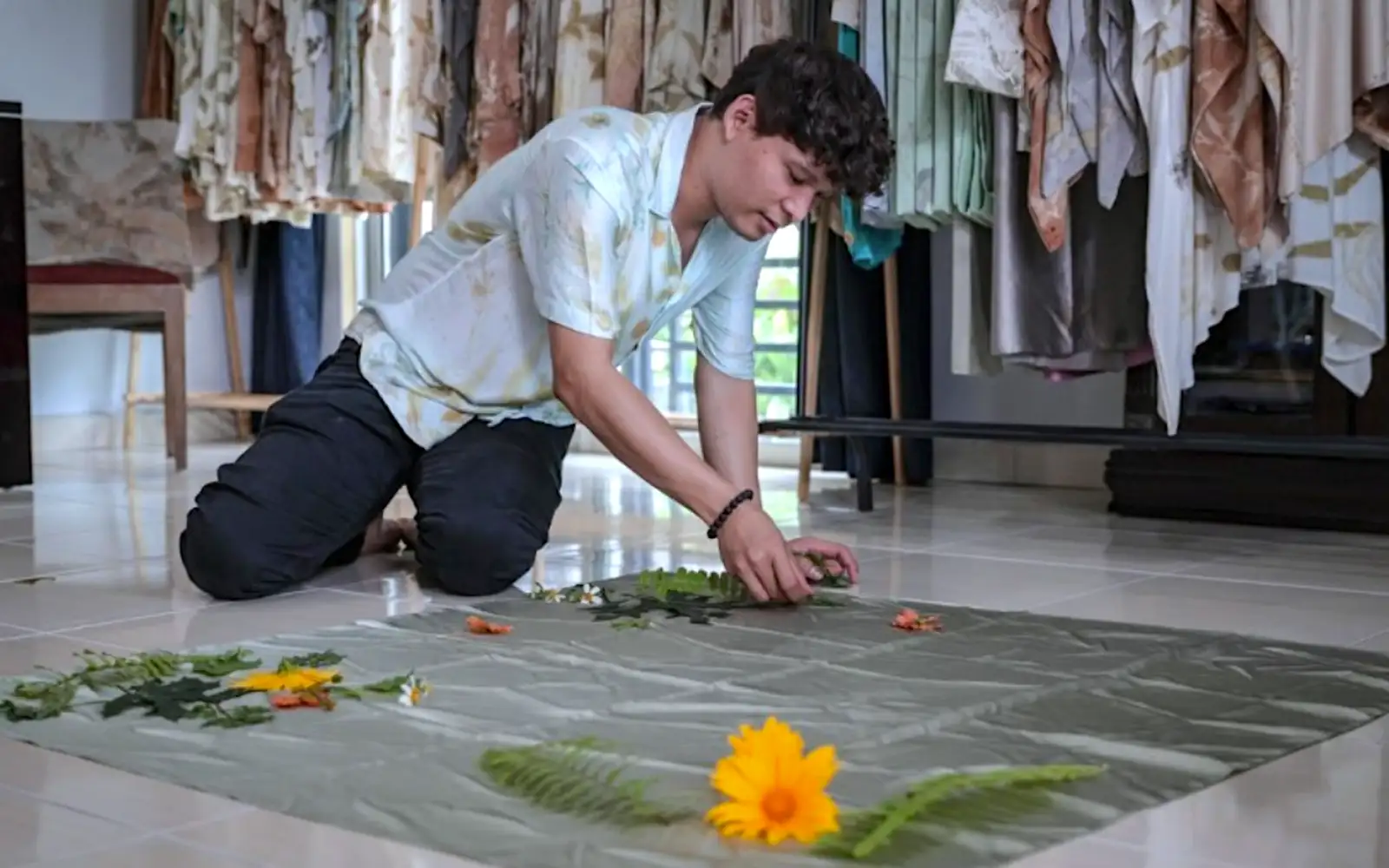
PONTIAN: What began as simple experimentation and a deep appreciation for nature has evolved into a unique venture for Misbaahussalam Zakaria.
The 32-year-old transforms leaves and flowers into intricate fabric designs using eco-printing, a technique that creates natural patterns without the wax-resist method associated with traditional batik.
A graduate of Politeknik Ibrahim Sultan in Pasir Gudang, Johor, he ventured into eco-print batik entrepreneurship in 2019, driven by curiosity and a desire to explore alternative textile methods.
His interest was sparked by the work of Australian textile researcher India Flint, who is known for using natural materials in fabric art.
“From there, I conducted my own research on suitable leaves, flowers and fabrics. I also learnt about tannins in leaves, which help produce natural colours,” he said at his home in Taman Maju Emas here.
Not all leaves produce colour, but each leaves its mark. Some create soft tonal variations, while others form distinct, silhouette-like impressions on fabric.
Misbaahussalam often uses eucalyptus, castor and ketapang leaves, along with flowers such as hibiscus, sunflower and cosmos, each producing different effects.
The process itself requires patience: fabric is first pre-treated by soaking it in water mixed with substances such as ferrous sulphate, zinc or aluminium sulphate.
Leaves and flowers are then carefully arranged, before the fabric is rolled and steamed for two to three hours to allow the natural pigments to transfer.
“The temperature and materials used will affect the final outcome,” he said, noting that darker tones require higher tannin content or repeated dyeing.
Through this meticulous process, Misbaahussalam produces between six and 12 pieces of fabric a day. These are later turned into clothing items such as shirts, cardigans and headscarves, as well as silk pieces, with prices ranging from RM50 to RM400 depending on the material.
He markets his products at craft fairs and festivals, as well as tourist hotspots like Central Market in Kuala Lumpur, attracting both local and international customers.
Misbaahussalam’s efforts have already garnered accolades: in 2023, he won the “Kemasan Lembut” category at the Piala Seri Endon batik design competition.
He said the competition, which brings together designers, artists and batik entrepreneurs from across the country, was an invaluable experience for someone still new to the industry.
Despite growing recognition, challenges remain. “My initial startup cost was around RM10,000 to RM12,000, covering fabric, equipment and basic operations. I still don’t have my own premises, which makes it hard to expand my business,” he said.
Looking ahead, he hopes to scale up production, set up his own workshop and train members of the local community, including single mothers, in eco-printing.
He is also exploring ways to combine natural dye techniques with other materials to achieve stronger colours while remaining environmentally friendly.
Popular Products
-
 Adjustable Shower Chair Seat
$107.56$53.78 -
 Adjustable Laptop Desk
$91.56$45.78 -
 Sunset Lake Landscape Canvas Print
$225.56$112.78 -
 Adjustable Plug-in LED Night Light
$61.56$30.78 -
 Portable Alloy Stringing Clamp for Ra...
$119.56$59.78