Unionpay To Plug Chinese Payment Apps Into Brazil’s Pix After Us Tariffs Over The System
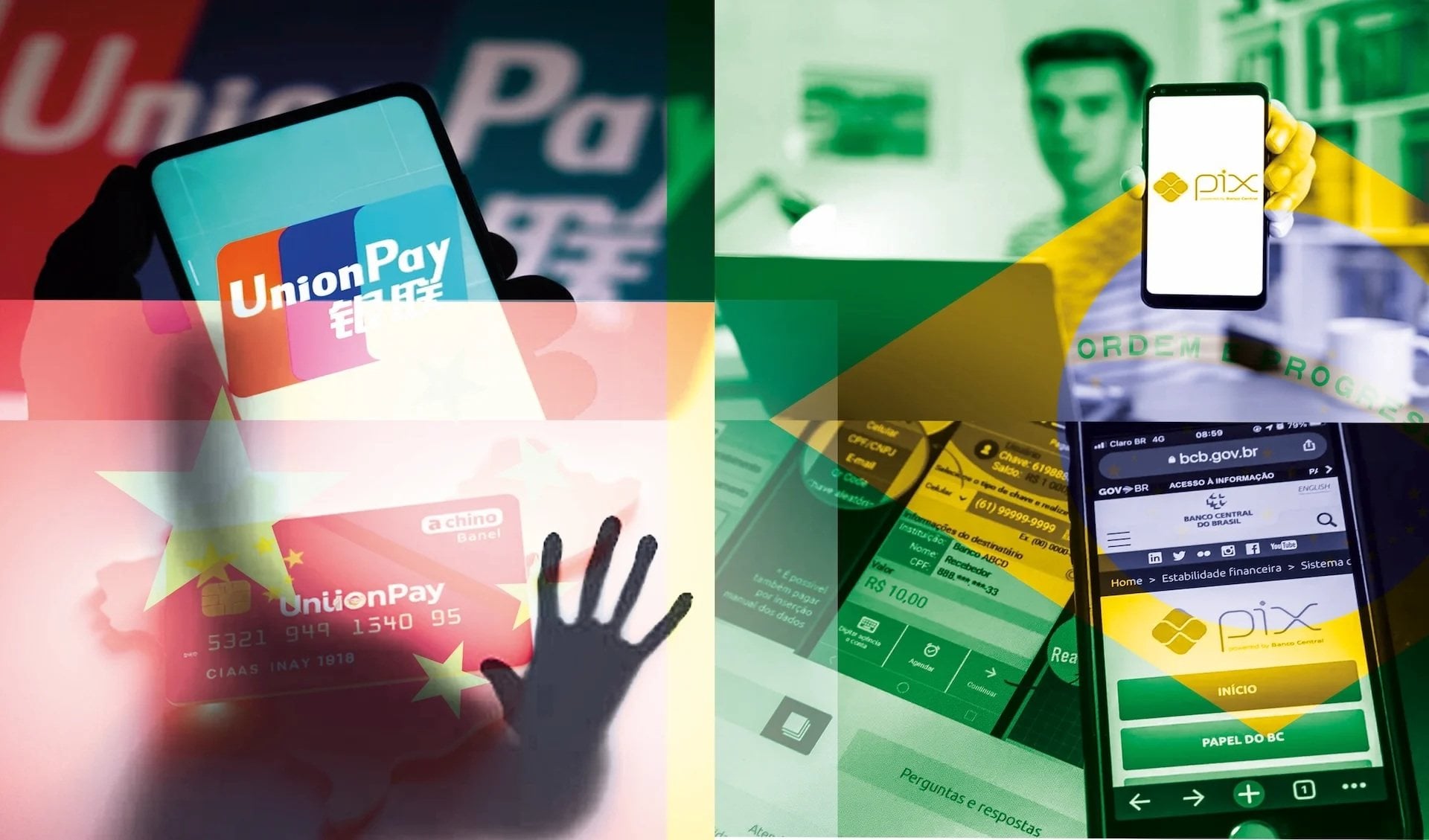
China’s UnionPay International plans to connect Chinese payment apps to Pix, the Brazilian payment system at the centre of Washington’s trade case against Brasilia, allowing Chinese tourists to pay by scanning a code.
Under the pilot, users of the UnionPay app and of Chinese bank apps linked to its platform would scan a merchant’s code and pay from the account they use at home.
Chinese state media reported that access would later extend to other digital wallets in UnionPay’s global network.
Pix has become the default way Brazilians move money since the central bank launched it in November 2020. The system transfers funds between any two accounts in seconds, at any hour, and costs individuals nothing.
It now reaches about 15 million merchants, from department stores to street vendors, and has pushed cash and cheques to the margins of the economy.
The central bank both regulates Brazil’s payment industry and runs Pix inside it, a dual role that American card companies say tilted the market against them.
The Office of the US Trade Representative closed a year-long investigation on July 15 and imposed a 25 per cent tariff on Brazilian goods a week later. Its investigators found that Brazilian policy favoured Pix and left American card and payment companies at an unfair disadvantage.
A second US investigation covering 60 economies added another 12.5 per cent on Brazilian products from July 24. In about a quarter of affected product lines the new duties stack on tariffs already in force, taking the total to 50 per cent, and hit steel, aluminium, machinery, footwear and wood products.
The Brazilian government refused to change the system and escalated the dispute instead. A statement issued the day of the announcement called July 15 a regrettable milestone in relations with Washington and described Pix as public property and an international benchmark for digital infrastructure.
Brazil’s central bank president, Gabriel Galipolo, said the American case was “a pretext dressed up as a technical argument”. He noted that Brazil’s credit card market had grown about 150 per cent since Pix launched, and said the system had displaced cheques and cash.
The South American country took the dispute to the World Trade Organization on July 27, though the venue offers little practical relief. Its Appellate Body has been paralysed since 2019 after Washington blocked the appointment of new judges.
Galipolo has also been promoting the system abroad, telling reporters last month that the central bank had signed more than 47 technical cooperation agreements with other monetary authorities.
He listed China among the countries studying similar models. Brazil would “keep Pix free, secure and instant”, he added, and would not change how it works.
Beijing spent three years building the financial relationship that produced this week’s announcement.
Galipolo and Pan Gongsheng, governor of the People’s Bank of China, signed a memorandum on financial cooperation in Beijing on May 13, 2025, during a state visit by President Luiz Inacio Lula da Silva.
The Chinese central bank said it covered investment conditions, financial infrastructure, local currencies and payments. Neither institution has published the text.
That visit also renewed a currency swap line worth 190 billion yuan (US$27 billion) for five years.
In January 2023, the two central banks had signed a separate agreement under which the Chinese side promised to name a clearing bank for renminbi business in Brazil, according to Brazilian regulatory filings.
Payments moved up the agenda when the two central banks met in June. They discussed widening the swap line and examined direct yuan-real trading and a possible bilateral bond market link. The Chinese account of the meeting also raised the prospect of connecting the two countries’ payment systems.
The Chinese announcement named no Brazilian partner and set no start date, and neither central bank has commented. Until now, Pix has never been connected directly to a foreign payment system.
Where it already works abroad – in Argentina, Chile, Paraguay, Uruguay, the United States, Portugal, Spain and France – firms such as PagBrasil, Getnet and Verifone handle the conversion and settle in local currency.
UnionPay has spent more than two decades building acceptance in Brazil, where its cards already work at major merchants in the main tourist destinations, and the visitor numbers now justify going further.
Brazil received more than 100,000 Chinese tourists in 2025, an increase of 35 per cent on the previous year, and arrivals rose another 30 per cent in the first quarter of 2026, according to the tourism board Embratur. A reciprocal visa waiver for stays of up to 30 days took effect on May 11 and runs until December.
Transactions at Brazilian terminals using UnionPay cards issued in China rose more than 30 per cent year on year in the first half of 2026, according to figures cited by Chinese state media.
Popular Products
-
 Classic Oversized Teddy Bear
$23.78 -
 Gem's Ballet Natural Garnet Gemstone ...
$171.56$85.78 -
 Butt Lifting Body Shaper Shorts
$95.56$47.78 -
 Slimming Waist Trainer & Thigh Trimmer
$67.56$33.78 -
 Realistic Fake Poop Prank Toys
$99.56$49.78