Why Is Surrogacy In China Proving So Difficult To Ban Despite The Crackdown?
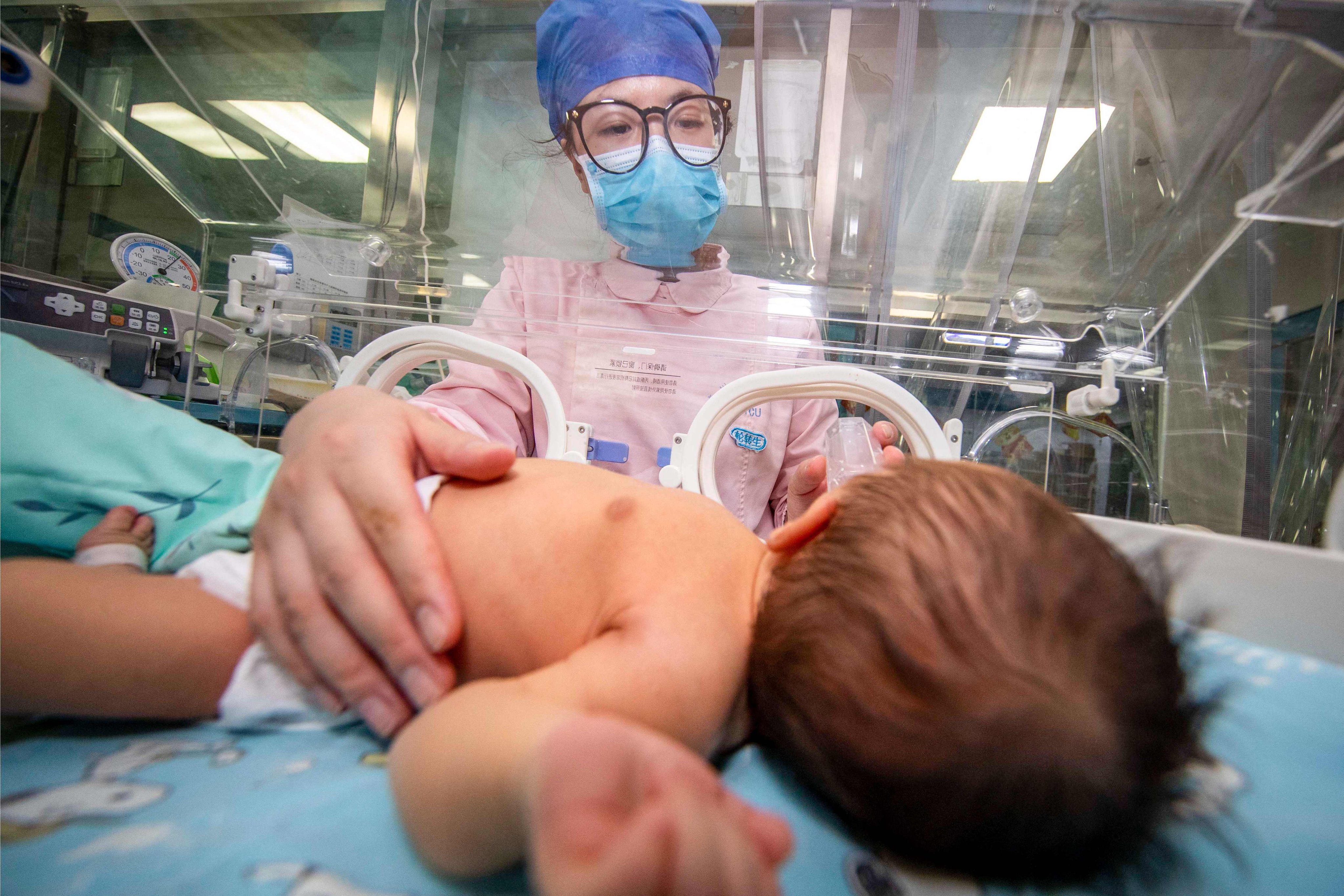
Two laboratories in central China have been shut down for alleged surrogacy activities, an underground practice that persists despite repeated crackdowns.
On Wednesday, the health bureau in Changsha, Hunan province, said six people were detained after a tip about a “laboratory that illegally uses assisted reproductive technologies”, according to state news agency Xinhua.
A day earlier, the Wuhan Municipal Health Commission, in neighbouring Hubei province, announced that an illegal lab had been shut down and eight people detained. Police are investigating and will “severely punish any illegal activities”.
A long-time anti-trafficking activist and whistle-blower, who uses the pseudonym Shangguan Zhengyi, was responsible for both tips, according to his posts on social media this week.
He wrote on Wednesday that he had gone undercover for eight months, finding that the Changsha lab was operated by a surrogacy agency. Operations started at around 11am, with cars and staff circling the area on lookout, he added.
On Tuesday, Shangguan Zhengyi alleged that the Wuhan lab was equipped with a surgery room and embryo incubator. The doctor who operated at the facility came from the Hubei Maternity and Child Health Care Hospital, he claimed.
The activist also alleged that the surrogacy agency had previously been reported to authorities but only halted operations for a few days before opening up again.
According to China’s medical laws, assisted reproductive technologies can only be performed by permitted medical institutes for married couples suffering from infertility, and only for medical purposes.
Medical institutes that apply these technologies for surrogacy can be fined or charged criminally.
Xia Ying, a criminal lawyer at the Beijing-based BZW Law Firm, pointed out that the laws only governed medical facilities. A lack of direct regulations on surrogacy was a contributing factor to repeated offences, she said.
“There’s no specific criminal offence for surrogacy activities,” Xia said, adding that in these cases, the rulings took a “patchwork form”.
“Rather than directly passing judgment on surrogacy, the authorities break down the commercial surrogacy industry chain and fit each activity into a matching, existing offence,” Xia said.
“For example, some could be charged for illegal medical practices, or abducting and trafficking women and children, others for buying and selling state-issued certificates, abandonment, infringement of personal information and fraud.”
According to Xia, charges in the newly reported cases would be determined by what exact activities the detainees were accused of carrying out.
Chinese authorities are adamant that surrogacy activities in any form are prohibited.
In 2021, when National People’s Congress deputies suggested allowing legal surrogacy to prevent repeated illegal operations, the National Health Commission (NHC) replied that “surrogacy severely harms women’s health rights and interests”.
The practice “objectifies women and gives rise to a string of grave social problems, including human trafficking, and can cause ethical crises within the family and society”, it said.
The commission’s response also noted that, since 2015, the NHC had joined forces with the police in a series of crackdowns on illicit collection and supply of human sperm and eggs, as well as surrogacy.
Despite the crackdown, the activities became more covert. In May 2025, media reported that undercover investigations had revealed two illegal surrogacy agencies in Changsha, with more than 10 women a day driven by car for operations.
The local authorities fined the agencies more than 130 million yuan (US$19.3 million) and suspended the certificates of doctors and nurses involved.
One reason that cases are continuing to be uncovered is that demand for surrogacy still exists.
According to Xia, the lawyer, many of the clients of these operations are unable to have children themselves.
National Business Daily reported in 2022 that, according to surrogacy agencies, their clients were couples who could not give birth and families who had lost their only children, followed by single people and members of the gay communities.
According to NHC data, in 2021, about 7 to 10 per cent of people in China were suffering from infertility-related conditions.
The cases have also sparked discussion in the media about the social issues that arise from surrogacy, including whether the resulting children can obtain household registration, a necessity for education and other social benefits.
Popular Products
-
 Gas Detector Meter
$311.56$155.78 -
 Foldable Garbage Picker Grabber Tool
$93.56$46.78 -
 Portable Unisex Travel Urinal
$49.56$24.78 -
 Reusable Keychain Pepper Spray – 20ml
$21.56$10.78 -
 Camping Survival Tool Set
$41.56$20.78