How Poetry Can Offer A Vital, Humane Response To Dementia
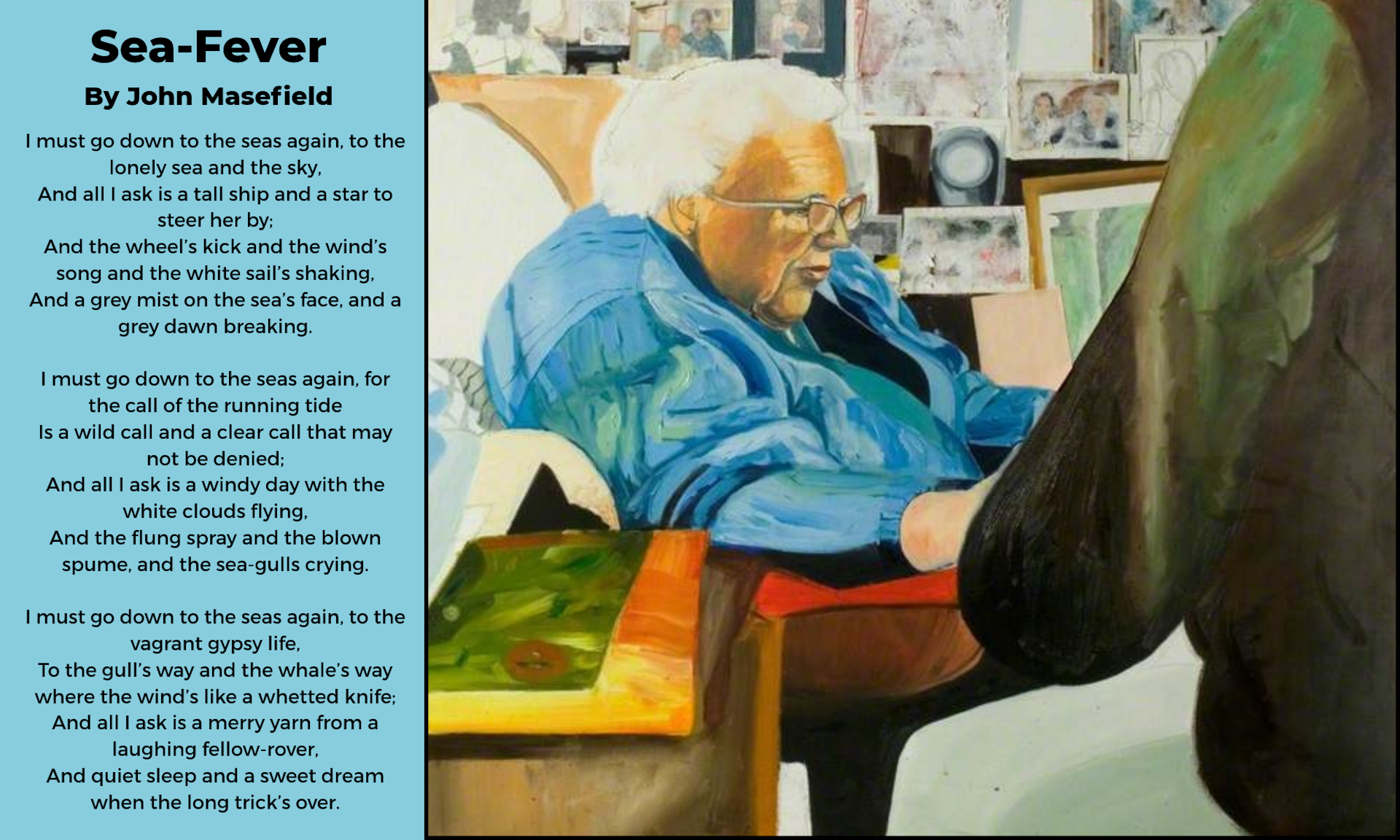
I’m sitting in the lounge of a Midlands nursing home on a hazy September morning. Most of the residents here have dementia and, as in many care and nursing homes, they lack meaningful ways to spend their time.
People are dozing in armchairs or, if awake, enduring the vacuous assault of daytime television. One resident is confused and unable to settle. “I want to go home,” she cries over and over, “I want to go home!”
The scene hardly seems conducive to a quiet poetry reading.
But when I start to read a poem aloud (John Masefield’s Sea-Fever, 1902), something happens. First, there’s a near-collective stirring: heads lift and turn towards me. Then, after picking up the thread, several residents start to recite the poem for themselves, summoning words first encountered over 60 years ago but still recalled with facility and aplomb.
Soon there are stories of long-lost seaside memories. Fish and chips on Cromer Pier. Fusty old guest houses. Slippery shingles beneath the feet.
For the first time this morning, there’s laughter in the room.
It doesn’t always happen like this. But whenever I read poetry aloud in dementia care homes, I’m struck by the influence it has on people’s quality of life – how dementia gives way to the person, revealing the self beneath.
Research suggests that shared reading can improve the wellbeing of people with dementia, encouraging engagement, enjoyment and reminiscence. One study found lower dementia symptom scores during a programme of group reading, alongside reports of improved listening, memory and attention.
The human response to poetry, it seems, continues to exist at a fundamental level. When interviewing the former poet laureate Andrew Motion for my book The Literary Lifeline about the power of reading in helping people cope in hard times, he said: “Our brains are hardwired to retain and enjoy the characteristic features of poetry … We are a poetic species. Poetry is like breathing to us.”
But what is it, exactly, about poetry that lends itself to enduring recall and cognitive stimulation?
The poet Don Paterson described a poem as “a little machine for remembering itself” (itself a memorable formulation). “The memory of a symphony, painting, film or novel,” he writes, “is no more than that: just a memory, or at best a very partial recovery. But if you remember a poem, you possess it wholly. To recall a poem is the poem; the poem has become, quite literally, part of your being.”
It’s perhaps no wonder, then, that poems known by heart remain with us, even in the face of progressive cognitive decline. The neural basis for such retention, however, is not fully understood.
Poetry may be particularly memorable because its rhythm, metre and patterns of sound give words a structure that resembles music. In one experiment, researchers found that people retained the precise wording of poems better than prose over short periods of time. Whether this advantage also helps people with dementia recall familiar poems remains an open question.
Some musical abilities can remain relatively intact in people with dementia, even in its later stages. For example, research has found that some people with severe Alzheimer’s disease can still recall familiar melodies when prompted by their lyrics, and recognise familiar song lyrics.
Poetry’s patterns of sound may also help make words more memorable. In experiments, researchers found that alliteration – the repetition of similar sounds – could prompt people to recall previously encountered information.
Arts interventions such as music and poetry therapy not only stimulate the mind; they can also help reduce anxiety and agitation in dementia, offering, in milder cases of disruption, a more humane alternative to antipsychotic medication. These drugs treat the symptoms of distress, whereas non-pharmacological interventions respond to the whole person and their environment – to unmet needs that might be driving the agitation in the first place.
So extending arts activities in dementia care could help reduce the use of antipsychotic medication, which are often over-used in care homes and can decrease quality of life.
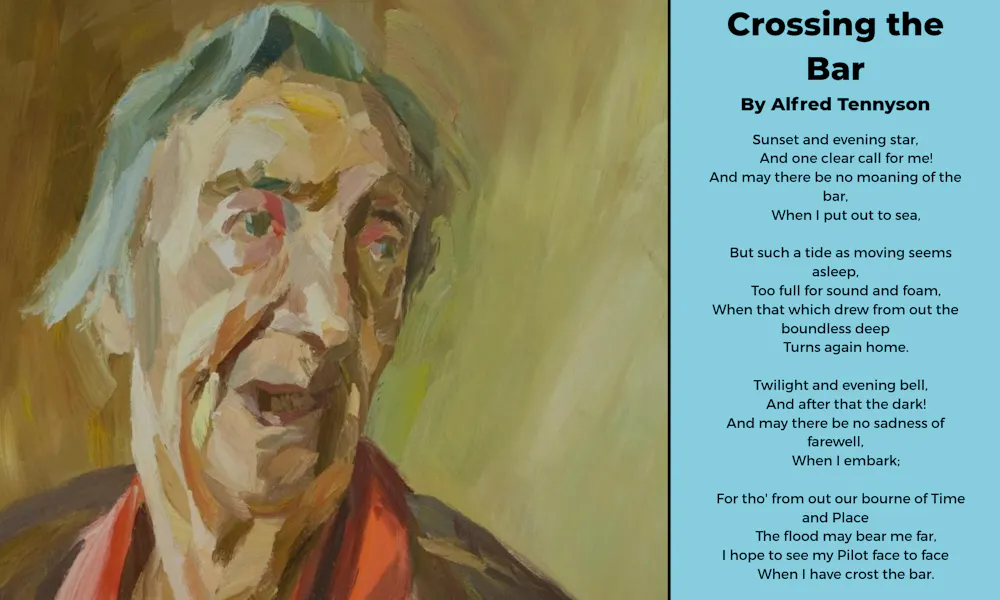
Of course, not everyone enjoys or positively responds to poetry and the arts. “It’s like being back at bloody school!” one unimpressed care-home resident harrumphed while I was reciting Alfred Tennyson’s Crossing the Bar (1889) and William Wordsworth’s Daffodils (also known as I Wandered Lonely as a Cloud, 1804).
Nevertheless, the value and power of poetry in dementia care homes is often under-appreciated and overlooked. A few years ago, I gave a quavering talk on poetry at a regional dementia forum. During the conference reception, I was approached by an immaculately dressed, red-faced man.
“You shouldn’t have given that talk,” he said.
Here we go, I thought. Brace yourself. (Throughout the day I’d been accosted by delegates with their public speaking advice.)
“I looked after my wife for 13 years,” he said, his voice faltering. “I played music to her, sang with her, went dancing with her. But I never read poetry to her.”
Silence.
“She would’ve loved that.”
This article features references to books that have been included for editorial reasons, and may contain links to bookshop.org. If you click on one of the links and go on to buy something, The Conversation UK may earn a commission.
Kevin Harvey received AHRC IAA funding to design and distribute a book of much-loved poems to regional care homes. He is a trustee of a local charity, Trent Dementia, based in Nottingham.
Popular Products
-
 Automatic Pill Dispenser with Alarm
$61.99$42.78 -
 Raised Toilet Seat– 300 lbs Support
$58.99$40.78 -
 Hands-Free Electric Can Opener
$45.99$31.78 -
 Portable Electric Abdominal Massager ...
$45.56$22.78 -
 Electric Heating Waist Massager Belt
$136.99$94.78