Powell: Harry Margolis On Removing A Sick Spouse From The House Deed
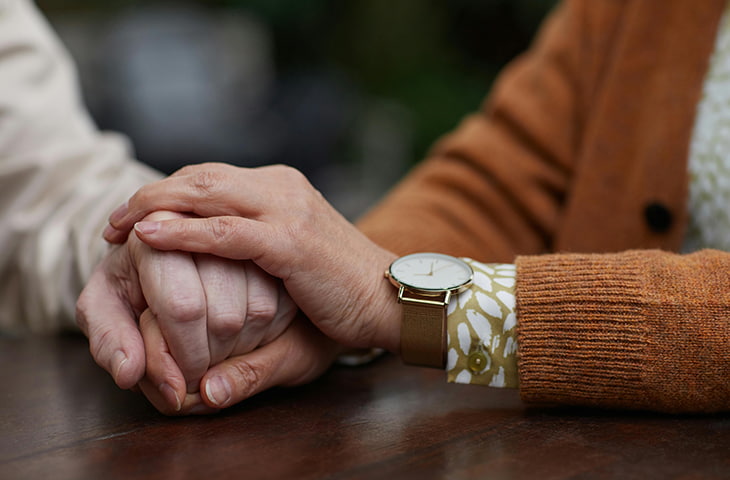
When one spouse becomes seriously ill, keeping both names on the deed to the family home may create unexpected financial and estate-planning risks.
Harry Margolis, author of “Get Your Ducks in a Row,” explained in a recent video interview why transferring ownership to the healthy spouse may make sense, what couples could lose in tax benefits, and why waiting too long can complicate matters.
Below is an edited for brevity and clarity transcript of that interview.
What happens if the healthy spouse dies first?
Bob Powell: Harry, when one spouse becomes seriously ill, should couples consider taking that spouse off the deed to their home? What’s the financial risk if they don’t?
Harry Margolis: In most cases, when one spouse becomes ill later in life, it does make sense to take them off the deed for a number of reasons.
Most married couples own their homes as tenants by the entirety, which is a form of joint ownership. When one spouse dies, the house passes to the surviving spouse.
The bigger downside is what happens if the wrong spouse dies first. The otherwise healthy spouse passes away, and the house is now in the sole name of the unhealthy spouse… And if they're in long-term care and receiving Medicaid, the house may be subject to Medicaid estate recovery when they die.
There’s a potential advantage to leaving things as they are. The surviving spouse may receive a partial step-up in basis when the first spouse dies, which could mean a lower capital gains tax when the house is sold.
But the bigger downside is what happens if the wrong spouse dies first. The otherwise healthy spouse passes away, and the house is now in the sole name of the unhealthy spouse.
That spouse may not have the capacity to manage it. And if they’re in long-term care and receiving Medicaid, the house may be subject to Medicaid estate recovery when they die.
Why put the house in the healthy spouse’s name?
Powell: How does transferring ownership help protect the couple financially?
Margolis: The first reason is that the healthy spouse has control and can do what they think makes sense with the house.
They can sell it, borrow against it if need be, or do some estate planning around it, such as putting it in trust.
So we usually recommend that the house be put in the name of the well spouse.
Why isn’t changing the deed enough?
Powell: If the couple transfers the house to the healthy spouse, is that enough to protect it?
Margolis: The healthy spouse also needs to change their estate plan.
If they have what I call an “I love you will,” where everything passes to the surviving spouse, it doesn’t help as much to put the house in one spouse’s name if, when that spouse dies, it goes right back to the unhealthy spouse under the terms of the will.
They have to update their will. They can either bypass the unhealthy spouse entirely or leave the property in trust for that spouse.
How can a testamentary trust protect the sick spouse?
Powell: How does leaving the house in trust work, particularly if the sick spouse needs long-term care?
Margolis: There’s a special safe harbor under the Medicaid rules for what are called testamentary trusts. Those are trusts created under wills.
The healthy spouse can update their estate plan to say that if they die first, everything or some portion of their estate will remain in a testamentary trust for the spouse who’s unwell and perhaps in a nursing home.
The assets will be available for that spouse’s needs, whatever they might be, but they won’t have to be spent down to pay for long-term care costs, and they won’t be subject to Medicaid estate recovery.
Does the spouse have to be terminally ill?
Powell: When we talk about a sick spouse, are we necessarily talking about someone whose life expectancy is limited?
Margolis: It’s… a time limit, but it’s really more a case of the cost of care.
Someone might have Alzheimer’s or have had a stroke. Their life may be cut short because of that, but they’re also going to need care until the end of their life, and the cost of that can add up.
What if the spouse has dementia and can no longer sign the deed?
Powell: Suppose someone has dementia and their name is still on the house deed. What’s the mistake families need to avoid?
Margolis: It’s really leaving their name on it. You need to put it in the well spouse’s name.
One question is, if they have dementia, how are they going to sign the deed to do that?
That’s one reason to plan early, before the dementia has developed to such an extent that they don’t have capacity.
There’s no black line that says today you have capacity and tomorrow you don’t. It’s something of a gray area.
More Retirement
- The year-end RMD trap: Why waiting until late December could cost retirees 25%
- The “Gap Year” Roth: Early retirees slash lifetime taxes before RMDs hit
- Tax-loss harvesting guide: $3,000 limit & wash-sale rules
Where there’s still some understanding or cognitive ability, they may know enough to say, “I want to protect my spouse and put the house in her name,” even though they couldn’t do anything more complex than that.
But assuming they can’t even express that desire, the transfer has to be done under a power of attorney. Ultimately, you may have to go to court and get court approval to make the transfer, which is more expensive.
Why is a durable power of attorney so important?
Powell: Determining whether someone has the capacity to sign legal documents can be complicated, can’t it?
Margolis: Yes. It’s up to the notary or witnesses to state their opinion about whether the person understands what they’re signing.
All the more reason that everybody should have current durable powers of attorney.
Popular Products
-
 Automatic Pill Dispenser with Alarm
$61.99$42.78 -
 Raised Toilet Seat– 300 lbs Support
$58.99$40.78 -
 Hands-Free Electric Can Opener
$45.99$31.78 -
 Portable Electric Abdominal Massager ...
$45.56$22.78 -
 Electric Heating Waist Massager Belt
$136.99$94.78