A Letter To The Person Who Is Terrified Of Giving Up Being Single: The Freedom You’re Protecting Is Real, And The Loneliness You’re Tolerating Is Also Real, And The Courage Isn’t In Choosing One Over The Other, It’s In Admitting You’ve Been Holding Both This Entire Time
Dear you,
I know what you’re carrying. I know because I carried it for fifteen years.
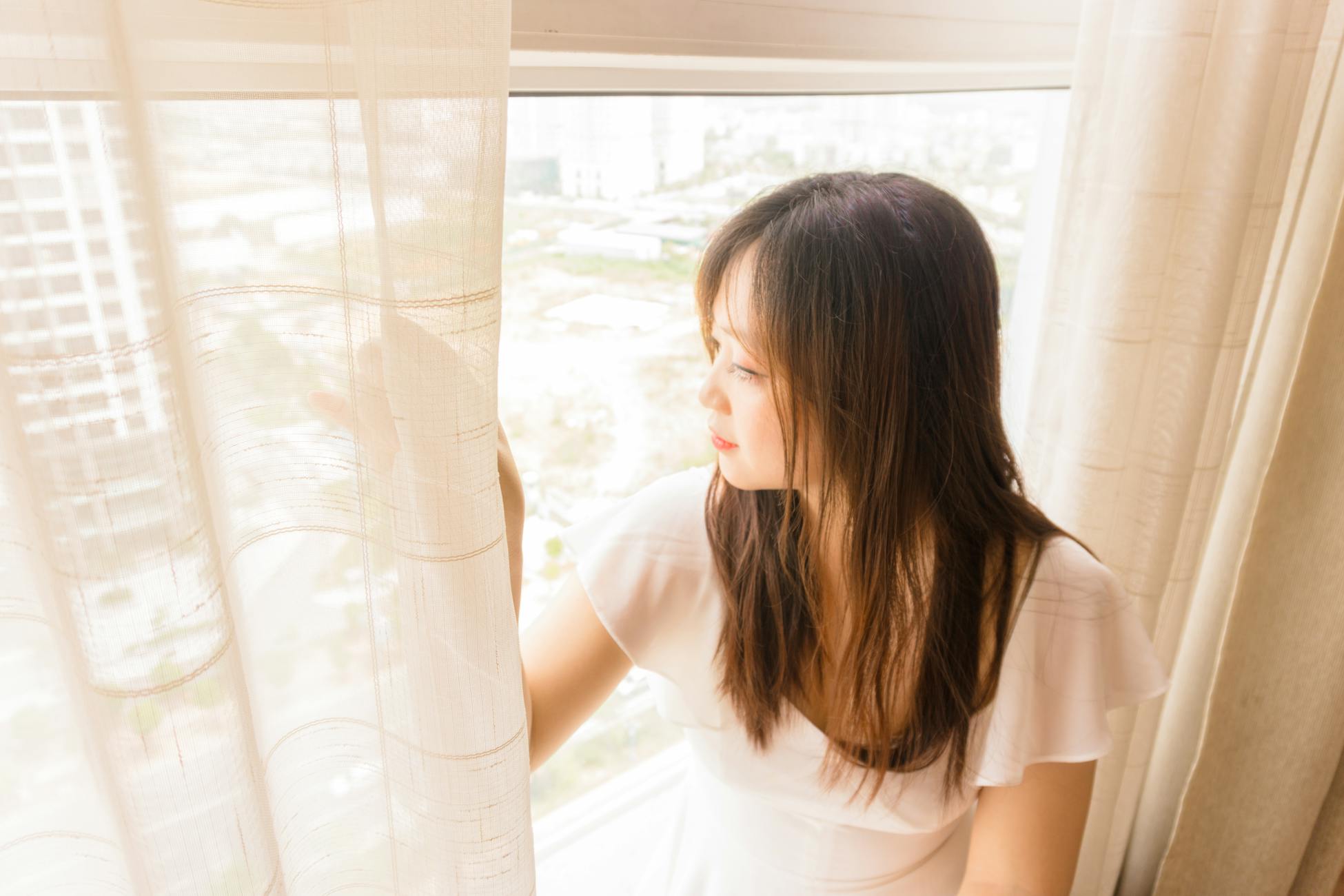
You sat down somewhere recently, maybe with a friend, maybe alone at 2am, and tried to explain something that doesn’t fit neatly into words. You’re proud of your independence. Genuinely proud. And you’re lonely. Genuinely lonely. And the exhausting part isn’t either of those feelings on their own — it’s the way everyone around you keeps insisting you can only have one.
The conventional wisdom about long-term singleness offers you two narratives and no middle ground. Either something is wrong with you, or you’ve heroically transcended the need for partnership. You’re either broken or enlightened. The dating-advice industrial complex reinforces one pole, and the self-love movement reinforces the other. Both are selling something. Neither is telling the whole truth.
The whole truth is messier: you’ve been holding a genuine freedom in one hand and a genuine loneliness in the other, and the weight of pretending one hand is empty is what’s actually exhausting you.
This letter is about that weight. And about what it looks like to finally set it down.
The choice that worked — until it didn’t
I know the origin story of your singleness, because it’s almost always the same shape. At some point, being single was genuinely the right call. Maybe you were losing yourself in relationships. Maybe you needed to learn that you could generate your own happiness instead of extracting it from someone else. For me, I used to seek validation compulsively from the people around me. Relationships brought out a version of myself I didn’t like. Choosing to step away from that pattern was one of the most empowering decisions I’ve ever made.
And here’s what nobody warns you about empowering decisions: they work. They genuinely make your life better. So you hold on to them. You tell people about them. You build your sense of self around them. And slowly, without any single moment you can point to, the choice hardens into an identity.
You know this has happened to you. You became the person who doesn’t need anyone. The person who can do everything alone. The person whose independence isn’t just a preference but a philosophy. And that identity served you, genuinely served you, for a long time, and then it became a wall. And the thing about walls is they don’t just keep out the thing you were originally protecting yourself from. They keep out everything new trying to get in.
This pattern operates far beyond singleness, by the way. You’ve probably seen it in other areas of your own life. Careers you can’t leave even though you stopped caring years ago. Friendships you’ve outgrown but won’t release. Beliefs about who you are that were true at twenty-five and haven’t been updated since. The mechanism is identical every time: a protective choice calcifies into a fixed identity, and then the identity does the protecting automatically, without your conscious consent.
The two needs you’ve been told to rank
Here’s something I want you to sit with: you have a deep need for autonomy and a deep need for closeness. Both are fundamental. Neither is optional. When you talk about the freedom of being single, you’re describing the fulfillment of one. When you feel the ache, you’re feeling the deprivation of the other. And you don’t outgrow one by maximizing the other.
I think you already know this. The problem is that the culture around singleness, both the stigmatizing version and the celebrating version, keeps insisting you pick a lane.
So you’ve probably done what most people do with an impossible contradiction: you collapsed it. You told yourself the loneliness was just the price of freedom. Or you dismissed the desire for freedom as a coping mechanism for loneliness. Both resolutions feel clean and both are incomplete. And the suppression doesn’t eliminate the need you’re hiding from yourself. It just drives it underground, where it expresses itself as anxiety, irritability, or a vague sense that something is wrong that you can’t name.
The courage, and I’m choosing that word carefully, is in refusing to resolve it. In admitting that both the freedom and the loneliness are fully real, fully yours, and have been cohabitating inside you for longer than you’ve been willing to acknowledge.
The identity trap you haven’t named yet
I want to name something directly, because I think you’ll recognize it the moment I do.
Your identity as a single person has become a container for unprocessed fear. The fear might be of losing yourself in someone else. Of repeating your parents’ patterns. Of being seen fully and found lacking. Your singleness wraps around that fear and gives it a respectable name: independence.
And the independence is real. That’s what makes it so effective as camouflage. You’re not lying when you say you love your freedom. You do. You’re just also not telling the full story.
I’ve written before about the particular pride that comes from building your own self-sufficiency — the kind that looks like strength from the outside but feels like a locked door from the inside. You built that door for a reason. A good reason. But you might be at the point where the door has served its purpose and could now be opened. That’s terrifying when you’ve spent years convincing yourself the door was load-bearing.
What happened when my wall came down
I’m not going to give you the full fifteen-year timeline — you don’t need my biography, you need to see the mechanism. So here’s what matters:
In my recent video on my channel, I described what the transition out of long-term singleness actually looked like, and the details matter, because they don’t match the dramatic narrative most people expect:
I met someone here in Singapore about eighteen months ago. On Bumble, of all things. What made this different from every other encounter I’d had over the previous decade was subtle but decisive: early on, I didn’t feel any impingement on my freedom. We just kept agreeing to meet up again. Not frantically. Weekly at first. A smooth transition that never triggered the alarm system I’d spent fifteen years building.
Then I had a big event in Melbourne that required a plus one. Inviting her felt like stepping off a ledge. She said yes, rearranged work, and we spent an incredible week together. That forced the issue, not because she pressured me, but because the experience made the identity of being single feel less like a truth and more like a habit. The more time I spent with her, the less I thought about my singleness as an identity at all.
The key realization, looking back, was that the things I actually needed — freedom, independence, the capacity to generate my own happiness internally — didn’t require singleness as their permanent vehicle. Singleness had been the essential delivery mechanism at a particular stage of my life. But the needs themselves could be met in other configurations.
I want to be honest with you: the transition almost felt like a death. A death of a core part of myself. And I don’t say that lightly. If you’ve built your identity around being single the way I did, you should know that letting someone in doesn’t feel like gain at first. It feels like loss. It feels like the version of you that survived everything alone is being asked to step aside. And that version deserves more than dismissal — it deserves your gratitude, and then your permission to rest.
Holding both without choosing
So let me say this to you directly, the way I wish someone had said it to me.
The freedom you’re protecting? Real. The spaciousness of your own schedule, the absence of someone else’s emotional weather system in your daily life, the clarity that comes from knowing your choices are entirely your own — all of that is genuine, and anyone who dismisses it has either never had it or has forgotten what it costs to lose it.
The loneliness you’re tolerating? Also real. The hollow feeling at the end of a great day when there’s no one specific to tell. The way a Sunday afternoon can feel like it weighs nine hundred pounds. The knowledge that you are genuinely known by perhaps one or two people on the planet, and the quiet arithmetic of what happens to you if those one or two people disappear.
The conventional framing says: choose. Either the freedom matters more, so stop complaining about loneliness. Or the loneliness matters more, so go find a partner. But that framing misses something fundamental about how you actually work. You’re not a problem to be solved in one direction. You’re a person holding two real things, and the move that actually matters is refusing the forced choice.
Admitting you’ve been holding both. That you like your independence and you’re lonely. That you’ve built a life that works and something is missing. That the wall you built was necessary and has outlived its necessity.
You’re also carrying a kind of unprocessed grief that rarely gets named as such — grief for the relationship you might have had, for the version of yourself that might have emerged inside partnership, for the years that passed while the wall was doing its job. That grief doesn’t mean the single years were wasted. It means they were inhabited, fully, with all the complexity that entails.
What the transition actually requires
I don’t want to pretend my story is your template. I got lucky. I met a person who shared my values, who didn’t trigger the alarm system, who let the transition happen gradually instead of demanding I dismantle everything overnight. Not everyone gets that luck, and I’m not interested in dispensing false optimism.
What I can say, from the specific vantage point of someone who spent fifteen years on your side and now stands on the other, is that the transition didn’t require me to stop valuing freedom. It required me to expand my definition of it. Freedom had meant the absence of another person’s needs, and it now means the presence of another person’s needs alongside my own, navigated with enough skill and honesty that neither set gets suppressed. That second version of freedom is harder. I chose it, and I’d choose it again, but I want to be honest about what the choice costs: there are mornings when I wake up and feel the ghost of the old spaciousness, the version of my life where every hour belonged only to me, and I miss it with a sharpness that surprises me even now. The first freedom was clean. This one is heavier and more tangled, and I still can’t tell you with certainty that it contains more oxygen or just a different kind of air.
You don’t have to choose between being proud of your independence and being honest about your loneliness. You’ve been holding both, maybe for years, maybe for decades, and the contradiction didn’t break you. But I think about that pattern I mentioned earlier, the way a protective choice calcifies into an identity that runs on autopilot, and I wonder whether the same thing is happening to me in reverse now, whether partnership is hardening into its own kind of wall, and whether the only honest position is to keep admitting that I don’t know. I chose partnership. I still feel the weight of what I set down to pick it up. And I can’t promise you that what you gain will feel like enough to offset what you lose, because eighteen months in, I’m still measuring, and the math hasn’t settled yet.
That’s the letter. You can do with it what you want.
Popular Products
-
 Brightening & Hydrating Rose Facial C...
$154.99$107.78 -
 Pheromone Long Lasting Attraction Per...
$88.99$61.78 -
 Crystal Glass Rose Table Decoration w...
$137.99$95.78 -
 Mini Facial Hair Trimmer with Replace...
$15.99$9.78 -
 Whitening & Spot Removal Skincare Set...
$201.99$140.78