Adults Who Keep A Light On In One Room Of The House All Night Aren’t Afraid Of The Dark, They Grew Up In Homes Where A Lit Window Meant Someone Was Still Coming Home
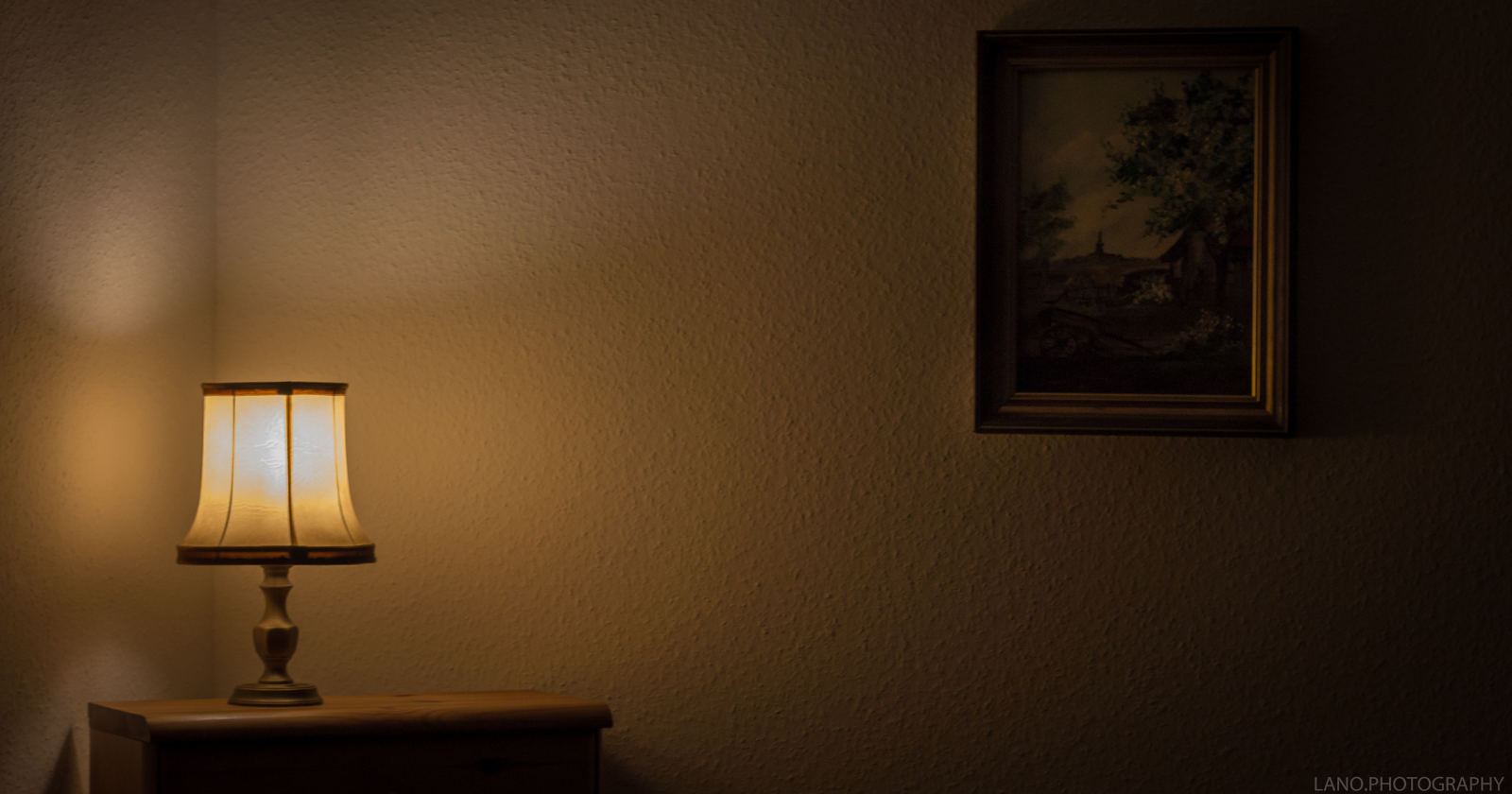
The hallway lamp stays on. Or the kitchen light above the stove. Or the small lamp on the console table by the front door, the one nobody sits near, the one that serves no purpose except to burn from 10pm until morning. The people who leave it on can rarely tell you why they do it.
Ask them and they’ll shrug. Say it’s a habit. Say the house feels wrong without it. Say they don’t like coming down to a dark kitchen for a glass of water at 3am.
None of those answers are the real one.
The real answer, for a certain kind of adult, is that a lit window used to mean something specific. It meant somebody was still out there. It meant somebody was still coming back. And the light was how you knew.
The child who watched the driveway
In a lot of households in the 1970s, 1980s, and 1990s, one or both parents worked shifts that ended after the children were meant to be asleep. Nurses. Factory workers. Long-haul drivers. Bartenders. Cops. Nurses coming off a swing shift at 11pm. Fathers who covered the graveyard rotation at the plant.
The children of those households learned a piece of domestic choreography that nobody taught them explicitly. Somebody, usually the parent who was home, left a light on. Sometimes the porch light. More often an inside light, visible from the street, visible from the driveway, visible from the last turn onto the block.
The message of that light was simple. We are still awake for you. Come home. The house is not asleep yet.
The child, watching from a bedroom window or lying in the dark listening for the sound of tires on gravel, absorbed the meaning of the light long before they could articulate it. Light equals safety. Light equals arrival. Light equals the person you love making it back one more night.
What the brain does with a repeated signal
Attachment theory, first outlined by John Bowlby in the mid-twentieth century and developed through Mary Ainsworth’s Strange Situation work in the 1970s, has always been less about affection than about signals. The infant learns, through thousands of small repetitions, which environmental cues predict the caregiver’s return and which predict absence. Those cues get encoded early and durably. Bowlby argued the attachment system evolved as a survival mechanism, which is another way of saying the child’s brain treats these signals as life-or-death information and files them accordingly.
A lit lamp in a specific room, night after night, for years, is exactly that kind of signal. It gets welded to the concept of the person is coming. Not through decision. Through repetition.
Decades later, the adult keeps the lamp on. The person they are waiting for may be dead. May be estranged. May be sleeping upstairs. It does not matter. The nervous system runs the old program because the old program worked.
Not fear of the dark
People assume adults who leave a light on all night are afraid of something. Intruders. Ghosts. The dark itself. Sometimes that’s true. Often it isn’t.
The tell is which light. Someone afraid of the dark tends to leave a light on wherever they are — the bedroom, the hallway they walk through, the bathroom. Someone running the old childhood program lights a very specific room. Usually a public room. Usually one visible from outside the house. Usually one they are not currently in.
They aren’t lighting the space they occupy. They are lighting the space someone else would enter.
That distinction matters. It’s the difference between comfort-seeking and signal-sending, even when there’s no one left to receive the signal.
The research on childhood environments that never quite leave
Early home environments have a lasting grip on adult behaviour. Psychology Today’s overview of the impact of childhood trauma on adult functioning notes that the effects of early household stress are typically longstanding and chronic, showing up in patterns the person often can’t trace back to their origin. Waiting for a parent to come home from a late shift isn’t trauma in the clinical sense for most people. But the vigilance it teaches is real, and it doesn’t dissolve on its own.
Children in many households learned to read environmental cues that nobody explicitly taught them — the sound of the front door, the pattern of footsteps, the hour when headlights would finally sweep across the bedroom wall. The lit window is the visual counterpart to the audible door.
Both are early-warning systems. Both outlive the emergency.
Why the specific room matters
Ask an adult who does this to point to the light they leave on and you’ll notice a pattern. It’s almost never the room where they sleep. It’s the room where the family used to gather. Or the room the front door opens into. Or the kitchen, because in a lot of working-class homes the kitchen was the room a parent came back to first — coat off, keys on the counter, kettle on.
The choice of room is diagnostic. It maps to the geography of return in the childhood house.
A woman who grew up watching for her mother’s headlights will often light the front room. A man whose father came in through the back door after night shifts will light the kitchen. The adult house may have a completely different layout. The behaviour transfers anyway, sometimes with strange contortions — lighting a room that faces no street, or that no one but the resident will ever see from outside. The signal has become internal. It’s for the person sending it.
The circadian cost, and why it doesn’t stop the behaviour
There is a physiological argument against leaving lights on all night, and it is not trivial. Research on light exposure and circadian rhythm regulation describes how even modest evening illumination affects melatonin secretion, sleep onset, and the internal clock’s alignment with the day-night cycle. Short-wavelength light is the worst offender, but any consistent nighttime light source can nudge the circadian phase.
The people who leave a lamp on all night usually know some version of this. They read the same articles as everyone else. They know blue light is bad. They know sleep hygiene experts would tell them to switch it off.
They don’t switch it off.
The reason they don’t is that the emotional function of the light outweighs the physiological cost. The nervous system’s calculation is not stupid. It is running a very old equation: a lit room means the household is intact. Losing a bit of melatonin is a small price for the felt sense that everyone who was supposed to come home did come home.
The version that runs after someone doesn’t come back
There’s a harder version of this pattern. It shows up in people whose parent, or partner, or child, went out one night and didn’t return. The lit lamp becomes a small, ongoing refusal. A refusal to accept that no one is coming. A refusal to let the house go fully dark, because a fully dark house is a house that has stopped waiting.
Grief researchers have long observed that mourning behaviours often organise around thresholds — doorways, phones, chairs, lights. The bereaved don’t always know they’re doing it. A widower keeps his wife’s reading lamp on for a year and calls it habit. A mother keeps the porch light burning for a son who died in his twenties and tells visitors she just likes how it looks.
The all-night lamp is often the physical residue of loss. Something is missing. The house acknowledges it by staying half-awake.
How the pattern shows up in adult relationships
Partners of people who keep a light on all night sometimes read the habit as fussy or wasteful. Occasionally they read it as anxious. What they miss is that the light is a small piece of self-parenting. The adult is soothing a child version of themselves that used to lie awake waiting.
Psychology Today’s discussion of how childhood dysfunction manifests in adult relationships notes that many of the strangest domestic rituals in a partnership are inherited survival strategies whose original context has vanished. The behaviours look neurotic in the present because they were adaptive in the past. Turning off the light feels, to the person who leaves it on, like an act of small betrayal. Toward whom, they usually can’t say.
Push them and they might say: toward the child who used to check.
The related patterns that travel with it
Adults who keep one light on all night tend to share a cluster of adjacent behaviours. They lock the front door and then check it again. They keep their phone ringer on overnight even when nobody is likely to call. They know, without looking, whether every member of the household is home. They are often the first to notice if someone slept somewhere different than expected.
This is the same vigilance system, expressed through different domestic instruments. Household habits that people inherit from their childhood homes tend to travel in packs. The lamp is rarely the only tell.
What to do with the information
Nothing, if it’s working. A lamp burning in the hallway is a very cheap form of self-regulation. It costs a few euros a year in electricity and buys a small, real feeling of continuity with a version of home the person is still loyal to.
The reason to look at it is not to stop it. It’s to understand that the behaviour is neither irrational nor mysterious. It’s an inherited signal, still running, still pointed at the front door.
Somebody, once, was still coming home. The light was how you’d know when they did. The adult who keeps that light on isn’t afraid of the dark.
They are still, on some quiet level, keeping watch.
Popular Products
-
 Brightening & Hydrating Rose Facial C...
$154.99$107.78 -
 Pheromone Long Lasting Attraction Per...
$88.99$61.78 -
 Crystal Glass Rose Table Decoration w...
$137.99$95.78 -
 Mini Facial Hair Trimmer with Replace...
$15.99$9.78 -
 Whitening & Spot Removal Skincare Set...
$201.99$140.78