Attached Changed How I See People (including Myself)
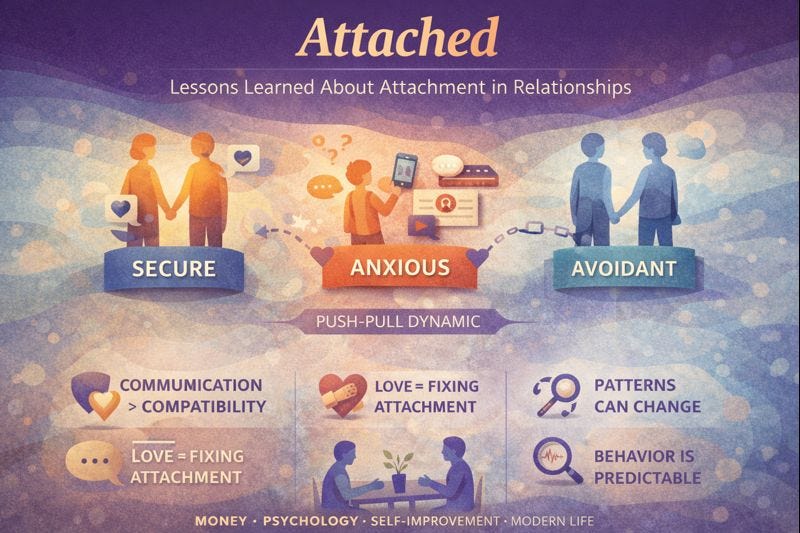
AI Created Image by Author
I used to think my relationship problems were about timing.
Or luck.
Or the wrong people.
That was comforting.
It meant nothing was really wrong with me.
Then I read Attached by Amir Levine and Rachel Heller.
And that excuse stopped working.
The uncomfortable truth
Most of us aren’t bad at love.
We’re just predictable.
Painfully predictable.
We repeat the same patterns.
With different faces.
And we call it chemistry.
That’s where this book hit me.
Not gently.
But clearly.
Why this book matters now
We live in a strange time for relationships.
Endless options.
Constant messaging.
Zero clarity.
Dating apps reward avoidance.
Work culture rewards emotional shutdown.
Technology lets us disappear without consequences.
And then we wonder why connection feels hard.
Attached matters because it explains something we don’t like admitting:
Love isn’t random.
Attachment isn’t mysterious.
And most relationship chaos is explainable.
That includes mine.
 Image taken from Pexels
Attachment styles are not personality traits
This was my first correction.
Attachment styles aren’t who you are.
They’re how you learned to stay safe.
That distinction matters.
The book outlines three main styles:
Secure.
Anxious.
Avoidant.
Not labels.
Patterns.
And patterns can change.
But only if you see them.
Most people don’t.
Secure people aren’t boring they’re regulated
I used to think secure people lacked depth.
They felt calm.
Predictable.
Too easy.
I confused stability with lack of passion.
Big mistake.
Secure people want closeness.
And independence.
At the same time.
They don’t play games.
They don’t disappear to feel powerful.
They don’t confuse silence with strength.
They communicate.
Even when it’s awkward.
Common misunderstanding:
People think secure love is dull because it doesn’t spike anxiety.
Reality:
Drama isn’t depth.
It’s dysregulation.
Practical takeaway:
If someone feels “boring,” ask yourself:
Is it boredom or the absence of emotional chaos?
Anxious attachment feels like love but it’s fear
This part hurt.
Anxious attachment is intense.
Thought-heavy.
Emotionally loud.
You crave closeness.
You scan for signs.
You overthink tone, timing, silence.
I recognized myself here more than I liked.
Anxious people don’t want too much love.
They want certainty.
And they often choose partners who can’t give it.
Common mistake:
Calling anxiety “passion” or “being emotional.”
What’s really happening:
The nervous system is in constant alert mode.
Practical takeaway:
If your mind is always busy in love, that’s not intuition.
That’s anxiety asking for safety.
 Image Taken from Pexels
Avoidant attachment isn’t cold it’s protective
Avoidant people aren’t heartless.
They’re controlled.
They value independence so much that closeness feels dangerous.
Not because they don’t care.
But because caring once felt unsafe.
They pull away when things get real.
They intellectualize emotions.
They need space when connection deepens.
Sound familiar?
Unpopular truth:
Avoidant behavior is rewarded in modern life.
At work, emotional distance looks like professionalism.
In dating, detachment looks confident.
On social media, mystery looks attractive.
Common misunderstanding:
Thinking avoidants “just haven’t met the right person.”
Reality:
No one heals your attachment style for you.
Practical takeaway:
If someone disappears when intimacy increases, believe the pattern not the promise.
Why anxious and avoidant people find each other
This dynamic is everywhere.
The anxious wants closeness.
The avoidant wants space.
One chases.
One withdraws.
And both feel misunderstood.
The book explains this loop with brutal clarity.
And once you see it, you can’t unsee it.
They activate each other’s deepest fears.
And mistake that activation for chemistry.
Common mistake:
Calling this “opposites attract.”
What it really is:
Two nervous systems stuck in a feedback loop.
Practical takeaway:
If a relationship feels intense but unstable, ask:
Is this connection or mutual insecurity?
 Image taken from Pexels
Love doesn’t fix attachment wounds
This was uncomfortable.
We grow up believing love heals everything.
That the right person will make us secure.
The book disagrees.
Firmly.
Attachment wounds are healed through awareness, consistency, and effort.
Not romance alone.
That includes self-work.
And choosing partners who can meet you halfway.
Hard truth:
You can’t out-love someone’s attachment system.
Practical takeaway:
Stop waiting for relationships to fix what requires responsibility.
Communication matters more than compatibility
Another correction.
We obsess over shared interests.
Music taste.
Hobbies.
Goals.
But attachment alignment matters more.
Two people can love the same things
and still destroy each other emotionally.
Secure communication beats perfect compatibility.
Every time.
Common misunderstanding:
Thinking conflict means incompatibility.
Reality:
It’s how conflict is handled that matters.
Practical takeaway:
Pay attention to how someone responds when you express a need.
That response tells you everything.
 Image taken from Pexels
Attachment shows up beyond relationships
This surprised me.
Attachment styles don’t stop at romance.
They affect:
How we handle feedback at work.
How we deal with authority.
How we manage money risk.
How we respond to uncertainty.
Anxious patterns chase reassurance everywhere.
Avoidant patterns avoid dependence everywhere.
This is psychology, not dating advice.
Practical takeaway:
Notice where else you overthink or detach.
The pattern is wider than you think.
What this book changed for me
I stopped romanticizing instability.
I stopped chasing emotional highs.
I stopped calling anxiety “intuition.”
I became more honest about what I need.
And more respectful of what others can give.
Not perfect.
But clearer.
And clarity is underrated.
The quiet conclusion
Attached doesn’t make love easier.
It makes it clearer.
And clarity is uncomfortable because it removes excuses.
You can still choose familiar patterns.
But you can’t pretend you don’t know better.
Once you see attachment, you start seeing people differently.
Including yourself.
That awareness stays with you.
Quietly.
Long after the book ends.
Attached Changed How I See People (Including Myself) was originally published in Write Your World on Medium, where people are continuing the conversation by highlighting and responding to this story.
Popular Products
-
 Brightening & Hydrating Rose Facial C...
$154.99$107.78 -
 Pheromone Long Lasting Attraction Per...
$88.99$61.78 -
 Crystal Glass Rose Table Decoration w...
$137.99$95.78 -
 Mini Facial Hair Trimmer with Replace...
$15.99$9.78 -
 Whitening & Spot Removal Skincare Set...
$201.99$140.78