Children Who Grew Up In Homes Where One Parent Was The Peacekeeper And The Other Was The Storm Almost Always Become Adults Who Can Read A Room In Seconds But Have No Idea What They Actually Feel When Nobody Else Is In It
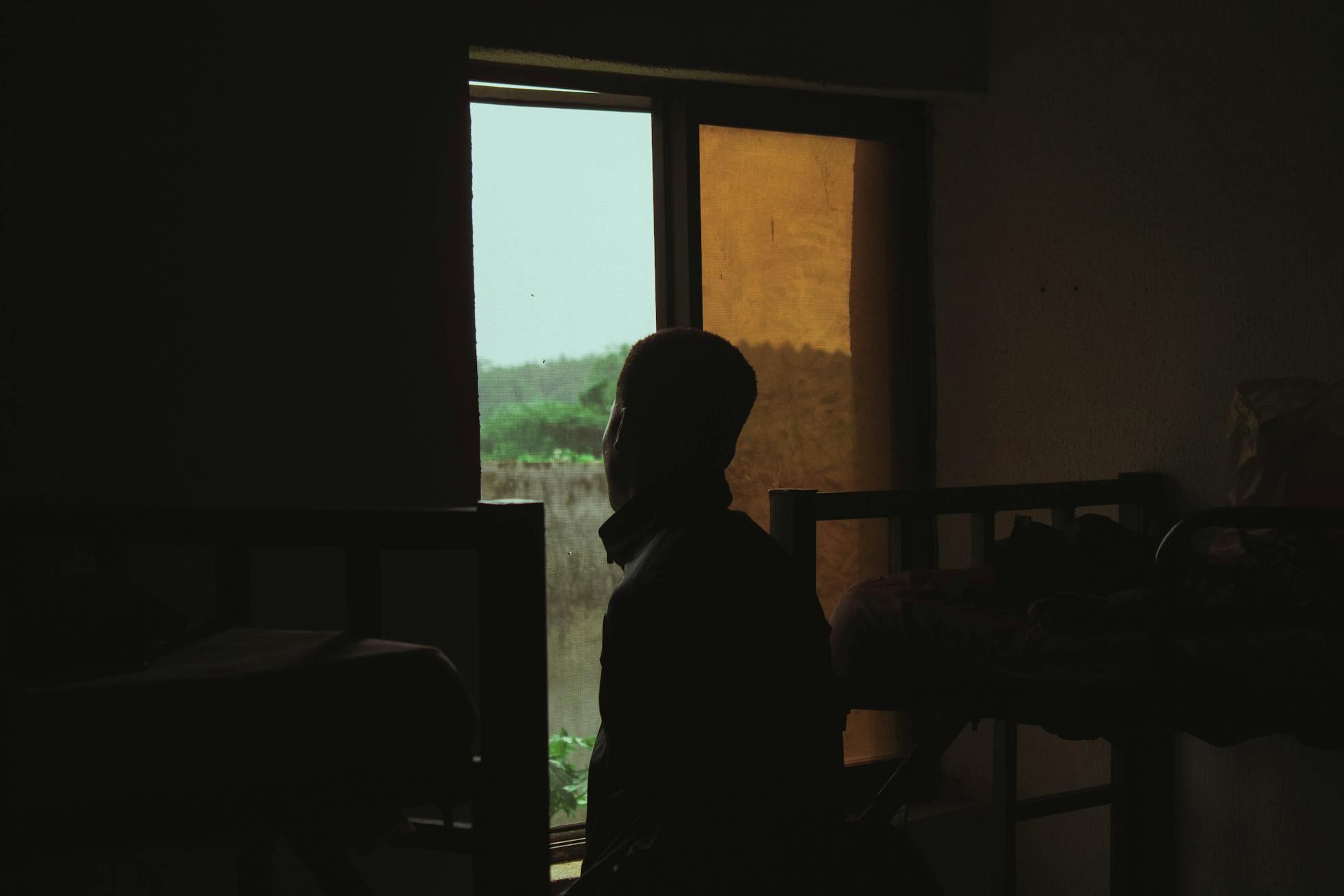
When I was a product manager, I could walk into a room of twelve people and know within seconds who was frustrated, who was about to derail the conversation, and who had already mentally checked out. My colleagues thought this was a professional skill. Something I’d cultivated through hundreds of meetings. I let them believe that. The truth was less flattering. I’d been doing it since I was old enough to hear a door open and know, from the weight of the footstep, what kind of evening was coming.
The conventional wisdom around emotional intelligence frames it as an achievement. Corporate training programs sell it. LinkedIn profiles advertise it. The assumption is that people who read rooms well developed this capacity through curiosity, practice, or natural empathy. That framing is comfortable. And for a subset of people — the ones who grew up in households with one peacekeeper parent and one volatile one — it is almost entirely wrong. What I’m describing isn’t a personality type or an edge case. It is one of the most common and least examined dynamics in family systems, and the adults it produces share a specific, recognizable fingerprint: extraordinary perception of others, near-total blindness toward themselves.
The capacity to scan an environment for emotional threat before your conscious mind has finished processing the scene is an adaptation. A survival response that developed because the alternative — being caught off-guard by a parent’s mood shift — carried consequences. The child who grew up triangulated between the parent who smoothed everything over and the parent whose emotional weather could change without warning learned to read micro-expressions, vocal pitch, the angle of a jaw, the pace of breathing. They learned it the way a person living near an active volcano learns to read seismic tremors. Because the information was existential.
The Architecture of Watching
A household with a peacekeeper and a storm operates on a specific emotional logic. The storm parent generates unpredictable intensity. Anger, withdrawal, criticism, sometimes all three in rapid succession. The peacekeeper parent manages the aftermath, smooths the rupture, translates the storm’s behavior into something the children can metabolize. The peacekeeper parent manages the aftermath with reassurances that reframe the storm’s behavior, suggesting the outburst didn’t reflect true intent or explaining it away as stress. The child watches both performances and internalizes a blueprint: the world is managed through emotional vigilance, and love is maintained through careful monitoring of everyone else’s state.
Research on parent-child dynamics supports this pattern. A Yale study on parental discord found that disagreement between parents — even about something as foundational as parenting roles — directly affects child development. When parents hold conflicting views of their household dynamics, children are placed in the position of navigating two incompatible realities simultaneously. The child doesn’t just witness the conflict. The child becomes the instrument that measures it.
This produces adults with an extraordinary external radar. They can tell, from across a restaurant, that a couple three tables over just had an argument before arriving. They notice when a colleague’s smile doesn’t reach their eyes. They register the half-second delay before someone says “I’m fine” and they know, with a certainty that feels like fact, that the person is not fine.
The skill looks like empathy. Sometimes it even functions as empathy. But the mechanism underneath it is closer to threat detection.
The Blank Space Where Your Own Feelings Should Be
Here is the cost that rarely gets named: the same child who became expert at reading everyone else’s emotional state often has no reliable access to their own. When someone asks them how they feel, there’s a pause. Not because they’re searching for the right word. Because the signal genuinely isn’t there. Or more precisely, the signal is there, but the receiving equipment was never built. All the wiring went outward.
This has a clinical description. Alexithymia. Literally “lacking words for feelings.” It describes a condition where a person struggles to identify, understand, or name their own emotions. The word sounds clinical and distant, but the lived experience is disorienting. You can spend an entire day feeling something heavy and unnameable in your chest and be completely unable to determine whether you’re angry, sad, anxious, or grieving. The emotion is present. The vocabulary isn’t. And the interpretive framework, the inner voice that says this is what I feel and this is what it means, was sacrificed decades ago to make room for tracking everyone else.
People who grew up with very little affection often develop this same outward-facing attunement. The radar calibrates toward others because the environment demanded it. And the internal compass — the one that tells you what you want, what you need, what you feel when nobody else is in the room asking you to manage their experience — atrophies from disuse.
I’ve written before about how the quietest people in a room are often the most emotionally intelligent — not because silence indicates depth, but because observation was their earliest protection. The peacekeeper-and-storm household produces this exact person. Silent. Watchful. Capable of reading the room in seconds. And utterly disconnected from their own interior when the room empties.
The Feedback Loop That Never Breaks
What makes this pattern so persistent is that it gets rewarded. Constantly.
The hypervigilant child becomes the adult who gets promoted for their “people skills.” The person who can defuse tension in a meeting. The friend everyone calls when they need someone who will just get it without being told. The emotional labor is invisible and the praise is real, which creates a feedback loop that makes the adaptation almost impossible to question.
The volatility of the storm parent was never truly random. Each outburst felt unpredictable in the moment, but over time, the pattern reveals itself: the volatility was always baked in. The storm parent’s next eruption was never a question of if but when. And the peacekeeper’s smoothing, however well-intentioned, didn’t remove the fragility. It papered over it. The child learned to read the room because the room was a system with failure built into its architecture. Misfortune by design, domesticated into daily life.
And because the hypervigilant child became exquisitely attuned to unexpected information in every interaction — the hidden signal, the concealed emotion, the unspoken need — they developed a genuine perceptual gift. But they only ever learned to use it for other people’s benefit. The dots they connect are always someone else’s dots.
The Peacekeeper’s Inheritance
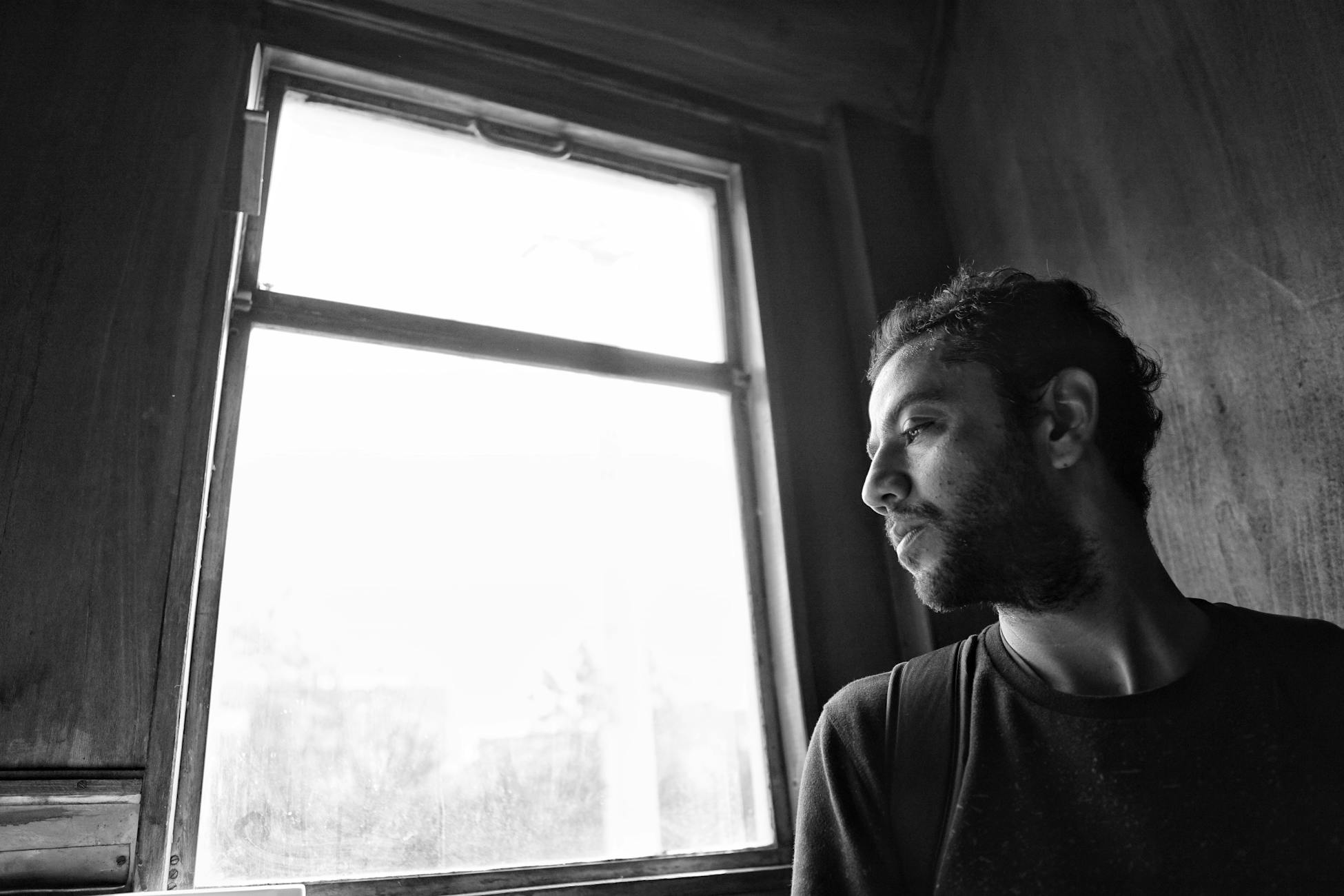
A pattern that deserves more attention is how children in these households often identify with the peacekeeper parent rather than the storm. They inherit the role. By adolescence, many of them are mediating conflicts between their own parents, translating one parent’s behavior to the other, managing a household’s emotional temperature with the skill of a seasoned diplomat and the authority of no one.
Research on parentified roles shows that children who take on adult emotional responsibilities in the family carry specific deficits into their own adult relationships. They struggle with emotional autonomy. The ability to have feelings that are genuinely their own rather than responses to someone else’s state. They become the kindest people you know, and that kindness has a specific origin: they became the person they needed and never received.
The inheritance is precise. The peacekeeper parent modeled a specific form of love: love as management. Love as anticipation of another person’s needs before those needs become dangerous. Love as the absence of conflict rather than the presence of authenticity. The child absorbs this definition completely. And then spends decades in relationships where they monitor, manage, soothe, and translate — often brilliantly — while having no framework for asking themselves the most basic question: what do I actually want?
A philosophy professor I once had would ask a single question about every system we studied: Who benefits? Applied here, the answer is uncomfortable. The system benefits. The storm parent benefits from having their behavior managed. The peacekeeper parent benefits from having an ally. Employers benefit from having a worker who can navigate any interpersonal complexity. Friends benefit from having someone who always knows the right thing to say. Everyone benefits except the person doing the emotional scanning, who has traded self-knowledge for social utility and been told it’s a gift.
What Silence Actually Sounds Like
When the room empties, these adults often describe a specific sensation. Not loneliness exactly, but a kind of formlessness. As if the self that exists in relation to others is vivid and detailed, but the self that exists alone is a rough sketch. Some fill the silence immediately — with noise, with tasks, with the phone — because the absence of another person’s emotional signal creates something close to vertigo. There is nothing to read. And when there is nothing to read, there is nothing to be.
Others describe the opposite: a profound relief that eventually curdles into anxiety. The relief of not having to scan. Followed by the disturbing realization that without the scanning, they don’t know what to do with themselves. People who go quiet when upset often learned that silence was the only language that felt safe. But there’s a difference between choosing silence and being unable to hear your own signal through the noise of everyone else’s.
Consider a parent who loses their home and whose young child, staying in a hotel room, says they want to go back. For most people, that moment is heartbreaking on its own terms. But for someone who grew up calibrated to others’ emotions, that sentence would trigger something different: an instant, full-body focus on the child’s distress, a rapid calculation of what to say and do to manage it, and underneath all of that, a complete suppression of their own grief. It would surface later, if at all, as a headache or insomnia or a vague sense that something is wrong that they can’t name.
That distinction matters enormously, and almost nobody makes it.
A recent study published in Biological Psychiatry: Cognitive Neuroscience and Neuroimaging challenges the traditional deficit-focused view of childhood adversity and demonstrates that the brain’s neural connectivity reshapes itself in response to early experiences. The research suggests that what we often categorize as damage might more accurately be described as reorganization. The brain allocating resources toward the capacities that the environment demanded. For children in peacekeeper-and-storm homes, those resources went overwhelmingly toward social perception. The heightened sensory responsiveness that clinicians might flag as a vulnerability is, viewed from the child’s perspective, exactly the adaptation that made the environment survivable.
The brain did what it was asked to do. The problem is that nobody told it to stop.
Turning the Radar Inward
The work, for someone whose emotional radar was built entirely outward, begins with what sounds deceptively simple: noticing what you feel when there is no one else to feel for. Sitting in the formlessness without reaching for the phone. Registering the physical sensation in the chest and resisting the urge to immediately translate it into someone else’s language or someone else’s need.
When I left my product management role, the first thing I noticed was how disoriented I felt without a room to read. No stakeholders to manage. No emotional weather to track. The same portable unease that follows people who never learned to feel safe in the presence of others. Except mine manifested as an inability to feel present in the absence of others.
Children who grew up being told they were too sensitive often became adults who can identify everyone else’s emotional state while remaining genuinely unable to name their own. The skill was built outward as a defense and never turned inward as a resource. Reversing that direction requires something the hypervigilant person has almost no practice with: treating their own emotional signal as information worth attending to.
The household with a peacekeeper and a storm was an engine of predictable dysfunction disguised as random bad days. The child’s adaptation — the room-reading, the emotional translation, the suppression of self — was a form of extraordinary perception applied in the wrong direction. Taking a trigger (the storm parent’s mood shift), imbuing it with meaning (danger, manage it now), and materializing an outcome (defuse the situation, keep the peace). Every element executed perfectly, in service of someone else’s equilibrium.
So here is the uncomfortable question these adults eventually have to sit with. You built the most sophisticated emotional radar in any room you enter. You can read strangers, colleagues, partners, children. You can detect a mood shift from forty feet away. Can you name what you feel right now, in this moment, with no one else’s emotions to decode? And if you can’t — if there’s that familiar pause, that blankness, that reaching outward for a signal that isn’t coming — then who exactly have you been all this time? The person in the room, or the instrument?
Because instruments don’t get to want things. And you have been so good at being useful that you may have never tested whether the people in your life would still be there if you stopped performing the scan. That’s not a reflection to sit with. That’s a question to answer. And the answer will cost you something either way.
Popular Products
-
 Aqua Peel Facial Deep Clean & Dermabr...
$138.99$96.78 -
 Custom Engraved Gift Box - Black Paper
$50.99$34.78 -
 Smart Notebook Wireless Graphics Tablet
$175.99$135.78 -
 Enamel Heart Pendant Necklace
$49.56$24.78 -
 Women's Custom Name 18K Gold Plated N...
$68.99$47.78