Children Who Grew Up Watching Their Parents Stay Together Despite Being Visibly Unhappy Often Develop A Very Specific Fear As Adults — They Confuse Sacrifice With Love And Can’t Tell The Difference Until Someone Shows Them Both
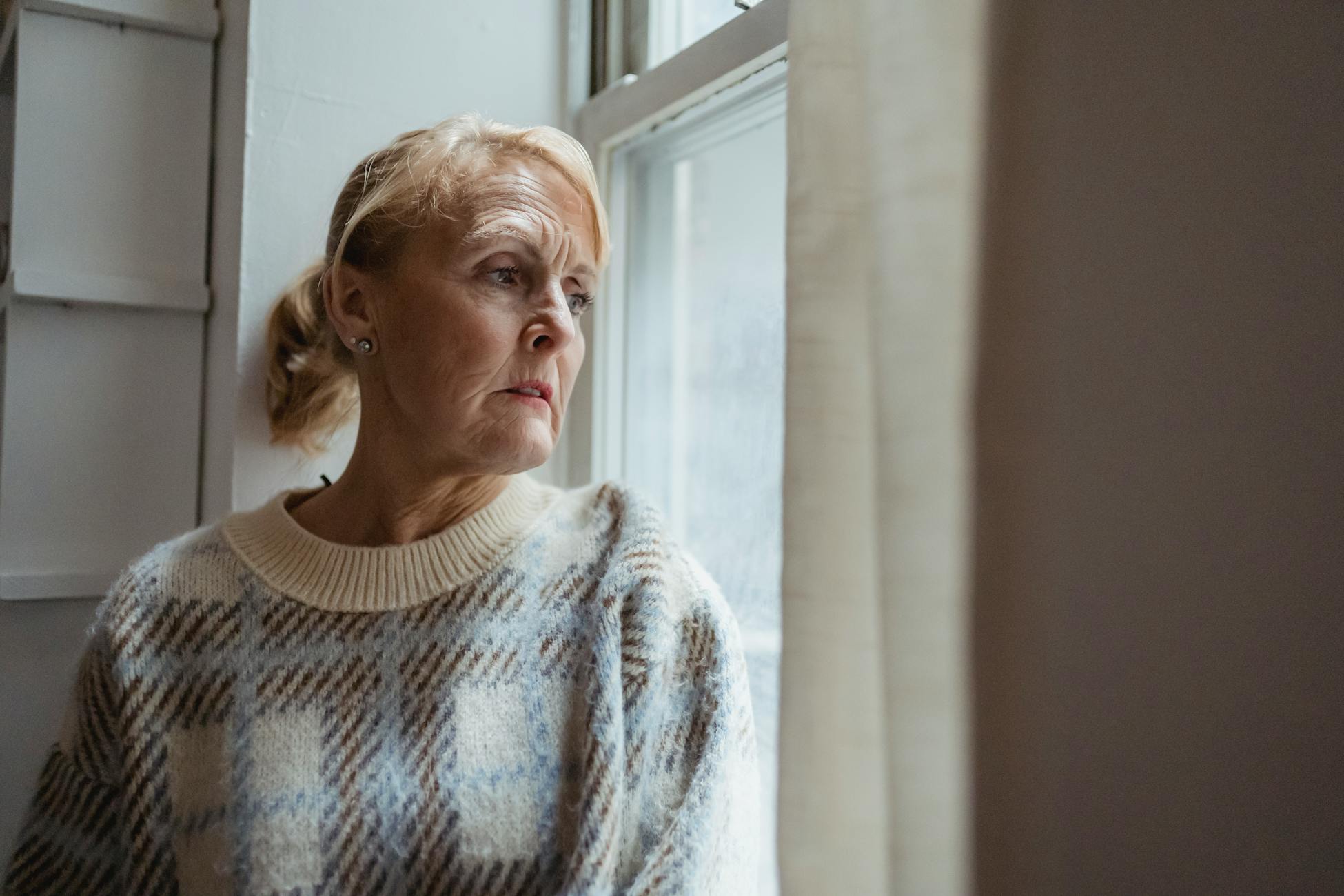
Many psychologists and researchers have observed that the quality of emotional bonds we observe between our caregivers shapes the attachment patterns we carry into adult relationships. The finding itself isn’t surprising. What caught my attention was the specificity. Children don’t just absorb whether their parents loved them. They absorb how love looked. The mechanics of it. The texture. And for those who grew up in homes where two people stayed together while radiating quiet misery, the model they absorbed was this: love is supposed to cost you something. If it doesn’t hurt, you must not be doing it right.
Most people assume the children of divorce carry the heaviest relational baggage. That’s the conventional wisdom. Broken homes produce broken people, the logic goes. But I’ve come to think there’s a different kind of fracture that gets far less attention: the fracture that happens inside a home that technically stays intact. Two parents under one roof, marriage legally unbroken, the structure holding — while the emotional atmosphere inside slowly poisons everyone who breathes it.
The children of those homes don’t get the clean narrative of disruption. They don’t get a before and after. They get a long, slow exposure to something they can feel but nobody names. And the thing they learn, the lesson that lodges deepest, is that love and suffering are the same activity.
The architecture of endurance
I didn’t grow up in that home. My parents were engaged, present, often loud — my dad came home from work and the kitchen would fill with talk about the day, about what had happened and why, about who was getting a raw deal and what ought to be done about it. My mum held her own in every conversation and ran things with a quiet authority that didn’t need a title to be felt. They were proud of each other in their way, and they were proud of us. It wasn’t a household of quiet suffering. It was a household of making do, of working hard, of staying because staying made sense and because, by most measures, it worked.
But what I absorbed, even from a home that functioned, was a particular model of what love looked like in practice: duty, persistence, getting on with it. Love was demonstrated through endurance, through showing up day after day regardless of how you felt. Joy wasn’t absent, but it wasn’t the point. The point was holding things together. And I carried that template into my own life without examining it for years.
I’ve since met enough people — friends, strangers, readers — who grew up in homes where the staying was far less functional than mine. Homes where the silence between parents wasn’t companionable but loaded. Where two people coordinated logistics like colleagues managing a project neither of them chose. Where something would crack once a year — a sharp word, a slammed door — then silence for two days, then back to the routine as though nothing had happened. And for those people, the lesson went deeper. The lesson was that love and misery were inseparable.
Children in these environments become extraordinarily good at reading rooms. They develop a pattern recognition that borders on hypervigilance. They can sense a shift in emotional temperature before anyone speaks. They learn to scan for safety, to calculate which parent needs managing, to make themselves small or useful depending on the atmospheric pressure of the room.
These are survival skills. They work beautifully in childhood. They become devastating in adult relationships.
What sacrifice teaches when nobody explains it
The unspoken curriculum of the unhappy-but-intact household is this: good people endure. Selfish people leave. Love means choosing to stay even when staying makes you miserable. And the proof of your love is the visible toll it takes on you.
Children can’t critique this framework. They don’t have the developmental tools to say, “Actually, Mum, your chronic self-denial is creating an anxious attachment template that I’ll spend decades trying to dismantle.” They just absorb. And what they absorb is a definition of love that’s indistinguishable from suffering.
I absorbed a version of it, even from a home that wasn’t unhappy. My parents were engaged people — my dad working hard, my mum leading without a title — but what I saw was that love meant showing up and pushing through, regardless. In a long relationship that ended amicably, I genuinely believed that the difficulty was evidence of depth. If something felt easy, I distrusted it. Comfort made me suspicious. The moment conflict decreased, I’d unconsciously manufacture some, because peace felt like the prelude to abandonment. If we weren’t struggling together, were we even together?
My ex once said something that I’ve thought about probably a thousand times since. She said, “You act like love is something you survive.” She was right. That was exactly how I’d been treating it. A test of endurance. A thing you white-knuckle your way through. And my evidence that this was the correct approach was an entire model of love built around persistence and duty rather than joy.
Research into parent-child estrangement and healing highlights something I found striking: adult children who eventually distance themselves from parents often cite not abuse but a persistent emotional environment that warped their understanding of what relationships should feel like. The wound isn’t a single event. The wound is the wallpaper.
The fear that has no name
Here’s what I’ve noticed, both in my own life and in conversations with friends who grew up in households where love looked like labour. There’s a very specific fear that develops. A fear that operates below conscious thought, so you don’t recognise it as fear. You experience it as preference, as taste, as instinct.
The fear is this: that if a relationship feels good, something is wrong with it.
You don’t trust ease. You don’t trust laughter that comes without effort. You don’t trust a partner who doesn’t need you to perform sacrifice to prove your commitment. Because in the model you inherited, love and pain shared an address. They slept in the same bed. They sat at the same table. You never saw them apart. So when someone offers you love without the accompanying suffering, your nervous system flags it as unfamiliar, and unfamiliar gets coded as unsafe.
I’ve written before about how childhood can teach your brain to treat safety as temporary, and this is a direct extension of that pattern. The child who watched their parents stay together through sheer determination learned that stability requires sacrifice, and sacrifice requires pain. Remove the pain and the whole equation collapses. Safety becomes the moment before something goes wrong.
So you sabotage. Or you choose partners who replicate the dynamic. Or you stay in situations that drain you because leaving would mean you’re the selfish one, the one who quit, the one who couldn’t endure. And endurance, in the model you inherited, was the highest form of love.
When someone shows you both
The title of this piece mentions someone showing you both — sacrifice and love as separate things. I can tell you exactly when that happened for me.
A couple of years into therapy, my therapist asked me to describe what love looked like. Not what it felt like, not what I thought about it intellectually. What it looked like. I described effort. I described choosing to stay. I described putting someone else’s needs ahead of your own even when it cost you.
She asked me where joy featured in that description. I didn’t have an answer.
The person I’m with now is curious about the world in completely different ways than I am. And the thing she did that changed something fundamental in how I understand relationships wasn’t dramatic. She laughed during a disagreement. Not dismissively. Warmly. She said, “We’re going to figure this out and it’s going to be fine,” and there was no tension in her body when she said it. No bracing. No performance of endurance.
That moment broke something open because it showed me what love looks like when sacrifice isn’t the point. When disagreement doesn’t require someone to suffer. When staying is a choice made from desire rather than duty.
I almost couldn’t receive it. My first instinct was distrust. My second was to wonder what she wanted from me. My third, the one I had to actively choose, was to sit in the discomfort of being offered something I hadn’t earned through pain.
The generational machinery
My parents’ generation — and the generation before them — operated under a cultural script where independence was the highest virtue and vulnerability was treated as a structural weakness. Marriages were meant to last because that’s what marriages did. The question of whether you were happy in one was almost beside the point. Happiness was a bonus, not a prerequisite.
I understand the logic. I even respect parts of it. My dad’s generation didn’t have the luxury of examining their emotional landscapes. They had rent to pay and children to feed and work to do and a world that offered very little softness. Staying together was practical. Staying together was responsible. Staying together was what you owed your family. My dad was a principled man — he stood up for what he believed in, he gave me my first real education in how power works — but the emotional vocabulary just wasn’t part of the toolkit he was handed.
But the cost got passed down. Not deliberately, not maliciously, but inevitably. Because children don’t learn from what you tell them. They learn from what you show them. And what many of us were shown — whether through parental misery or simply through the absence of a different model — was that love meant apologising for having needs. It meant shrinking. It meant performing contentment while your actual emotional life went unattended.
The research on parent-child conflict tells us that disruption between parents and children is natural, even necessary for growth. But the children of quietly unhappy marriages often didn’t get healthy conflict. They got suppression. They got modelling that taught them conflict is dangerous, needs are burdensome, and the correct response to unhappiness is to continue functioning.
Unlearning is slower than learning
I wish I could tell you there’s a clean moment where the old wiring switches off. There isn’t. The belief that love requires suffering is deeply embedded. It lives in the body as much as the mind. When things are going well in my relationship, there are still moments where something in my chest tightens, some old surveillance system scanning for the catch.
Therapy helped. Enormously. But the real work happens in the small, daily moments where I have to choose a different interpretation. When my partner is kind without wanting something in return, I have to actively resist the old programme that says kindness is currency, that I’ll owe a debt for receiving it. When there’s no tension in the house for a week, I have to talk myself out of the conviction that silence means something is being withheld.
The children of visibly unhappy marriages carry a particular kind of grief. Not for what happened to them, because from the outside, nothing happened. The family stayed together. The bills got paid. Nobody hit anyone. The grief is for what they never learned: that love can be a place you rest rather than a task you perform.
When I think about my dad now, I sometimes picture a photograph of my parents from before I was born. They were on some seafront, wind in their hair, and they were laughing. Genuinely laughing. I’ve stared at that photo many times because it showed me something I’d always known was there but hadn’t thought enough about — the warmth between them, the life in them before work and mortgages and children turned love into logistics. They had that. They just didn’t have a framework for keeping it visible alongside everything else that demanded their attention.
They did their best. I believe that completely. And their best taught me something about loyalty and perseverance that has served me in other areas of my life. But it also taught me, without anyone meaning it to, that love is demonstrated through endurance rather than joy. That the absence of struggle means the absence of meaning.
That was the lesson. Unlearning it is the project of my forties. Some days go better than others. The difference now is that I can name what’s happening. I can feel the old pattern activate and choose not to follow it. I can sit in the unfamiliar warmth of something good and let it be good, without waiting for the cost.
Most of the time.
Popular Products
-
 Upgraded Butt Lifting Bodysuit
$83.99$57.78 -
 Ice Cooling Painless Hair Removal Device
$200.78$110.78 -
 Couples Card Game
$15.89$8.78 -
 Satin Floral Sleepwear Pajamas
$15.00$8.78 -
 Bedroom Battle Card Game
$53.99$30.78