People Who Finish Other People’s Sentences, Anticipate Moods, And Notice When Someone Has Gone Quiet Aren’t Always Intuitive, Many Learned Early To Read A Room Before They Felt Safe In It
The skill we call intuition is often something else wearing a softer name. The adult who finishes a friend’s sentence before she gets to the end of it, who senses a partner’s mood from the sound of a key in the door, who notices when a colleague has gone three minutes too quiet in a meeting, isn’t necessarily gifted at reading people. Sometimes, they learned very young that paying attention was the safest thing available.
This kind of attunement can look like a personality trait. For some people, it began as a way of getting through the day.
What constant room-reading can look like in adulthood
The obvious version of vigilance is easy to recognize: jumpiness, startled reactions, an inability to relax. The quieter version is harder to spot. It dresses well. It shows up on time. It is often praised by employers and described by friends as emotionally intelligent.
The pattern is simple. A person is always scanning for changes in tone, body language, silence, pace, and mood. The output may look polished. The effort underneath may be much older than the adult life around it.
Children raised around unpredictability can learn to forecast moods the way farmers read clouds. Salon’s reporting on unpredictable childhoods describes how distress does not always come from one dramatic event. It can also come from years of not knowing which version of an adult will walk through the door.
The room-reading skill set
The skill set is specific and surprisingly consistent across people who developed it early.
They notice when someone’s breath changes pace. They register when laughter sounds slightly off. They can tell from the angle of a shoulder whether a friend wants to talk about the hard thing or be distracted from it. They often answer a question the other person had not quite asked yet, which gets read as either uncanny or intrusive depending on the relationship.
None of this always feels like effort. That is part of what makes it easy to mistake for intuition. A skill that might require concentration in someone else can run quietly in the background for a person who once needed it to understand what kind of room they had just entered.
Why early unpredictability can shape attention
Children learn from the emotional weather of their homes. If a household is calm and predictable, a child may not need to monitor every small change. If a household is volatile, withdrawn, tense, or hard to read, attention can become a form of preparation.
That does not mean every observant adult had a terrible childhood. It does not mean every careful child was harmed. It means that for some people, attentiveness was not just a social gift. It was a way of feeling less caught off guard.
A child who could not predict whether dinner would be calm or difficult might develop a finely tuned habit of reading early warning signs. As an adult, that habit may keep running even when dinner is now safe.
How family patterns travel
Some patterns begin before a child has words for them. Research associated with Rachel Yehuda and colleagues has found differences in cortisol regulation among adult children of Holocaust survivors, especially in relation to parental post-traumatic stress. That research is careful and specific; it does not mean a parent’s history simply gets copied into a child. But it does show that severe stress can leave complicated traces across generations.
In ordinary family life, the transmission is often more visible than biological. A watchful parent may create a watchful household. A parent who is always bracing for impact may teach a child, without meaning to, that peace is something that must be monitored.
Silence transmits more than people think. Children absorb the things adults do not say with the same precision they absorb the things adults do say.
The body can carry the cost
The cost of growing up around chronic stress is not always only emotional. Recent Emory University research published in the Journal of the American Heart Association found links between childhood trauma and later vascular problems among Black adults, with especially concerning patterns among Black women in the study.
Telisa Spikes, the lead author and an assistant professor at Emory’s nursing school, pointed to the need to understand how early stress may contribute to later cardiovascular risk. The finding does not turn every observant adult into a medical case. It simply reminds us that long-running stress can become more than a memory.
The body may keep records the conscious mind stopped reviewing years ago.
Why this gets read as intuition
Intuition is the polite social label for a skill that has no easy vocabulary in adult life. Saying someone noticed a jaw tighten when a mother called can sound either psychic or invasive. Saying they just had a feeling lets everyone keep moving.
The label has a cost. It conceals the labour. People praised for being intuitive rarely get permission to acknowledge how tiring the work can be, because the framing implies it is not work. It is just who they are.
This is one reason these adults often end up in caretaking roles, in people-facing jobs, in middle-management positions where they translate between higher-ups and teams, or in friendships where they are the person everyone calls during a crisis. The skill rewards them. It can also recruit them into more of the same.
The exhaustion nobody sees
The funniest person in a friend group is often the most tired by the end of the night because being entertaining became a way of managing the room. The same dynamic can apply, more quietly, to the most attuned person. Being entertaining can become the price of admission; being preternaturally observant can become a similar invisible toll.
Reading rooms takes effort even when the room is friendly. The old habit may not immediately understand the difference between a dinner party with people who love you and a room where someone’s mood once determined whether the night would go well.
This is why deeply attuned adults often need significant alone time after social events, even good ones. The processing has to happen somewhere.
Memory, perception, and the changing story
One complication: people who grew up reading rooms often do not remember the home that taught them to do it as particularly bad. Iowa State professor Carl Weems has proposed a developmental theory, published in Clinical Child and Family Psychology Review, arguing that memories of childhood trauma and adversity are not static. They can shift with new experiences and as cognitive development continues.
That idea matters because the story a person tells about childhood can change as adult life gives them new comparison points. Someone may look back at a home that felt normal at the time and later recognize that the constant scanning, careful tone management, and predictive emotional labour were not required in every family.
This is why people often arrive at the realization slowly. The pattern reveals itself in adult relationships before they trace it back to its origin.
What it looks like in adult relationships
The relational signatures are recognizable.
They apologize preemptively for things that have not gone wrong yet. They feel a partner’s mood enter the room before words do, and adjust accordingly. They struggle when someone they love has a bad day and will not say what is wrong, because the missing information can feel uncomfortable, not merely interesting. They sometimes answer for their partner in social situations without realizing they are doing it.
They may also take responsibility for emotional weather they did not cause. If a friend is quiet, they assume they did something. If a meeting goes flat, they assume they should have lifted it. The assumption is not arrogance. It is the residue of being young in a room where small actions seemed to change the temperature.
This pattern travels with other ones. People who replay conversations for hours afterward are often the same people who anticipate moods, because both behaviours can come from the same early training: predict the consequence before it lands.
How the cycle continues if nobody names it
A parent who grew up scanning may raise a child who scans, not by intent but by atmosphere. The household carries a baseline level of vigilance that feels normal because it is normal, for that family.
Children are exquisite anthropologists of their own homes. They learn what the adults monitor, and they learn to monitor it too.
The same pattern can produce adults who cannot relax until every dish is washed, who treat ambient mess as an early warning signal that something larger is about to go wrong. The triggers are different. The underlying habit is similar.
What changes when someone names it
The useful shift is often not dramatic. It is language.
When an adult realizes that what they call intuition may partly be trained vigilance, two things can happen. First, they stop being quite so impressed with themselves for being good at it. Second, they stop being so confused about why it tires them.
The skill does not have to disappear. It often should not. People with this kind of attunement can make extraordinary friends, partners, clinicians, and colleagues. The goal is not to dull the instrument. The goal is to learn when to put it down.
That part is harder than it sounds. The instrument was built before there was much conscious choice in the matter. Learning to set it aside in safe rooms can be a slow adult project, helped by time, honest relationships, and sometimes professional support.
The quiet work of recalibration
People who grew up reading rooms may assume the reading is the relationship. It is not. It is a tool the relationship can sometimes use, not the foundation it stands on.
What recalibration looks like, in practice, is small. Letting a partner be quiet without diagnosing the silence. Allowing a friend’s bad mood to be about something that has nothing to do with you, and not asking three times to be sure. Sitting in a meeting where someone seems off and choosing, just this once, not to manage it.
None of this is dramatic. All of it can feel uncomfortable for the person who learned to scan, because the scanning used to feel load-bearing.
The instrument was built for a house that may no longer exist. Adulthood, slowly and unevenly, is the work of finding out which rooms still need it and which rooms never did.
The adult who finishes sentences and reads moods may not be unusually intuitive. That adult may have once been a child who learned to be right about people before they spoke. The skill is real. The cost can be real too. Both deserve to be acknowledged in the same sentence.

The freeing moment for many of these adults is when they stop calling it a gift and start seeing it as work their younger self learned to do. Work can be valuable. Work can be skilled. Work can also have hours. It is allowed to clock out.
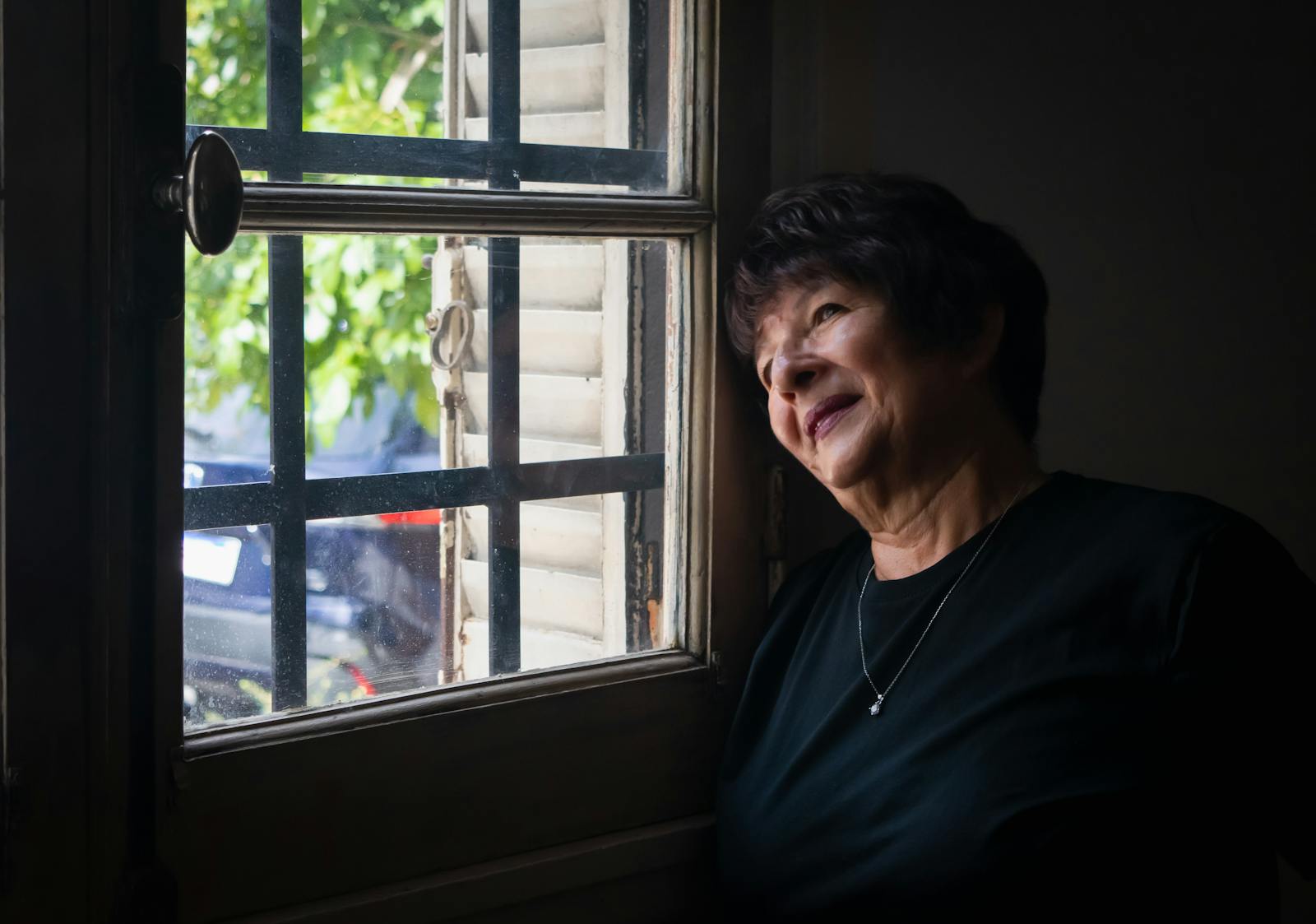
Photo by Kari Alfonso on Pexels
The post People who finish other people’s sentences, anticipate moods, and notice when someone has gone quiet aren’t always intuitive, many learned early to read a room before they felt safe in it appeared first on Space Daily.
Popular Products
-
 Pure Essential Oils for Diffuser and ...
$60.99$41.78 -
 Lash Lifting Lotion Sachets for Perm ...
$65.99$45.78 -
 Cherry Blossom Face Peeling & Brighte...
$13.99$6.78 -
 Personalized PU Leather Wallet with P...
$35.99$24.78 -
 Rose Flower Pendant Necklace for Wome...
$34.99$23.78